









The AI adoption conversation in organisations is often centred on tools, platforms and use cases. Yet access to technology alone does not guarantee impact. According to Research, 39% of workers' core skills are expected to change by 2030, highlighting that the challenge is not in deploying AI, but preparing people to work effectively alongside it.
As AI is embedded into the workflows, how are organisations preparing people to work with it meaningfully?
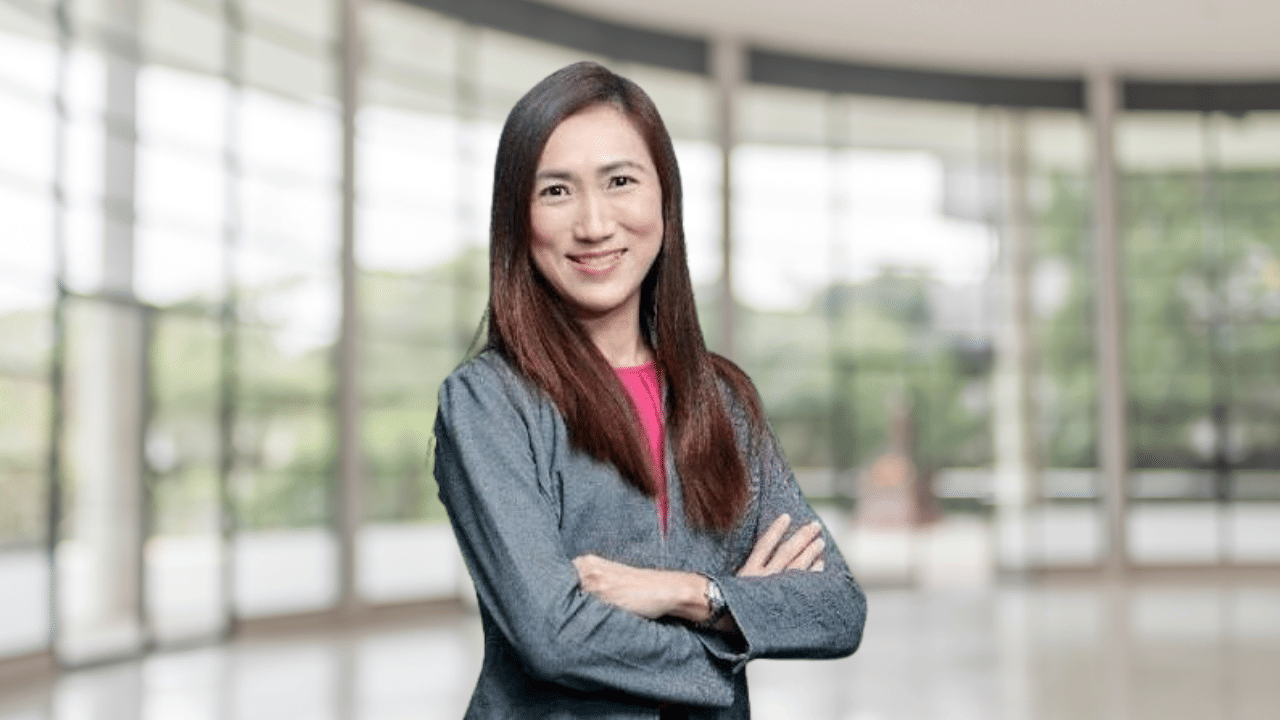
This theme was at the centre of a recent conversation as part of the “Futurist Circle series” by People Matters and Darwinbox, where leaders explore how organisations are building workforce readiness in an age of AI and continuous transformation. Jeslin Lim, Head of People and Culture at Cycle & Carriage, Singapore, in conversation with Cheshta Dora, Head, Content & Research, People Matters, shared how her organisation is approaching AI readiness through a people-first lens.
For Lim, AI readiness begins with the fundamental question that organisations may not be discussing enough. “The first principle is what do we use AI for?” she said. “If we can answer that big question, the readiness part and capability part will follow.”
Access creates possibility. Readiness creates value
Adoption and readiness are often treated interchangeably. Lim believes the distinction matters more than ever.
“AI adoption is about access to the tool,” Lim shared. “The readiness part is about the ability to use it.”
She compared the experience to driving with GPS. While technology may recommend a route, existing habits and instinct often influence decisions. The challenge, therefore, extends beyond introducing new tools.
“The readiness portion is the ability to adopt it, use it and own it,” she said.
For organisations, this creates a different focus. The goal is to help employees overcome existing habits and build confidence around new ways of working.
Why curiosity matters more than compliance
Organisations are also navigating concerns around preserving the human edge, particularly in service-oriented environments where relationships remain central to business outcomes.
At Cycle & Carriage Singapore, Lim believes managers need frameworks. “I would imagine leading with a framework instead of a mandate,” she explained.
Rather than asking whether AI should replace work, her organisation is reframing discussions around role design. A key question becomes whether specific roles are "human first, supported by AI" or "AI first, supported by humans."
This distinction creates greater clarity and reduces uncertainty around changing workflows.
“When we lead with those questions, managers may be able to redesign roles with AI supporting workflows,” she said.
In AI transformation, waiting may be the biggest risk
Organisations are also in unfamiliar territory without established frameworks or clear precedents.
For Lim, waiting for certainty may itself become a barrier.
“Stop waiting for the playbook to land on my lap,” she said. “Start to create the rules that may work for the context of the organisation.”
Rather than pursuing perfect solutions, Cycle & Carriage Singapore has focused on experimentation and collaboration.
Lim shared that one of the most important decisions in her own journey was finding a collaborative partner within the digital function and approaching conversations through shared problem-solving.
“Just start. Not with an agenda, but a question,” she explained.
This approach shifted conversations away from ownership and toward co-creation.
“You need to build use cases, I need to build capabilities. How about we come together and build something together?” Lim shared.
Transformation happens when HR and digital move in the same direction
At this junction, the collaboration between HR and technology teams becomes important. Yet while goals can align, priorities may differ.
Lim shared that HR and digital leaders generally share a common ambition around enabling business progress. However, their approaches may naturally diverge.
“HR... is very mindful about change management, about adoption, about human emotions and getting used to it,” Lim noted.
The challenge, therefore, is not in eliminating these differences but creating stronger integration between them.
“If we can become a merging lane when HR and digital can lead this together, I think that will be a transformation that will stick for a longer time.”
In an AI-powered workplace, trust becomes a competitive advantage
Amid AI’s growing capability, questions emerge around what continues to distinguish strong performers and high-performing teams.
For Lim, the answer begins with trust. “Between humans there must be that mutual trust,” she said.
Even sophisticated AI-generated work, she argued, cannot create value if people lack confidence in one another. “If there is no existence of mutual trust in the first place, even with AI... you're not going to trust that output.”
Beyond trust, Lim believes another important distinction is how people choose to use AI itself. “Are we using AI to help us become better thinkers or using AI to outsource our thinking?”
For her, this difference may increasingly define future performance. In that sense, the future advantage may not come from access to AI itself, but from how people choose to engage with it.
Employees who use AI to strengthen judgment and improve thinking may create very different outcomes than those who rely on it passively.
Three lessons for organisations building AI readiness
Reflecting on Cycle & Carriage Singapore’s AI readiness journey, three lessons emerge.
First, AI readiness begins with clarity of purpose. Organisations need to define why AI matters before focusing on capability building.
Second, adoption and readiness are not the same. Access creates possibility, but confidence and ownership create value.
Finally, sustainable AI transformation requires balancing technology with deeply human elements such as trust, curiosity and collaboration.
AI readiness is ultimately a human challenge
As organisations race to scale AI, the conversation often centres on technology deployment, productivity gains and new use cases. Yet Cycle & Carriage Singapore's experience points to a different reality, that of readiness being a human challenge.
Technology can be deployed quickly. Curiosity, confidence and trust take longer to build. The organisations that succeed with AI may not necessarily be those with the most advanced tools, but those that create the conditions for people to experiment, learn and adapt alongside them.
For Jeslin Lim, AI readiness is not about having all the answers. It begins with asking better questions, creating space for experimentation and helping people see where they fit in a changing world of work.
This story is part of The Futurists, a leadership series featuring bold ideas and perspectives from CXOs shaping the future of business across Asia.