









As AI moves from experimentation into everyday work, the conversation is shifting from simply adopting tools to rethinking how work gets done, how people build new skills and how HR plans for the future.
At Infobip, AI has been made a ‘priority zero’, with employees given access to advanced AI tools and People Operations using AI across hiring, skills assessment, learning and succession planning.
The company is also identifying AI ‘builders’ and ‘users’, using skills data to inform workforce planning and preparing a workplace where AI agents increasingly work alongside people.
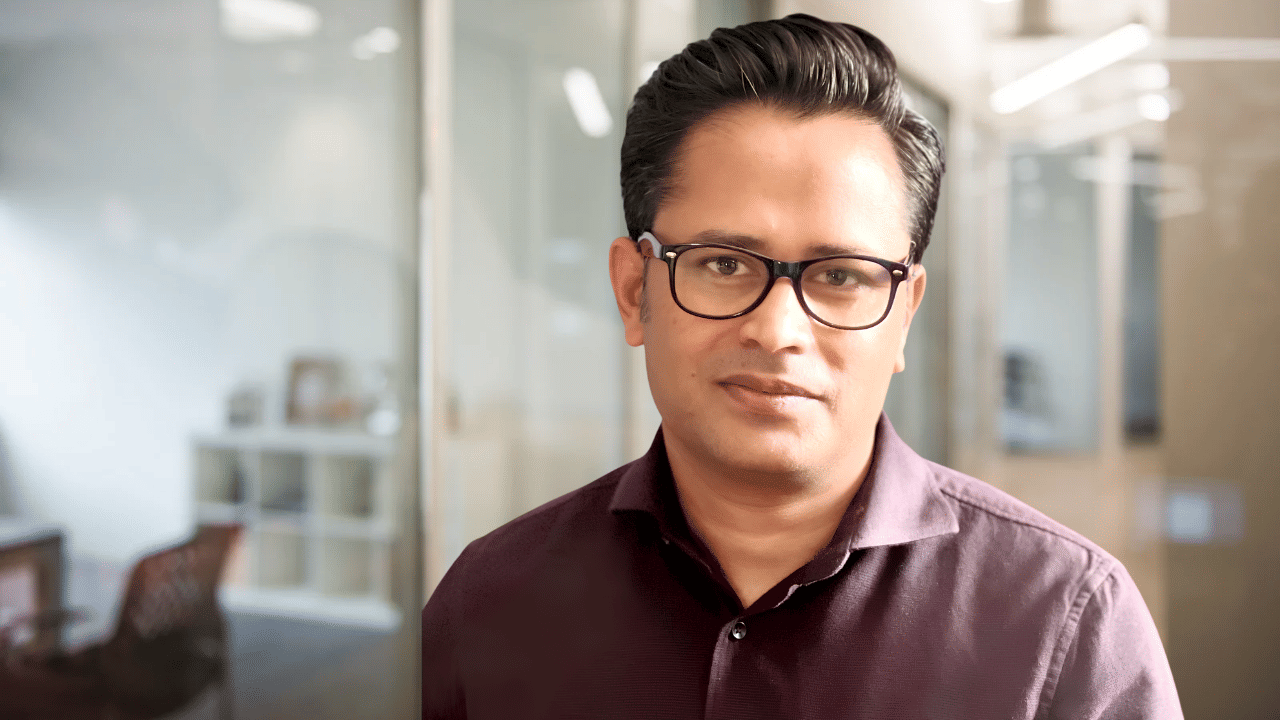
In this exclusive interview, Faisal Wahedi, Head of People – Asia, Infobip, shares how the company is building an AI-ready, skills-based workforce, what HR needs to rethink as AI adoption deepens, and why moving beyond ‘surface-level’ AI use will be critical for employees.
Read the edited excerpts below:
From AI experimentation to everyday work: How HR is rethinking talent
We started experimenting with AI in 2021–2022. While some of us were initially skeptical, we were actually preparing for the future.
That’s one thing you realize at Infobip: we’re always trying to stay one step ahead of market dynamics. We look at where the industry is heading and how we need to adapt. Even when most people were still unfamiliar with AI, we had already started incorporating it into our products.
Over the past few years, we have invested in building layers of AI across our platforms to improve efficiency and client service and over time, those investments have translated into clear business value.
We’ve taken the same approach with our people. For example, our employees have access to advanced AI models and can choose what works for them, whether that’s ChatGPT, Claude, or any other AI tools.
In Asia, where we have over 650 employees, the majority of them have adopted AI with more than 80% of active users in the region as of today. People Operations is amongst the top AI-using functions, and we have our own AI marketplace, known as the POP Agent marketplace. Each one of us is using 10+ skills or plugins in the HR team for hiring, onboarding, skills assessment, succession planning, individual development plans and learning budgets.
The impact is significant. Work that could have taken weeks, or at least a day, can sometimes be done in a few minutes. That’s the power of AI.
It’s also empowering people. We had an intern, now a full-time employee who turned out to be one of the top AI users in our People Ops. team. After a year of doing fairly routine work, she has now become a top performer by using AI to do things differently. In the earlier days, it would have taken years to achieve that level of proficiency, but not in the era of AI. That’s what’s exciting, creating an environment where people can not only perform better in their current roles but also increase their own skills, value, and marketability.
From skills mapping to capability building: Preparing for the skills organisations need next
We have a robust skills assessment process, particularly for client-facing roles. AI can help us analyse information better, but when it comes to understanding an individual’s capability, two people know that person best: the individual themselves and their manager.
People can sometimes overestimate their own capabilities, so the manager’s role is to have that conversation and provide an objective view. For example, we define an expert as someone who could write a book on the subject. People may initially rate themselves as experts, but after discussing with their manager, they often recognize that they are at a different level of proficiency.
The process starts with a self-assessment, followed by an assessment from the direct manager.
For client-facing roles, we have identified more than 20 critical skills, with classroom and online learning, conference and mentoring programmes available to develop them.
The next level involves the leadership team or business head. The manager and employee may be focused on individual or functional development, but leadership needs to look at the broader organisational requirements. As we move towards increasingly becoming a skills-based organisation, this wider perspective influences how we decide what talent we need to hire and in what number.
A good example is Project Sparta, through which we’re hiring young talent globally for client-facing roles. The skills data we’ve collected over the years has helped us identify what capabilities we need. We’re also using AI to build our location strategy, determining which roles need to be in specific markets because of language, clients or other requirements, and which can be supported from lower-cost locations.
That combination of skills and location strategy is helping us build a more skills-based organisation. We then use AI to identify what skills people need to move to the next level, while also factoring in their individual aspirations. Someone may work in one function today but aspire to move into a completely different role. We can identify the skills required to support that transition.
This information connects with two AI skills on our platform: education and succession planning.
The education tool looks at seven years of our learning and development data, including programmes, investments and their outcomes, and recommends the right interventions — whether that’s an internal or external programme, a certification, a stretch assignment or a conference.
That information then feeds into succession planning, helping us identify critical roles, potential successors, and the development they need. Ultimately, the system recommends what should be included in each individual’s development plan.
Today, 100% of our named successors have individual development plans, and approximately 80% of employees have an individual development plan in the region.
The biggest change is how much easier the process has become. When we first started succession planning, everything was Excel-based. We had 30–50 questions and a nine-step process, from identifying and shortlisting candidates to building the bench and assessing development needs.
We still use some bit of Excel to track progress, but the underlying analysis and mathematics are now being done by AI.
The organisational and human challenges of applying AI to talent strategy
In my experience, organisations can face three potential challenges when applying AI to talent strategy, although none became a roadblock at Infobip:
First is buy-in from the top. Many organisations understand that AI is important, but still think it only needs to be available to certain functions, such as engineering. You need leadership to make it a priority for everyone.
Second is having the right expertise. Getting access to a tool or a license is easy. The bigger question is: how do you actually use it? You need people who can guide, enable, and teach others.
Third is the budget. AI can require significant investment.
At Infobip, we addressed all three and always tried to stay one step ahead. At our annual FOCUS event last year, our founder told us that we had been a company using AI, but we were now going to be an AI-first company with AI-powered products and services. AI was declared a “priority zero”, and every employee was expected to spend time on it.
We already had cross-functional “unfix” teams, including an AI team with its own leadership, budget and HR support. The team has already been building AI products and enablement programmes, which allowed us to scale those efforts quickly across the organisation.
We also identified AI champions in every function. They work with the central team to create function-specific enablement because what HR needs from AI is different from what sales or engineering needs.
We then run AI hackathons across Asia, including Mumbai, Manila, Kuala Lumpur and Shenzhen where teams build their own projects, giving employees hands-on experience of how AI could actually be used in their work.
AI is also a part of a formal goal for every employee and manager. Managers are responsible for enabling their teams, which helps drive adoption.
By the first half of 2026, we had already made a significant investment in AI. We reviewed that investment and decided to continue, while also giving employees flexibility in choosing which models to use. Someone who is not coding, for example, may not need the most expensive model. There are also lower-cost models that can deliver equally good results for certain use cases.
We therefore encourage people to use their judgement and choose the model that works best for the task. This approach helps us address all three challenges. And that’s why we’re now at a place where AI adoption is happening not just at the company level, but across the employee base.
As AI takes on more analysis, how should HR and managers rethink their roles?
One interesting observation we’ve had over the last eight months is that, when it comes to AI, there are two kinds of people: builders and users.
No matter who you are or what your role is, even without a technical background, you can become an advanced user of AI. In fact, if you want to get things done efficiently, there’s really no excuse for not doing it. Everyone can do it.
The other group is the builders. At Infobip, we have a higher percentage of our people falling into this category, which makes sense given that we’re a technology company.
Our focus is to identify people who can be developed into advanced users or builders. Builders will look at our processes to identify which workflows can be completely eliminated using AI.
Users, meanwhile, need to look at their own workflows and understand how they can use AI to eliminate repetitive tasks, freeing up more time to apply their creativity and judgement to higher-value work rather than spending it on basic analysis in an Excel sheet.
That’s what we’re working on internally. We’re identifying people who need more advanced AI training and involving them in identifying workflows that can be transformed. At the same time, everyone else needs to learn how to use AI effectively in their day-to-day work.
The next human edge in the workplace
By 2030, I think we’ll have a large number of AI agents working alongside humans. That’s already a conversation we’re having at Infobip. Our employees have already created hundreds of agents and that number is only going to grow.
The questions we need to ask are: who is going to manage these agents, and who will be responsible for the decisions and actions they take? If there’s a compliance concern, for example, the responsibility ultimately comes back to HR.
So, who owns this new part of the workforce that is going to work alongside humans? It’s not something in the distant future; it’s happening now. We need to understand how these agents will act, behave, and make decisions.
The decisions ultimately remain with humans. But once people get used to something, they tend to trust it easily. We need to apply our judgement to ensure that decisions made with AI don’t negatively impact the individual, the team, or the organisation.
We’ll need clear processes to govern this. At Infobip, we’re already developing AI policies and integrating AI with our privacy framework, which is particularly important from a GDPR perspective.
How HR can build organisations that are genuinely future-ready
HR needs to start experimenting NOW. As long as the mindset remains, “I want someone to teach this to me,” you’ll keep looking for people who are at an advanced level in using AI. And if you don’t know someone like that today, most likely, you won’t find them anytime soon.
But if you simply take a basic subscription to an AI tool and start experimenting, you could become that person in six months. The person you’re searching for today was probably in the same position as you six months ago.
It’s as simple as that. When it comes to adopting AI or becoming good at using it, anyone can do it with very little investment.
So, start experimenting. Don’t fear AI or hesitate to use it. With consistent practice, you could be the next AI expert, perhaps even writing a book on it :)