









In an era where automation and digital transformation have become key priorities for HR leaders, organisations are under increasing pressure to innovate while balancing employee expectations, business outcomes, and technological change. Yet, transformation isn't always straightforward, especially in a region as diverse as Asia Pacific and within a niche industry such as Sharia-compliant financial services.
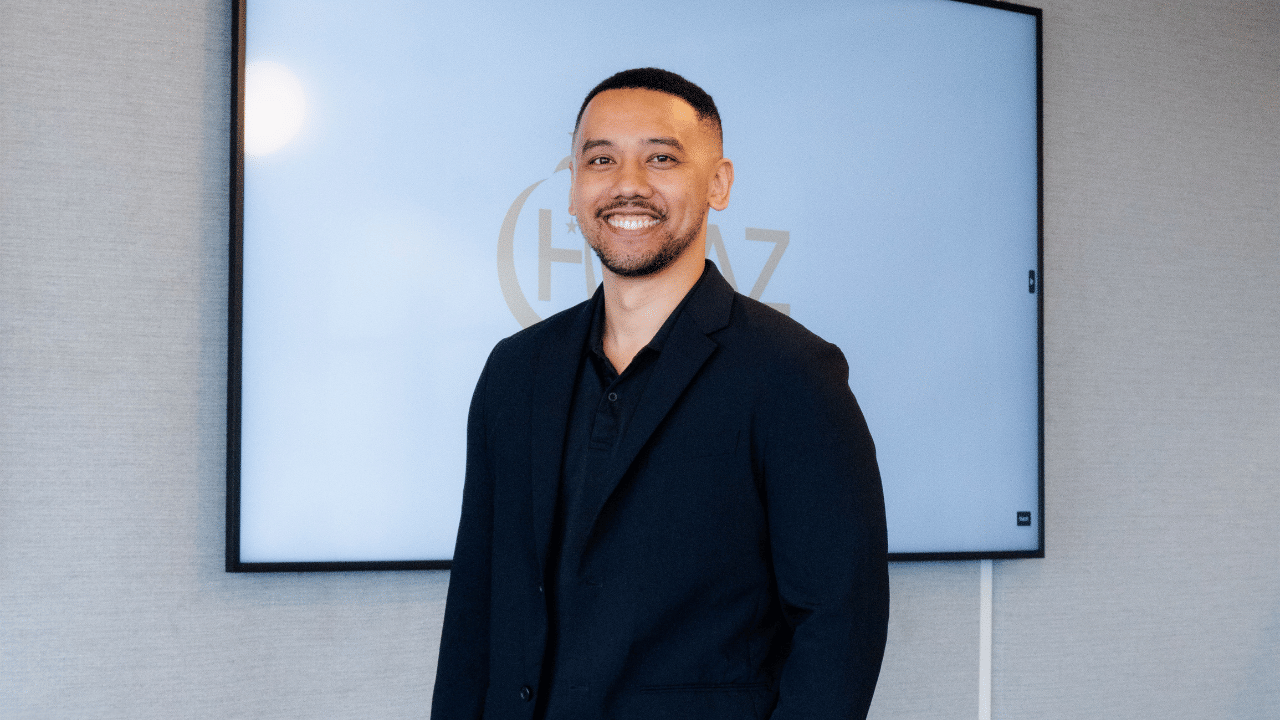
Kareem Pello, who leads HR across APAC at Hejaz, believes that innovation isn't defined by the number of technologies an organisation adopts. Instead, it's measured by stronger employee experiences, better business outcomes, and a workplace culture built on trust, accountability, and ethical leadership.
In this exclusive interview, Pello shares his perspective on why technology should be viewed as an enabler rather than the destination, how organisations can build a skills-first workforce, and why the future of HR will always remain deeply human.
Read the edited excerpts below:
What makes HR innovation truly impactful?
Technology is an enabler, not innovation itself. Over the past 11 years in HR, I've come across organisations that automate existing processes and describe that as transformation. In reality, they've simply accelerated existing problems rather than solved them.
I believe true HR innovation begins by asking a different set of questions: How do we create a better employee experience? How do we improve business outcomes?
Technology can certainly be part of the solution, but sometimes innovation requires redesigning decision-making, simplifying processes, or strengthening leadership capabilities.
At HRIS, our focus is on building systems that improve the employee experience, accelerate decision-making, and strengthen accountability. Accountability becomes even more important when you're operating across multiple countries, as we are. Our operations span Australia, Indonesia, China, Bahrain, the UK, and now Pakistan as well, which makes consistency and accountability across markets a critical priority.
I also don't believe innovation should be measured by the number of software platforms an organisation adopts. It should be measured by outcomes.
Are we hiring better talent more quickly? Are employees more engaged? Are managers spending less time on administrative work and more time developing their teams? Are we retaining our top performers?
Ultimately, HR innovation should be defined by measurable business value while creating a better experience for employees.
When people hear the term HR innovation, they often think of technology. But innovation isn't just about technology. It's about improving the entire system that supports people and enables them to succeed.
HR transformation and balancing consistency with local workforce needs
One of the key lessons I've learned is that consistency should exist in values, but not necessarily in execution. When you're managing a diverse region such as APAC, you're dealing with different labour regulations, cultural expectations, communication styles, and employee priorities.
Even markets that appear similar on the surface, such as Indonesia and Malaysia, can have very different workplace dynamics. Trying to apply identical practices across every market often creates resistance because there is no universal, one-size-fits-all approach.
Instead, we've focused on establishing a consistent set of principles across the organisation, including fairness, transparency, accountability, and a strong commitment to the employee experience. While those principles remain constant, we're flexible in how they're implemented within each market.
The second lesson is the importance of listening before introducing change. We actively seek feedback from both employees and local leaders before implementing any new initiative. If we're working with a team in Australia, for example, our first step is to ask them for their perspective. What are their concerns? What do they think will work? What challenges do they anticipate?
I believe this approach does more than improve the quality of decision-making. It also creates a sense of ownership and trust. When people feel that their input has shaped a decision, they're much more invested in the outcome.
Most importantly, visibility matters. Meaningful transformation cannot be driven from behind a desk. HR leaders need to be present, approachable, and willing to have difficult conversations. That's what builds credibility, particularly during periods of significant change.
For me, successful HR leadership across multiple markets isn't about imposing uniformity. It's about staying consistent in your values while remaining adaptable in your approach, listening to people before making decisions, and maintaining a visible presence throughout the transformation journey.
Building a culture of innovation, agility and continuous learning
Organisations often overcomplicate innovation. In my experience, one of the simplest and most effective strategies, especially when managing multiple regions, is simply to ask.
Creating structured opportunities for employees to share ideas, ask questions, and provide feedback makes a significant difference. People are far more likely to embrace innovation when they feel they've been part of the decision-making process. When they believe their voices have been heard, influenced the outcome, they're much more willing to support change.
If leaders introduce a new initiative without consulting employees and simply announce that it's being implemented, not everyone will embrace it. That's why I believe the simplest approach is often the most effective: ask people what they think and involve them from the beginning.
Leadership plays a critical role. Employees pay close attention to how their leaders behave. They observe whether leaders are willing to experiment, acknowledge mistakes, and continue learning. Innovation isn't something that can simply be delegated.
You can't tell people to innovate and expect it to happen automatically. Employees need to see their leaders demonstrating those behaviours themselves. Innovation has to be modelled before it can become part of the culture.
I also believe recognition is equally important. In many organisations, we celebrate flawless execution and successful outcomes, whether that's launching a new product, completing a project, or achieving a business target. However, we don't always recognise experimentation itself.
If organisations only reward the final result, employees may become reluctant to take calculated risks. Creating a culture of innovation means recognising the willingness to test new ideas, learn from failure, and continuously improve, not just celebrating the end product.
In the end, building an innovative culture doesn't have to be complicated. It starts with involving people in the process, encouraging leaders to set the right example, and recognising the value of experimentation alongside results.
Rethinking talent management, leadership development and workforce planning for a competitive APAC workforce
Growing focus on skills represents one of the biggest shifts in the future of work. For a long time, organisations placed significant emphasis on degrees, qualifications and job titles. While those credentials still hold value, skills are increasingly becoming a more accurate indicator of an individual's ability to succeed and create an impact.
Because of this shift, I believe organisations need to rethink the way they approach talent management, leadership development and workforce planning.
When it comes to workforce planning, the focus can no longer be limited to filling roles. Instead, organisations need to identify existing capabilities, anticipate future skill requirements, and address potential gaps before they emerge.
The same applies to leadership pipelines. Leadership development shouldn't be based solely on job titles, hierarchy or years of experience. Instead, organisations should focus on identifying individuals with the right capabilities, strong learning agility and the ability to adapt to changing business environments.
I also believe that internal mobility and continuous learning will become increasingly important. Skills are evolving so quickly that a qualification earned years ago can't be the only measure of an employee's potential. Organisations need to create opportunities for employees to reskill, upskill and explore different career paths as business needs continue to evolve.
This becomes even more important in regions such as APAC, where labour markets, business environments and talent challenges vary significantly from one country to another. A skills-based approach gives organisations greater flexibility and allows them to build a workforce that's more agile, adaptable and prepared for the future.
I believe organisations that shift their focus from roles and titles to capabilities and potential will be in a much stronger position to remain competitive in the years ahead.
How the Sharia financial services sector is shaping HR innovation, ethics, and workplace culture
I believe working in Sharia-compliant financial services reinforces an important principle: business success and ethical leadership should never be separated.
The values that guide Islamic finance, such as fairness, transparency, accountability, and creating genuine value, are also the foundations of effective people management. Those principles have significantly influenced our approach to HR.
I strongly believe that innovation should never come at the expense of trust or fairness. Technology is an enabler, but it shouldn't replace an organisation's core values. Whether we're introducing a new policy, adopting AI, or making talent decisions, we always ask the same questions: Is the outcome transparent? Is it fair? Does it align with our values?
I also believe that purpose matters. Employees are increasingly drawn to organisations whose mission extends beyond financial performance. When people understand how their work contributes to improving financial well-being and serving the community, their work becomes more meaningful.
The same principles that guide our approach to business also shape the way we manage people. At its core, Sharia-based practice emphasises fairness, equal treatment, accountability, and respect. These principles provide a strong ethical framework for managing people.
That's what we're trying to reinforce within HR as well – building a workplace where innovation, ethical leadership, and purpose work together rather than competing with one another.
Leading an AI-powered workplace while keeping people at the centre of work
I believe AI will fundamentally change the way HR operates, but it won't replace HR professionals. Instead, it will elevate the role of HR.
By automating routine tasks such as reporting, documentation, and other administrative processes, AI gives HR professionals more time to focus on higher-value activities, including leadership coaching, organisational development, workforce strategy, and employee experience.
That said, AI should support decision-making, not replace it. Areas such as recruitment, promotions, performance management, and employee relations still require human judgment and context.
That's why organisations need to focus on AI literacy while establishing clear guardrails around ethics, privacy, transparency, and bias.
The goal isn't to remove the human element from HR. It's to reduce administrative burdens so HR professionals can spend more time listening to employees, strengthening relationships, and creating a better workplace experience.
So, the real value of AI isn't replacing people. It's giving people more time to focus on what matters most.
How AI can support HR decision-making while ensuring ethics, transparency, and fairness remain at the forefront
I believe organisations need to start by asking one question: What do we value most as a business? Once that's clear, HR policies, processes, and AI adoption should align with those priorities.
There's no universal approach to AI in HR. If speed is the priority, AI can help streamline recruitment. If employee experience is the focus, it can reduce administrative workloads and create more meaningful employee interactions.
We prioritise two things: the quality of the talent we hire and the employee experience we provide. That's why we use AI to strengthen talent acquisition and enhance the employee experience.
AI shouldn't define an organisation's HR strategy. It should support the outcomes the organisation values most while ensuring that human judgment remains at the centre of decision-making.
For us, AI is a tool that helps strengthen our priorities rather than redefine them. That's why we focus on using it to enhance talent acquisition and employee experience while ensuring that human judgment remains at the centre of our decision-making.
Defining the next era of HR leadership capabilities to successfully lead future workforce
I believe the next decade of HR will be defined by one thing: adaptability. APAC is one of the world's most diverse regions, shaped by rapid technological change, evolving workforce expectations, and significant demographic differences. Although it's often viewed as a single market, the reality is far more complex.
Countries such as Vietnam and Singapore have very different economic conditions, cultural norms, and workforce dynamics. As a result, organisations cannot adopt a one-size-fits-all approach across the region.
Because of this, HR can no longer operate as a purely administrative function. Over the past decade, we've seen HR evolve into a far more strategic function, one that's directly responsible for building organisational resilience.
I believe future HR leaders will need to develop a combination of capabilities, including business acumen, data literacy, digital confidence, AI fluency, ethical decision-making, and, perhaps most importantly, cross-cultural leadership.
However, as important as technology and AI will become, HR leaders must remain deeply human. I think we sometimes lose sight of the fact that HR is ultimately about people.
The most successful HR leaders won't simply focus on matching people to roles. They'll focus on creating environments where people can learn, adapt, grow, and perform at their best.
In recent years, much of the conversation has centred on AI, but I believe qualities such as empathy, trust, and purpose will become even more valuable in the future. Those human qualities will be a significant competitive advantage.
I also think it's important to challenge the perception that AI is replacing people. The real opportunity lies in using technology to give people more time to innovate, collaborate, and focus on higher-value work.
So, the organisations that succeed will be those that invest as much in human capability as they do in digital capability.
In many ways, the future of HR is about returning to its roots. Technology is simply the tool that helps us get there. The real objective is to strengthen human capability and create workplaces where people can thrive.