









In conversations about business transformation, a lot of emphasis has been placed on upskilling employees, and for good reason; without people who know how to handle new technology, new situations, and new disruptions, a business will stagnate.
The question for many businesses, especially small enterprises, is how to go about doing this - how to set aside the financial resources, manpower, and time to make job redesign and enterprise transformation happen.
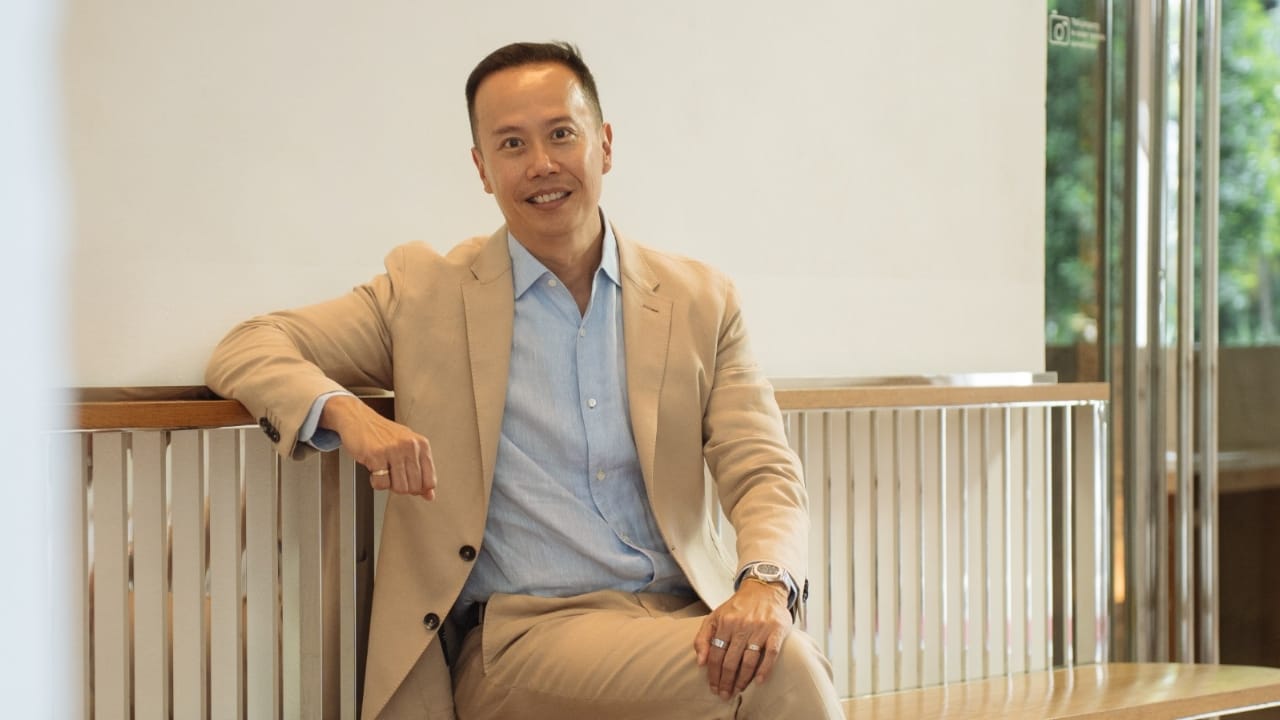
People Matters asked Mark Lee, the vice-chair and honorary treasurer of the Singapore Business Federation, who also chairs the SBF’s Human Capital Action Committee, for an industry perspective on how enterprises can adapt and keep up. Speaking on the sidelines of the inaugural Career Health Summit organised in July by SBF and Workforce Singapore, he pointed out that in a small and tight labour market like Singapore, the main challenge businesses face is how to use their existing supply of talent most optimally.
The need for enterprise transformation
Just in terms of technology alone, digitisation and the advent of robotics have represented consecutive disruptions to business models within a short period of time, and now we have AI on top of it, he said.
"Some business owners may not care about it because they do not have succession in mind, and they just want to continue day to day. But companies that are more forward looking will have a three year plan or a five year plan. They know that they need to grow and scale. If not, they will be extinguished."
That three- or five-year plan becomes the basis for enterprise transformation, Lee said. By mapping it against the current state of their organisation, business owners can get an understanding of what needs to change about their current workflow and processes, and what positions they will need in five years' time.
"Some positions will need to be created. Some will need certain skills so that the business processes can continue to grow. Some parts of the business will need to be digitised. Some parts will need to be automated. Some parts will be robotised. Some parts will need AI to do it. You need a methodology. You can't just say 'Oh, I'll just hire a person with AI' - to do what?"
And if business owners find it too much to keep track of on top of everything else they are doing to keep the business afloat - reach out to industry resources, Lee urges. SBF and other industry associations provide advisory resources, many tailored specifically for SMEs; the government offers grants for businesses that need financial resources.
How can businesses tackle the challenges along the way?
A good starting point, Lee said, is to strengthen the HR function. There are career conversion programmes available to bring mid-career talent into the profession and into the business, and grants for training and onboarding them; or, if the person is already within the business, to help them develop new skills for the new job role, and also to design the job role to meet the business needs.
The obstacle most businesses run into, he added, tends to be mindset - the idea that there’s not enough money, not enough people (to cover for the person who is being trained) and not enough time to do the training and role redesign. But in reality, all these challenges can be resolved - or even if there’s no easy solution, the business has no choice but to deal with it.
“You need to do job redesign as part of enterprise transformation. Certain things have to change. Some work will be digitised, automated, robotised, or given to AI. Then the job changes. You may be able to fractionalise it, giving it out to several different people. You may hire from a different source of manpower such as seniors, people with disabilities, stay at home mothers, people who need some flexibility in their work,” he said.
And if this is a lengthy and time-consuming process, it still has to be done.
"And the people who leave you will be the people that you actually want to keep, while the people who stay with you will be the people whose skills are less valuable.”
The inevitable attrition of enterprises
Not every business will be able to do this, and not every business owner will want to do it, Lee pointed out - and that is a natural part of the business and industry life cycle.
“Not everybody wants to have to adjust to the pace of change,” he said. “People will have different ambitions at different stages of their lives, and that will also change their ambitions for their companies. They know what the consequences are - the business will eventually close - but they may be fine with those consequences. Maybe they want to retire, maybe they have no children to take over the business from them.”
It’s an unfortunate, but entirely normal part of the economy today, he pointed out; competition is now global, and those who cannot change quickly enough, or do not want to change for their own reasons, will drop out of the race.
For those who are determined to stay in, though, he has this advice:
“You cannot compete on price alone. You must have quality of service. You must have innovative products and services."