









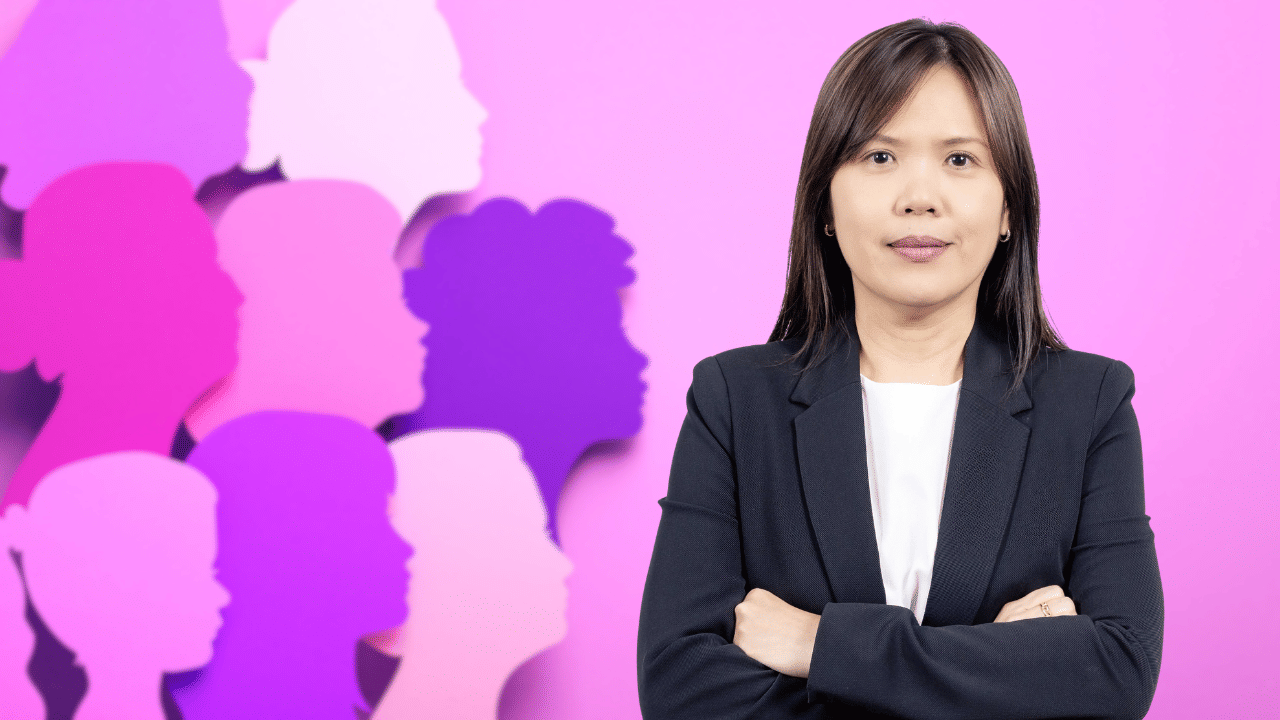
Decades of progress, yet the path to leadership for many women remains shaped by invisible barriers. From unequal access to opportunities to deeply embedded workplace norms that still expect women to prove their readiness more often than their peers.
While more organisations are investing in gender equity initiatives and supportive policies, the challenge today is not simply getting women into the workforce, but ensuring they have the environment, access, and confidence to truly lead.
This is where culture becomes decisive.
For Joanna Lee, HR Director at Lumen Technologies, the conversation around inclusion must move beyond programmes and policies to address how organisations recognise and nurture leadership potential.
On this International Women’s Day, she reflects on what it takes to build workplaces where women are not just present but empowered — from creating equitable access to emerging skills like AI, to intentionally sponsoring female talent and encouraging women to step forward even before they feel fully ready.
She shares why organisations must stop waiting for women to self-nominate, how inclusive learning ecosystems can shape future leadership pipelines, and why lasting inclusion ultimately requires a cultural shift.
Turning challenges into leadership opportunities
My career has taken me across multiple markets in the Asia Pacific region, and early on, one of the greatest challenges I faced was establishing credibility as a woman in the enterprise technology space. It’s a fast-moving industry, and leadership expectations can vary widely across cultures, which often means you’re required to demonstrate impact quickly and consistently.
Navigating these environments taught me how to adapt my leadership style without losing my voice. I grounded my approach in outcomes - using data, listening closely to our people, and showing up with consistency and intent. Over time, those challenges became opportunities to sharpen my perspective and build trust across highly diverse teams.
A good example is how we approach our biannual employee engagement survey across APAC. We don’t treat it as a feedback exercise alone, but as a commitment to action. Today, 90% of employees tell us that the feedback they share leads to visible change. That trust has helped our teams thrive, and our offices across Australia, Singapore, Hong Kong, and Japan have since been certified as a Great Place to Work.
Sustaining that momentum requires intentional investment in development and access. That’s why our APAC University also matters. This is our unified platform that ensures every employee, regardless of location, has equal visibility into learning and growth opportunities. For me, that’s how challenges turn into progress: by creating environments where people feel heard, supported, and empowered to grow.
Skills women need to lead in tech
I would distil it into three essentials: business acumen, adaptability, and the courage to take up space.
Technology moves fast, and entire roles can change within just a few years. For young women entering this industry, technical capability is only the starting point. What truly differentiates future leaders is curiosity about the business itself — understanding how commercial decisions are made, how industries evolve, and how to operate effectively amid uncertainty. Leaders are trusted not just for what they know, but for how well they connect people, strategy, and outcomes.
On women's authenticity in leadership roles, the answer is unequivocally yes. Women can remain authentic as they progress into leadership.
One of the most persistent myths is that effectiveness requires adopting a more traditionally “masculine” style. I don’t believe leadership needs to be gendered at all. Influence comes from clarity, confidence, and credibility. Strong leaders lead with empathy, listen well, collaborate thoughtfully, and make decisions grounded in insight - while having the conviction to stand behind them.
Ultimately, leadership is not about reshaping yourself to fit a predefined mould. It’s about learning to deploy your strengths with confidence and intention, rather than second-guessing them.
Earlier in my career, I stepped into a role with a scope that was only loosely defined, while expectations were evolving in real time. Instead of waiting for clarity, I focused on understanding what the business truly needed - commercially and operationally, not just from a people perspective.
By asking sharper questions, challenging assumptions when necessary, and translating people insights into business outcomes, I helped reposition HR from a support function to a strategic partner. That experience reinforced an important lesson for me: leadership often begins the moment you choose to step forward, even before you feel fully ready.
Supporting women through culture and policy
Flexible work models and government-backed policies provide an important foundation for inclusion, particularly for women balancing multiple responsibilities. At Lumen, we actively support hybrid work arrangements and offer employees up to 60 days a year to work from anywhere. When implemented thoughtfully, flexibility is not a concession - it is a performance enabler that benefits both individuals and organisations.
We also strongly support government efforts to formalise and expand access to flexible work. Across APAC, frameworks such as Singapore’s Tripartite Guidelines and Australia’s Fair Work Commission provisions play a critical role in setting expectations and raising standards. However, while policies are essential, they are not sufficient on their own to create truly inclusive workplaces.
Lasting inclusion is ultimately a cultural challenge. Organisations must ensure that inclusivity and support are embedded into everyday decisions across functions, teams, and leadership behaviours, rather than treated as standalone initiatives. This requires deliberate and sustained commitment.
One key lesson from my work is that inclusion depends on active sponsorship, not passive support. It must start at the top. Leaders need to visibly model inclusive behaviours, advocate for their teams, and use their influence to open doors. At Lumen, our leaders mentor talent, actively participate in employee resource groups, and serve as genuine champions for our people. This leadership engagement has a powerful ripple effect across the organisation.
Employee resource groups also play an important role in building community and capability. Through initiatives such as our Women Empowered ERG, we focus on developing technical skills, increasing visibility for female talent, and supporting long-term career progression.
Finally, structure matters. Inclusive intent must be matched with clear pathways for growth. Structured leadership and career mobility programmes help ensure opportunities are distributed fairly and talent is not overlooked. In our APAC region, nearly one in five employees experiences career progression each year - a reflection of both the systems in place and the culture that supports them.
In today’s environment, employers have more tools than ever to support women at work. The organisations that truly succeed will be those that move beyond policy compliance and invest in inclusive leadership, accountability, and culture every day.
Empowering women leaders for AI Readiness
One key piece of advice I have is: Organisations need to stop waiting for women to self-nominate. Research consistently shows that women are less likely to put themselves forward for roles or development programmes, unless they feel they meet every criterion. If organisations rely solely on self-selection, they risk overlooking significant talent.
A more deliberate approach is needed through structured talent reviews, targeted sponsorship, and conscious investment in developing female leaders, rather than allowing L&D resources to default to those already most visible or vocal.
At the same time, emerging skills such as AI present both a risk and an opportunity. We are at a pivotal moment where choices made today will either accelerate inclusion or reinforce existing gaps.
If AI learning is limited to technical teams, longstanding gender inequities may simply be replicated in new forms.
In APAC, we’ve taken a different approach by embedding foundational AI learning across multiple functions through APAC University and our learning platforms. The strong uptake from HR, finance, sales, and operations reflects our belief that AI readiness should be universal, not specialist, and that inclusive access to future skills is essential for building diverse leadership pipelines.
Progress and potential for women’s empowerment in Southeast Asia
Working across Singapore, Thailand, Australia, Japan, Hong Kong and South Korea has shown me how uniquely diverse the region is. Southeast Asia, in particular, has made meaningful progress.
Singapore is championing women’s workforce participation through policy levers like enhanced parental leave, and we are seeing more women step into board-level and senior leadership roles.
What gives me optimism is the generational shift that’s underway. Whether they’re men or women, younger leaders across the region have fundamentally different expectations around workplace equity. They are less tolerant of environments that don’t walk the talk on inclusion, and are more willing to speak out when they see gaps. That creates a clear business imperative for organisations to get this right.
Southeast Asian companies now have a real opportunity to help define global standards. We don’t need to mirror Western frameworks; where we can stand out is in shaping models of inclusive leadership that are culturally grounded and genuinely reflective of our markets.
From an HR leadership perspective, one of the most meaningful shifts I’ve observed is the move from viewing gender equity as a “programme” to treating it as a core people and business capability.
Today, leaders are far more engaged in questions around succession, pay equity, and flexible career pathways because they recognise the link to resilience and performance. Where the work remains most urgent is in redesigning roles, career models, and leadership expectations so they reflect how people actually live and work - particularly for women navigating mid-career and caregiving transitions. That is where HR can, and must play a decisive role in shaping sustainable progress.
Joanna Lee’s Message for Women Leaders
On this International Women’s Day, my message to women - whether established leaders or those just beginning their journey - is simple: keep investing in yourself, and don’t wait to feel fully ready before taking the next step.
The pace of change in today’s workplace means that adaptability, continuous learning, and openness to new experiences matter more than ever.
Progress rarely comes from certainty alone; it comes from the willingness to step forward, even when the path isn’t perfectly clear.
For women at the start of their careers, this means building depth in your craft, cultivating relationships across functions and geographies, and having the confidence to raise your hand. Readiness is not a prerequisite for growth - it is built through action. Each stretch opportunity expands not just your capability, but your belief in what you can do.
For those already in leadership, representation carries real weight. When we show up visibly, advocate deliberately, and bring others along with us, we reshape what leadership looks like, and what the next generation of women believes is possible. That sense of responsibility matters, and it’s one I take seriously.