









Organizations are still assessing the impact of COVID-19 on their growth plans, with HR leaders sharpening their talent strategy. One of the critical components is knowing which skills will drive the future of work and which competencies will drive successful teams. With learning strategies being a key differentiator between performing and underperforming companies, having power skills in the workplace is a core need for L&D leaders and professionals. To drive this conversation forward, Pearson conducted a survey of 180 companies across the APAC region, and studied their skilling goals and challenges, their future strategies of talent development, and their learning culture.
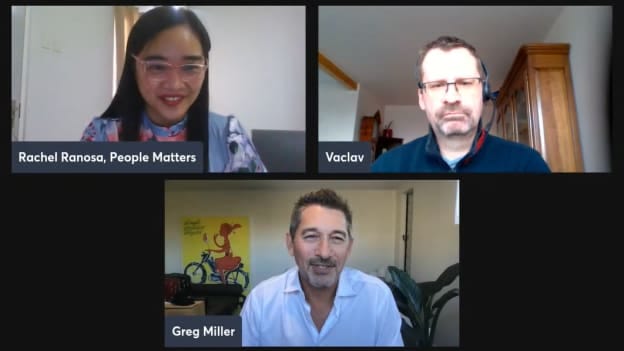
In the latest webcast hosted by People Matters and Pearson, Vaclav K., VP-Human Resources, T-Systems Malaysia and Greg Miller, SVP Pearson Workforce Skills and Faethm Cofounder had an incredibly exciting conversation discussing the findings of the survey and how organisations can go about implementing these lessons to create an impactful and sustainable learning culture.
Key Findings of the Survey:
HR and L&D leaders must begin by understanding some of the key findings with respect to skill development:
- Skill building will continue to influence the growth of organizations beyond the pandemic: Amidst digital transformation during the pandemic, the need to develop talent has become even more critical to business survival. For 49% of organizations, the crises created a demand for new skills and helped employers realize the extent of their skills gap. As a result, executive teams were seen refocusing on learning programs, and increasingly funding approvals for learning agenda.
- Investment and time spent in skilling programmes increased significantly in 2021: 51% of organizations showed more time spent on skill-building since the Covid-19 crises began, while 29% reported increase in budgets for skill-building.
- Covid-19 has increased the demand for power skills: Covid-19 accelerated the relevance of soft skills such as creativity, ingenuity, communication, collaboration, synthesis, and the ability to work across multiple disciplines. These are the ‘power skills’ that high performers exhibit and that employers are looking for in the future workforce – top three being leadership and managing others (79%), collaboration (78%), and adaptability and continuous learning (74%).
- Organizations are placing a premium on power skills: 95% of organizations believe soft skills or power skills are as important as, if not more important than hard skills. 37% of organizations have targeted a set of capabilities to build, 29% have begun discussions about the priority capabilities to build, and 20% have begun to build many, if not all of the priority capabilities.
- Effective communication in the workplace remains essential: Many of the 2022 power skills that employees are looking for are underpinned by proficiency in language, however, the report suggests a mixed approach to address this skilling area. The fact remains that 37% of organizations are not measuring proficiency in English language skills at all, and 61% of organizations do not have any strategies in place to support or upskill teams with English language training. We are seeing demand for these skills, but investment is not matching it.
- Roadblocks to skilling remain: There seems to be a lack of a clear vision for developing soft skills that align with overall business goals and lack of credible metrics for measuring the business impact of developing soft skills. Other challenges to upskilling remain difficulty among employees to allot time for participating in L&D programmes, and lack of budget and resources to support continuous skill building.
In order to deep dive into the skilling roadmap, it is important to know the Power Skills that will shape the future of people and organizations.
2022 Power Skills supported by Faethm’s future capabilities framework:
Future capabilities are the innate human attributes that no robot can replace, and digital literacies are needed to succeed in an increasingly digitized and data-driven workplace. Faethm's AI identified two categories of future capabilities and 5 sub-categories:
Human attributes:
- Core future i.e. core capabilities: These are critical to future employability - critical thinking, personal learning and mastery, and problem solving.
- Leadership: Ability to direct, inspire, and steward through change - agility, direction and purpose, judgement and decision making
- Outcome: Ability to convert individual capabilities into tangible workplace outcomes - collaboration, communication, and customer focus.
Literacies:
- Digital literacies: Ability to access information, collaborate and communicate in a digitized workplace - digital communication, participation, customer focus
- Data literacy: Ability to action insights from, analyse and interpret data - data ethics, visualization, programming
Moreover, as new norms transform the workforce and dictate changes to our workspaces, it is becoming necessary to add digital capabilities to forge new ways of working. We are seeing a shift to hybrid working environment, and HR professionals are faced with never-before questions like, “What level of remote productivity can be achieved?”, “Can remote working be 100% productive, and how can we identify how many days of office-going is needed?”, “What do workers need in a collaborative agile environment, to get the tasks done which cannot be made remote?” Power skilling is not just about implementing soft skills, but also concerns how the skilling agenda is constructed and deployed in a sustainable manner.
Cultivating and sustaining a learning culture:
Vaclav shares how they implemented the 10-80-10 Skilling Strategy related to all skills, by identifying 10% of organizational skills as those becoming obsolete, 80% skills as core future-building skills, and 10% as anticipated skills to be required in 2-3 years’ time. The idea was to identify groups of hard and soft skills, and curate a program spanning 3 months that involved around 75% of the workforce. “It was an extensive exercise and emerged successful because we could see positive reactions and improvement in CSAT scores, also direct business results such as a better ability to acquire new business in the region”, shares Vaclav.
Such a success story is possible only when CHROs are clearly aligned with business and view revenue growth as their key result area (KRA).
The only way to get the business case approved for strategic workforce planning and learning culture is to connect the learning and people strategy to the business strategy.
This has to be an ongoing exercise – implementing and innovating new technology to grow, while continuously identifying the impacted jobs, and deciding on the reskilling-upskilling pathways, to retain people and fulfil future job needs. “This method of reskilling and redeploying, training and getting talent productive is a circle of life, which is financially justifiable, as against mere firing and hiring”, says Greg. Investing in learning needs is quite more justifiable and aligned with sustainability goals, this will help create a sustainable skills strategy.
Conclusion:
Greg shares how a new role of a ‘conversation engineer’ i.e. a person who trains the AI to speak to customers, emerges due to call centres becoming redundant. This role requires a unique blend of STEM skills, creative writing, creative thinking, etc. The challenge lies in finding such a new combination of skills. Learning organizations must build new ways of thinking to source skills, “It is a very different environment, changing with times, and relook at finding, sourcing, and screening talent”, shares Greg.
To know more about the rising significance of power skills in the workplace and how to devise impactful learning strategies, click here to read People Matters and Pearson's latest report.