









For years, organisations have prepared themselves for an AI-led future by focusing on automation, productivity gains and technology adoption. But amid the race to become AI-enabled, a larger risk is beginning to surface: the gradual outsourcing of human judgement.
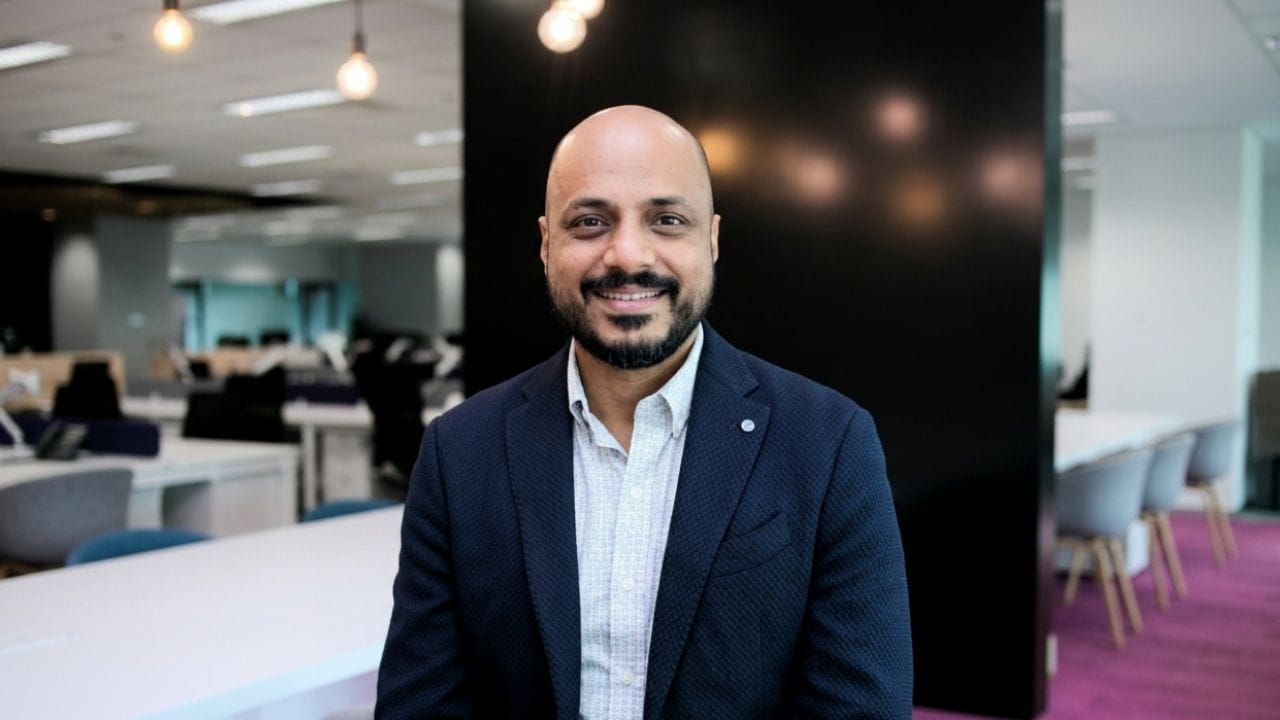
According to Venkatt Ramanan, Regional Vice President for Asia Pacific at AICPA & CIMA, AI is not creating a technology problem as much as it is creating an accountability challenge that organisations will need to address as these tools become embedded into everyday decision-making.
"We need to be not just agile, but anticipate. If finance can move to that space faster, we are the best business partners to anyone," he said.
The observation points to a larger shift underway. For years, agility has been celebrated as a defining organisational capability. But reacting quickly to disruption may no longer be sufficient. As technological, economic and demographic changes accelerate simultaneously, anticipation is becoming an equally important leadership capability.
That shift is also reshaping the role of finance.
AI is not replacing finance. It is redesigning it.
The dominant narrative around AI often revolves around job displacement.
Ramanan believes the conversation needs to be reframed. He said: "It's not AI that will displace people. It'll displace tasks. It'll displace skills."
He describes the future finance function as a reshaped pyramid. The transactional layers at the bottom, once dependent on manual effort, are expected to shrink as AI, automation and global capability centres absorb repetitive work. In their place, the strategic middle layer expands, creating greater demand for professionals who can interpret information, solve business problems, navigate uncertainty and influence decisions.
This changes how organisations need to think about talent development.
"If you recruit someone at that bottom layer who's joining the finance function, the question companies need to think about is: how do we get them to the middle layer faster?"
The discussion is therefore shifting from preserving existing roles to accelerating capability development.
The biggest career risk is standing still
Alongside organisational transformation, professionals themselves are confronting a new reality: technical expertise alone may no longer guarantee long-term relevance.
For decades, career progression was largely linear. Employees built expertise in one area and deepened it over time. AI is altering that equation.
"If you remain doing what you did five years ago and hope those are the skills you'll retire with, it's not that your value is declining—you're going to be out of the door."
The statement underscores a broader shift in professional expectations. Continuous learning is increasingly becoming a prerequisite rather than an advantage.
Ramanan believes professionals who combine technical expertise with strategic thinking, communication, business acumen and decision-making capabilities will be better positioned to create value.
"Opportunity exists for finance professionals who are not relying solely on their technical skills, but on the broader depth of how they can provide better value to the organisation."
As routine activities become increasingly automated, the nature of human contribution is also changing.
The CFO is no longer a controller. They're becoming a co-pilot.
This transformation extends to leadership roles as well.
Many organisations continue to operate with role definitions that were designed for a different business environment. Ramanan argues that these definitions need to evolve.
"If you take a CFO job description that was written five years ago and it still remains the same, that organisation has a severe problem."
Historically, CFOs were responsible for financial stewardship, expenditure management and compliance. Today, they are expected to participate more actively in business strategy, risk management, resource allocation and long-term decision-making.
AI is accelerating this transition by reducing the time spent on routine activities and increasing the emphasis on work that requires judgement and contextual understanding.
The conversation, therefore, is no longer about adding AI capabilities to existing structures but about rethinking how leadership roles create value.
The biggest innovation gap may already exist inside organisations
One of Ramanan's more compelling observations has little to do with technology itself.
It has to do with younger generations entering the workforce. Sharing about the new generation workforce, he said digital natives come with a natural familiarity with emerging technologies, evolving consumer behaviours and new expectations of work. Yet traditional hierarchies often prevent these perspectives from influencing organisational decisions.
"How many senior leaders are sitting and actually listening to what that current generation is bringing?"
For many organisations, creating greater opportunities for reverse mentoring and cross-generational collaboration may become increasingly important.
The conversation is not about one generation teaching another, but about creating environments where different perspectives can coexist and inform better decisions.
From agility to anticipation
Ramanan mapped insights from one of AICPA & CIMA's long-term initiatives exploring how the profession may evolve over the next 15 years. Through conversations with nearly 6,000 professionals across 25 countries and more than 90 future forums, three forces consistently emerged: AI, regulations and demographic shifts, he noted.
What stood out, however, was not anxiety about technological disruption. It was clarity about the direction of change.
As organisations navigate increasing complexity, technology adoption alone may not be enough. Questions around accountability, trust, judgement and capability building are becoming equally important.
The discussion around AI is therefore moving beyond efficiency gains. It is becoming a conversation about how organisations continue to preserve human judgement while integrating increasingly intelligent systems into the way work gets done.