









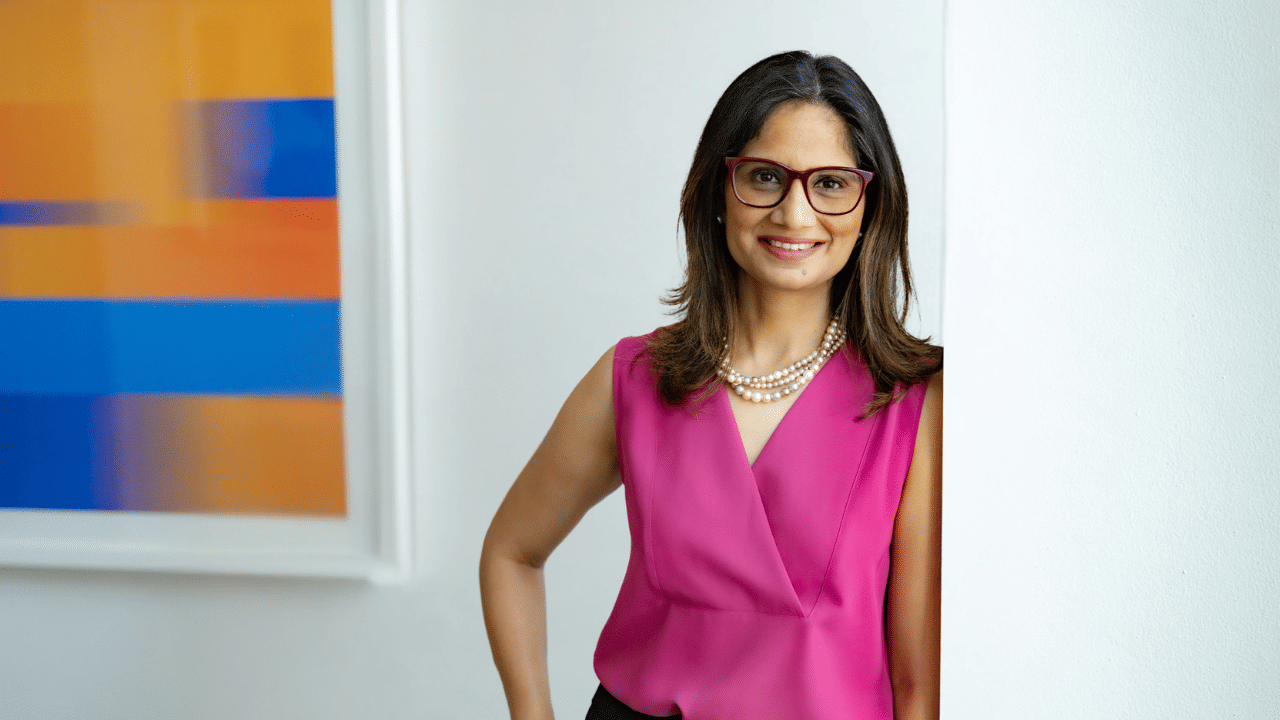
Some of the biggest gaps in leadership pipelines begin long before succession decisions are made. They emerge when women are overlooked for stretch assignments, denied sponsorship, or forced to choose between caregiving and career progression. For Ritu G. Mehrish, Global Executive Coach, Speaker and Author, understanding leadership challenges also comes from personal experience. After years of leading global teams and running businesses, she found herself grappling with disengagement as a leader, an experience that eventually inspired her first book, Leader’s Block.
Her subsequent work on Rewrite the Rules, which explores the experiences of women leaders in Asia, has further shaped her perspective on how organisations develop and retain talent.
In this exclusive interview with People Matters, Mehrish discusses why mid-career is a critical point in women’s leadership journeys, how sponsorship and male allies can help strengthen the leadership pipeline, and why organisations must look beyond the usual high-potential candidates. She also reflects on how leaders can navigate disruption driven by AI, economic uncertainty and geopolitical shifts by embracing continuous learning, self-awareness and the ability to let go of established ways of working.
Read the edited accepts from the interview:
Q. Your journey is quite unique. Looking back, what experiences shaped your thinking and influenced the decisions that ultimately redirected your leadership journey?
My years at GE shaped me as a leader. I had the opportunity to work alongside some really sharp leaders across the globe, was given considerable autonomy, and gained exposure to diverse business lines. I also started leading teams early in my career, which brought both plenty of joy and plenty of challenges.
The first experience was early on, when I didn't make the promotion list and my team went to my manager to ask why. Even after all these years, that remains one of the defining moments of my career. It taught me that the real measure of a leader isn't the title. It's whether your people will speak up for you when you're not in the room.
The second was the opposite. Years later, two members of my team asked to move out because they weren't happy working with me. I was taken aback. I genuinely didn't see it coming. I reached out to my mentor, who advised me to speak to each of them individually and ask why, but to ask with humility. I can't thank them enough for being so honest. They told me I had become disengaged and didn't seem to care about them. And there was truth in that. I had developed role fatigue, and it was showing up in how I led.
So I made a change. I re-engaged with my team through regular one-on-ones, and I spoke to my manager about new opportunities and projects that would stretch me again.
Those were my extreme highs and lows as a leader, and they shaped everything that came after. Years later, when I began thinking about my first book, Leader's Block, they were the driving force. I had hit that block myself, more than once, and I knew I wasn't the only one.
Those two moments showed me how much a leader's state of mind affects the people around them, and how rarely leaders get the support to notice it in time, or to work through it once they do.
After 15 years of leading large global teams and running businesses, I knew I wanted to be that support for others. I wanted to normalise these blocks as a natural part of every leader's journey, and help leaders navigate through them. That's what led me to this path.
Q. It has been some time since Leader’s Block was published. How relevant are its insights for leaders navigating disruption driven by AI, technology and global uncertainty? How have these changes reshaped the role of a leader?
I've been thinking about this for a while, and although the book was published in 2019, I believe its central concept is more relevant today than ever.
One of the main triggers of Leader's Block I write about is an unprepared transition, or sudden change. And that's exactly what we're seeing in abundance right now. Nobody is fully prepared for all the shifts happening at once, whether it's AI, the economy or geopolitics. That's why it's so important for leaders to recognise the symptoms early and address them proactively.
And yes, I do see these disruptions changing how leaders think about themselves and their role. The biggest shift is from being the expert to being a learner. For a long time, leaders were expected to have the answers. Today, nobody has all the answers, and the leaders who are doing well are the ones who've made peace with that. They're learning to be okay with uncertainty and to find the solution as they go along.
In the book, I share five ways to overcome a leader's block, which spell out BLOCK. Two of them feel especially important right now:
B – Big picture: Step back and zoom out. When change is coming from every direction, it's easy to get lost in the day-to-day. Leaders need to create space to see where the future is heading.
L – Let it go: Let go of old ways of doing and thinking, and embrace the new. Sometimes that means turning the usual hierarchy on its head, like a senior leader sitting down with a young leader on their team to learn about AI.
The other three, Outreach, Change and Kinship, are in the book.
None of us is fully prepared for what's coming. The leaders who can admit that, and keep learning anyway, are the ones people will want to follow.
Q. Your women-centric book, Rewrite the Rules, explores leadership and the experiences of women navigating their careers. What mindsets or qualities can help women navigate leadership roles and overcome structural barriers?
Our whole approach, and really the message of the book, is that women shouldn't have to conform to a path that wasn't set by them.
The book is built around five pillars: confidence, visibility, networking, balance and growth. But rather than prescribing how to master each one, we share stories of women leaders who have excelled in their own way, doing things that felt real to them and grounded in their own values and definitions of success. Each of them faced barriers and bias, and each addressed them in her own distinct way.
Take visibility. Fanny Huang, Vice President at DHL Supply Chain, told me how she built her visibility not by being the loudest voice in the room, but by being the most perceptive. Zalina Jamaluddin, Vice President at Hibiscus Petroleum Berhad, was told by her supervisor early in her career to "be more visible," and she had no idea what that meant. In the end, her visibility grew organically through the value she consistently delivered, and every one of her career opportunities came through her network rather than formal applications.
Two women, two very different paths, and neither followed the standard advice.
We deliberately didn't want to write a leadership playbook. There are enough of those telling women to be more assertive, speak up more, or lean in more. Our hope is to encourage women to find their own leadership style and pave their own way, on their own terms. That's why we called it Rewrite the Rules.
But women shouldn't have to do it alone. The whole ecosystem has to work, because when women lead, they're not the only ones who benefit.
And we have enough data to prove it. McKinsey estimated that advancing gender equality in Asia Pacific could add 12% to the region's GDP. Deloitte found that companies with inclusive cultures are six times more likely to be innovative. Organisations tap into a far wider talent pool, and the people around them get better leaders. It's a win-win.
Q. With ILO reporting that women still earning 18% less than men globally, in your view what gaps remain in gender pay equity? And how can organisations ensure women participate meaningfully in technological and economic transformation?
While labour market experts are best to assess the current state of gender pay equity, from my experience in developing leaders, I see that pay gaps rarely start with pay itself.
They start much earlier: who gets the stretch assignment, who gets sponsored, who gets the time to build new skills. And that's where organisations can make a real difference. It's not always about the big things. Often it's the small things.
People sometimes ask me why companies should do anything differently for women. The answer is simple: the challenges women leaders face are different. And until there's a level playing field, treating everyone the same doesn't mean treating everyone fairly.
Take stretch assignments. I've heard it in so many conversations: a manager assumes a woman with young kids won't want the big role, and quietly decides for her. It comes from a good intention, but it's an assumption nonetheless. The simplest fix? Ask her.
Then there's sponsorship. Women get a lot of mentoring on how they should behave and what they should do, but not nearly enough sponsorship. And sponsorship is the game changer. In my programmes, I always ask stakeholders to assign a sponsor to each leader.
Women returning after a career break are another untapped pool. So many want to come back but can't find the right fit. That's a huge opportunity for organisations willing to offer flexibility and hybrid options.
Q. Over the years, we have seen more women move into senior leadership and board-level roles. Yet, there are still opportunities organisations may not be fully leveraging. Where do you see the biggest untapped opportunities, and how could addressing them strengthen the leadership and succession pipeline for the future?
For me, the biggest gap is in the middle. We love celebrating women who make it to the board, and there's a lot of investment in women early in their careers. But mid-career is where we lose them. That's when caregiving is at its peak, when women start asking "is this worth it?", and when so many quietly step back. And if you lose them there, who are you going to promote later?
We heard this in the book too. Gigi Parco, one of the women we interviewed for Rewrite the Rules, had two young kids and asked her company for a temporary role so she could manage things at home without derailing her career. They said no, so she left. A year later, they came back offering her a promotion and some flexibility. But by then it was too late. If they'd offered that a year earlier, they'd have kept a future leader.
The second is male allies. Let's be honest, most decision-makers are still men, yet so many conversations about women's leadership happen only among women. Women's networks are wonderful, but things really move when men are part of it, when they make the introduction, put a woman's name forward, speak up for her in a room she's not in. And men gain from it too. Research shows men who act as allies grow personally as well.
The third is who gets picked. Most organisations pour their development budgets into the women already flagged as high-potential. But think about who usually makes those lists: the most visible, the most vocal. What about the women who are quietly delivering, year after year, and just don't put themselves forward? They often get missed. I'd love to see organisations invest more broadly and tailor development to what each woman actually needs. Some of your future leaders aren't on your list yet.
And, when organisations get this right, it's not just about more women at the top. It means their whole pipeline gets stronger, and they're not scrambling to find the right leader when a seat opens up.