









AI transformation is no longer just a technology and business agenda, it is a test of how organisations lead, develop and prepare their people for what comes next.
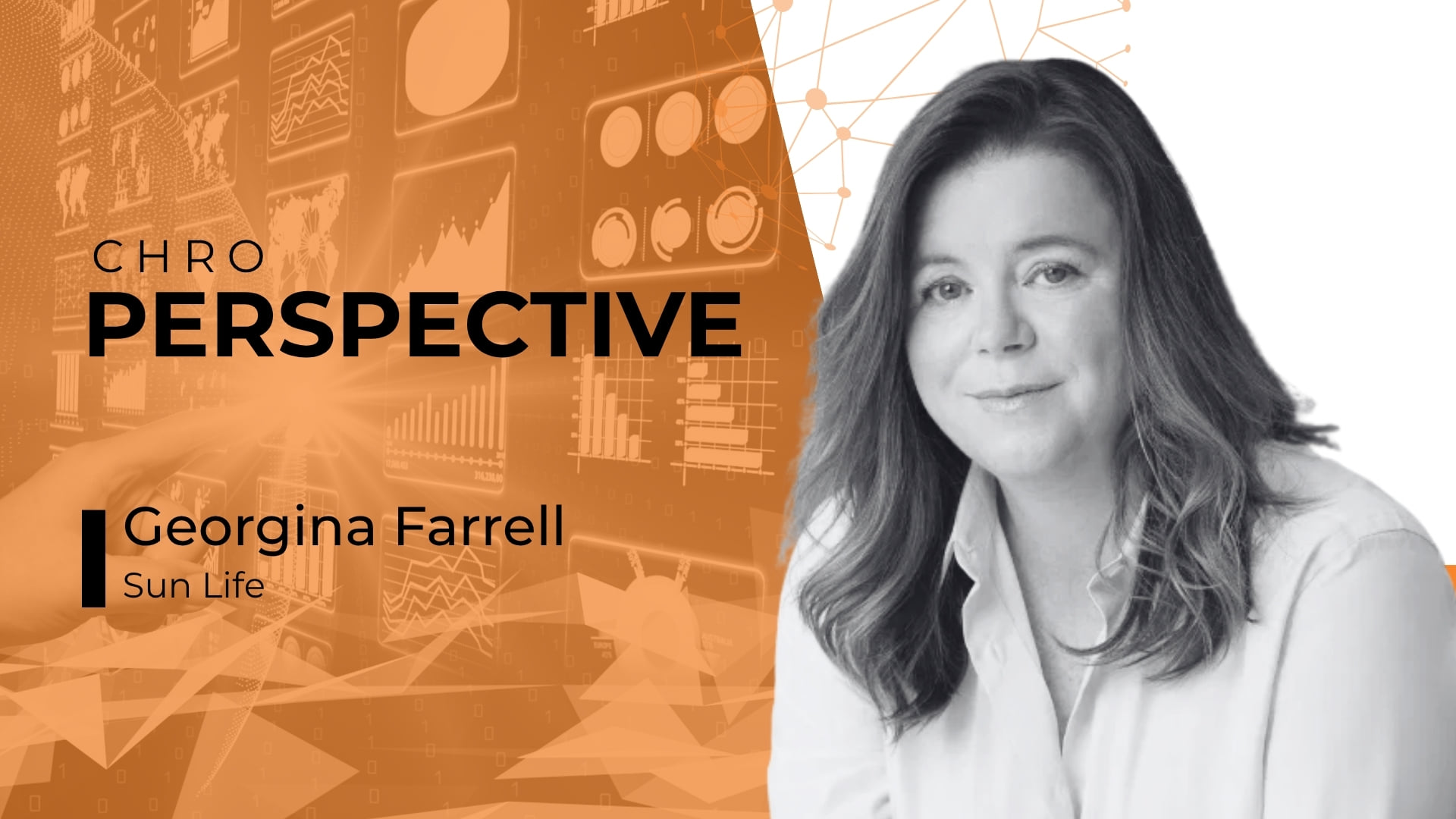
In this exclusive interview, Georgina Farrell, Chief Human Resources Officer, Asia, Sun Life, explores what it takes to build an AI-ready workforce while keeping the human element at the heart of change.
From shifting mindsets and building ‘skills for life’ to developing future leaders, strengthening trust and moving from an ‘I’ to a ‘we’ culture, Farrell shares how HR can help organisations navigate AI responsibly, create the right conditions for experimentation and learning, and ensure technology and people evolve together.
Read the edited excerpts:
What does 'workforce readiness' mean to you today, and how has that definition evolved over the years
For us, workforce readiness truly means shaping the ‘mindset’ of our workforce around transformation.
When we think about AI, we start with our purpose. Everything we do is grounded in helping clients achieve lifetime financial security and live healthier lives. From there, we focus on our people, leadership and technology, and how they come together to create value.How do we enable the technology, and where does it show up in our business? Leadership is a huge part of that.
Then there are the skills. What is the hard wiring we need to put in place to ensure the organisation is ready and has a clear plan? More importantly, all of this helps shape or refocus the mindset around what we’re here to do.
Fundamentally, we’re here for our clients. Everything we do is to ensure our client base achieves lifetime financial security and lives healthier lives. That’s what drives us. To deliver it well, there has to be trust in the relationship.
So, we need to create an environment where our people can build relationships based on trust. Given the nature of our industry, technology is about enabling human capability. It is very much a human-led change in terms of how we view the impact of transformation.
Leadership is about creating the right conditions. Our people managers play a key role in building trust, so that when they ask team members to work differently or develop new skills, they trust that they can navigate the change together and learn quickly.
As technology becomes more capable, distinctly human strengths such as judgement, critical thinking and curiosity become more important, not less. Curiosity helps us explore what is possible, while judgement helps us determine what is right for our clients and our business. These capabilities are built on a foundation of trust between the organisation, leaders and employees.
When we reflect on the whole picture, we see AI as an opportunity to create further value for our clients, while ensuring it remains closely aligned with our people-proposition and the purpose of our business.
Which human capabilities will become most critical in the future workplace, and how can organisations actively develop them?
It starts with our leadership team and their role in not just anticipating and managing AI-led shifts, but also enabling the next generation of leaders. Equipping them with the right skills allows them to create the conditions for change and prepare our people for the future.
They are instrumental to us. For example, over the last six to eight months, we’ve focused on building a leadership toolkit that allows us to continuously add new skills. More recently, it has been about building high performance aligned with our purpose, which is very much centred on care, while being clear about the skills leaders need to set expectations and provide effective feedback.
It’s about balancing performance and potential, particularly in an AI-transformed world. This helps our leaders and line managers understand where their people are, not just in terms of their skill sets, but also their challenges. It helps us identify different ways of working while understanding the core aspects of their roles.
This approach creates a conversation where change becomes co-created. From there, we can define the conditions for change and equip line managers with the skills to enable it.
Lastly, a big part of this is being comfortable with the fact that change is a continuum. It’s simply part of what we do now, without a beginning or end. It’s a continuous cycle of relearning and building that change-muscle.
What does a ‘skills-based approach to talent’ shift look like in practice, and how is it changing the way you identify, develop and deploy talent?
It’s about being crystal clear not just on the technical expertise required for a role, but also on the transferable skills. Otherwise, we risk developing people for jobs that exist today, when those roles will inevitably evolve with AI adoption.
Therefore, we focus on building 'Skills for Life' by developing capabilities such as judgement, decision-making, adaptability, critical thinking and, importantly, curiosity. As AI continues to evolve, curiosity becomes more valuable.
The people who thrive won't necessarily be those who know the most about today's technology, but those who continue asking better questions, experimenting with new ideas and learning as technology evolves.
At the same time, we need to provide the initiatives and solutions to support this development, while reminding people that they don’t have to wait for a workshop or a leader’s nudge to build these skills. Much of this can happen through self-learning.
And especially with cultural nuances. Because with deep technical expertise, sometimes we end up with an ‘I’ culture. But fundamentally, from an AI perspective, we believe we’re shifting from an ‘I’ culture to a ‘we’ culture.
As we develop technical capabilities, team development becomes increasingly important. It’s not just about knowing my own job but also the need to understand the roles of others in the room. That creates a more connected flow of capability and talent.
More importantly, when it comes to decision-making, critical thinking and judgement, there’s real power in the collective rather than relying solely on individual expertise. So, a big focus for us in the coming years will be strengthening teams and building that sense of a ‘we’ culture as we further adopt AI.
What capabilities do leaders need to translate AI strategy into business outcomes while also bringing their people along through the change?
The experience of change is a leadership choice. Leaders may not always control the pace or scale of change, but they shape how people experience it through the clarity they provide, the trust they build and the conditions they create for learning.
A huge part of the change agenda today is about transparency and trust. There are a few things we’ve really focused on in recent months, starting with clarity around expectations. What are the guardrails? What does governance look like around how we use AI? And how do we make sure we stay within the framework the organisation has set?
Then it’s about learning within that framework – how do we adopt new ways of working and build our skills? But the two things that remain constant are clarity around expectations and trust.
From a line manager-to-team or individual perspective, we need to be really clear on the starting point.
During experimentation, we may not be fully clear on what good looks like. But one thing is clear – we’re going to learn new things along the way.
With that continuous conversation and trust, and knowing that it’s a human-led approach with our purpose at the centre of everything we do, the dialogue becomes really important. How is this working? Is it working well? Are we aligned with expectations? What have we learned?
Essentially, the power is in having clarity around the starting line, how leaders expect us to show up, and how they’re going to give us feedback throughout that process.
What risks do companies face if they move ahead with technology adoption without making an equal investment in workforce and talent readiness?
The biggest risk of not investing in people alongside AI is losing the advantage and differentiation of a human-led approach. We operate in an industry built on trust, and that trust is strengthened through human relationships with our clients.
By leaving people behind, you risk losing judgement, decision-making and even empathy. Given the range of scenarios we deal with, empathy is critical to achieving the right outcomes for our clients. Technology cannot necessarily deliver that empathy in the same way a human-led approach can.
Secondly, for responsible AI adoption and people-readiness, a leader’s role is to create the conditions for change to succeed.
Those conditions are underpinned by clarity around expectations, a safe environment where people can learn quickly, and a continuous conversation where they can share feedback and co-create solutions.
Keeping that alive, alongside skills development, is a huge part of readiness. If you turn to technology as the solution before paying attention to the human aspect, you risk one getting ahead of the other. In reality, it’s a partnership – technology is an extension of the brain. You really want the two to go hand in hand.
One piece of advice for HR leaders preparing their workforce for this future
In my view, HR is here as a business partner and is becoming an integral part of our leadership board. Therefore, understanding the needs of the business and our clients is just as important as putting the right people-solutions on the table and working on them together.
That means understanding the fundamentals of business operations, the challenges leaders face as they navigate both current and future shifts, and, importantly, building trust in those relationships.
In today’s environment, knowledge is fully attainable. But how you translate that knowledge into real-world scenarios matters most. Alongside this, the partnership HR has with the business becomes essential.
HR leaders, therefore, should closely partner with business leaders and try to walk in their shoes to understand their concerns, challenges and priorities, whether related to people or technology.
Nine times out of 10, it comes back to the talent agenda: How are we creating the conditions for change? How are we ensuring our people have skills for life and feel confident and trusted in what we need them to do? And how do we continue to stay true to our purpose and who we are as a business?
With that consistency, I think trust gets stronger, particularly when the environment is continuously changing.
I believe that's the best approach to AI transformation as well: staying grounded in Purpose, building trust, investing in skills for life and creating the conditions for people to learn and adapt. Technology will continue to evolve, but helping people thrive through change remains a leadership responsibility.