









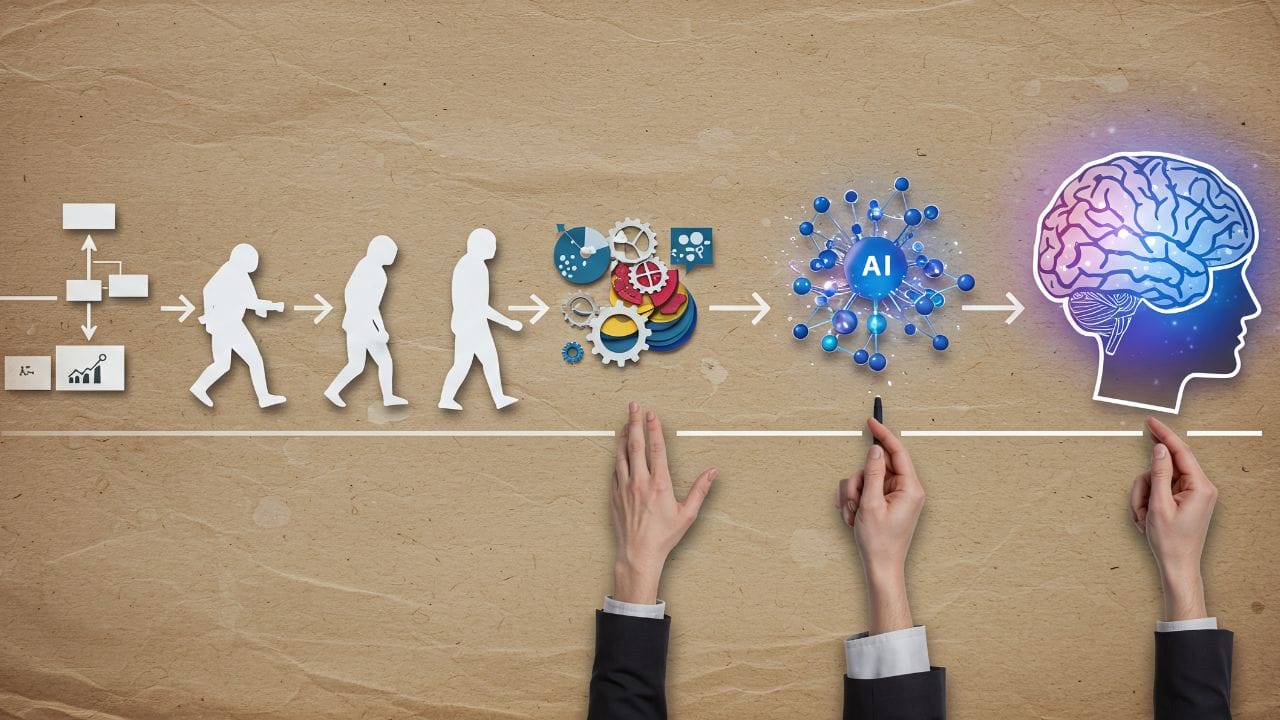
We are crossing one of the most consequential thresholds in the history of work, where leaders across Asia-Pacific and beyond will face a watershed moment. The converging currents of geopolitical uncertainty, demographic realignment, and generative intelligence are redrawing the architecture of organisations. Tariff volatility, aging populations, and the emergence of collaborative AI agents are no longer isolated phenomena, they are part of a systemic transformation that is reshaping the global operating model in real time.
In this new reality, leadership is no longer about control, it is about composition. The leaders who will define 2026 and beyond will be those who can orchestrate, not merely manage, the interplay between technology, talent, and trust. They will be the ones who understand that sustainable growth is achieved not by automating the human, but by amplifying the human edge. The future of work, therefore, is not a technological revolution, it is a human orchestration.
From adoption to orchestration
For much of the past decade, the corporate imagination has been consumed by ‘digital transformation.’ The emphasis has been on speed: how fast we can implement, automate, or scale. But as the exponential becomes everyday, a more mature question emerges: how do we make progress meaningful?
The next leap is not about adoption, it is about orchestration. To orchestrate is to design intentional synchrony between intelligence and empathy, between algorithms and ethics, between data and discernment. It is the art of creating harmony in complexity.
At People Matters TechHR Singapore 2026, we call this industrialising AI with an elevated human edge. The purpose is not to industrialise intelligence alone, but to humanise the system that wields it to make AI an ally in building dignity, creativity, and collective resilience into the fabric of work.
The leadership imperative: Leading the legacy
2026 represents a decisive shift in leadership philosophy, from operational excellence to existential stewardship. Leaders are being called upon not just to drive outcomes, but to define the ethos by which those outcomes are achieved.
To Lead the Legacy is to ensure that growth is not pursued at the expense of humanity. It is to build systems that endure because they are rooted in empathy, ethics, and intelligence, the three defining currencies of responsible leadership.
Empathy to see the invisible human experience behind every metric, every data point.
Ethics to govern progress with accountability and fairness, ensuring that automation never outruns our moral imagination.
Intelligence to anticipate, adapt, and align, turning volatility into vision and complexity into coherence.
This is not soft leadership. It is strategic stewardship, the discipline of orchestrating innovation without losing integrity.
HR at the helm: Custodians of the human edge
In this orchestration, HR is not a spectator; it is the conductor. HR leaders occupy a vantage point that is uniquely integrative, the bridge between technology and humanity, between performance and purpose. They hold the mandate to embed the human edge into every algorithmic decision, every culture-defining choice, every system of growth.
In the orchestration agenda of 2026, HR emerges as the core orchestrator of sustainable progress, connecting data with discernment, scale with sensitivity, and ambition with accountability. HR’s evolving role is not only to enable business transformation but to humanise it, ensuring that the adoption of AI becomes an act of empowerment, not erosion.
TechHR Singapore 2026 Agenda Pillars: The four edges of orchestration
At TechHR Singapore 2026, the orchestration agenda is embodied through four defining edges, each a compass point for leaders navigating the convergence of intelligence and humanity:
The New HR Operating System Edge: Reinventing HR for the AI era, building intelligent, compliant, and adaptive architectures that turn data into foresight and foresight into fairness.
The Capability Design Edge: Reframing capability as a living system, designing roles, skills, and incentives for human–AI collaboration. From Chief EQ Officers to AI Auditors, tomorrow’s organisations will thrive on blended intelligence and ethical literacy.
The Modern Human+Machine Experience Edge: Reimagining how people experience work in the age of intelligent systems, where automation amplifies imagination, and technology creates space for reflection, creativity, and connection.
The Sustainable Innovation Edge: Innovating with purpose, crafting ecosystems that balance speed with stewardship, progress with principle, and growth with grace
These four edges are not discrete; they are deeply interwoven. Together, they define the architecture of a human-centred enterprise, one that thrives not by replacing the human mind, but by expanding its potential.
Orchestration as the new leadership art
To orchestrate growth with a human edge is to recognise leadership as both a science and an art. It demands cognitive clarity and moral courage; analytical precision and emotional depth. It invites leaders to curate, collaborate, and compose to transform their organisations into living systems of intelligence and empathy.
In 2026, the leaders who endure will be those who can conduct complexity without losing compassion. They will not see technology as a force to manage, but as a movement to guide.
Their legacy will not be measured by the algorithms they adopted, but by the humanity they amplified.
Lead the Legacy
At People Matters TechHR Singapore 2026, we invite leaders to join this movement to move beyond transformation toward orchestration. Together, we will explore how to design enterprises that are as empathetic as they are efficient, as intelligent as they are intentional.
The future belongs to those who can harmonise progress with purpose. Be the Orchestrator. Lead the Legacy. Shape the Human Edge of Growth.