









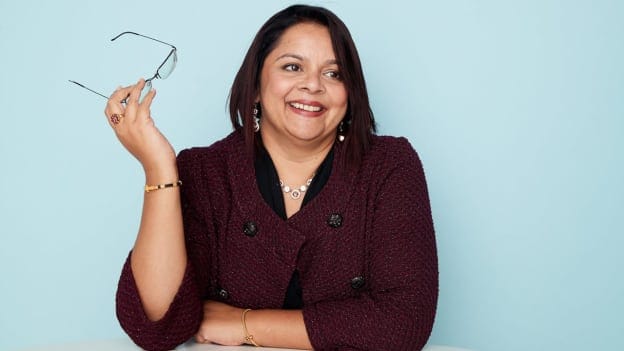
Radha Shreeniwas has over 25 years’ of experience leading human resources in globally recognized brands such as LinkedIn, Target and Thomson Reuters. She is presently serving as ServiceNow’s VP Global Talent Partner, APJ.
In an exclusive interview with People Matters, Radha discusses the key elements of a safe return to the workplace strategy, the non-negotiables as employers call employees back to the workplace and standardizing employee experience for a hybrid workplace.
Here are excerpts from the interaction.
In your opinion, what are the top three trends that will shape work, workforce and workplace in 2021?
The new normal has put in place very different operating mechanisms, rhythms and expectations within the workforce, many of which are here to stay. While the pandemic should stabilize with the availability of vaccines, things are unlikely to go back to pre-pandemic conditions and having a clear understanding of new workforce expectations is essential.
Three areas management must consider include:
- Rethinking talent value proposition to suit a new hybrid model of workforce. Everything from how we attract, compensate, retain, engage, build culture in the past was designed around physical offices and physical presence. Our current and future workforce is now expecting a hybrid and distributed model, one that is led by employee choice. We will need to revisit our talent strategy by designing to meet the new employee expectations.
- Rethinking our offline, antiquated paper-based mechanisms to more digitized workflows that provide a more seamless experience. The companies that thrived in 2020 were those that had or quickly adopted digital work practices. The efficiencies and seamless experiences of digital workflows not only continue to win favour among employees, they also act as further insurance in case of future disruptions to the workplace. ServiceNow’s Work Survey uncovered that in Singapore, 91% of executives admit they have offline workflows in key areas such as document approvals, IT, tech support requests. Additionally 60% of the executives surveyed, and 52% of employees surveyed say that their companies do not have well integrated systems to manage digital workflows.
- Employee and workplace safety. This will become more and more critical as employers start reopening their workplaces. At any given time they need to ensure their workers well-being and comfort and reassure them that the workplace is catering to their safety. In May 2020, ServiceNow launched The Safe Workplace App suite to help organisations manage this. It has been downloaded and used by hundreds of companies around the world and is updated with new features on a fortnightly basis.
As you rightly shared, a ServiceNow survey found that a startling 91% of executives say certain routine business workflows are done completely or partially offline at their companies. What is your take on this?
This is not altogether surprising, and it’s an enormous opportunity for companies to re-examine their workflows to be competitive, sustainable, scalable and agile as we continue to deal with an uncertain economic climate. As workforces become more distributed and global, we will need to revisit how we do work, so that our processes and workflows are designed with these distributed models in mind.
We will continue to see a consumerization of employee and enterprise experiences to enhance simplicity of use.
We have all been steadily relying on digital collaboration tools to support our workflows. These have gone from a nice to have to an essential, and now need to be integrated into our corporate workflows.
Are you planning any significant changes in the working model for your organization? Which direction are you headed towards - remote work, return to work or a hybrid working model?
In March 2020 we sent our entire workforce home overnight as a response to the escalating threat of the pandemic. Our entire global workforce has operated successfully and productively in a digital, distributed model. We have been opening up a handful of offices slowly around the world in places like Singapore, Australia and New Zealand, as the governments declare their countries and environments safe. However, as we have seen, we need to be agile as we are susceptible to changing regulations and safety concerns with sudden shutdowns. As we open offices we need to ensure that the right conditions for our workers exist - personal safety, hygiene, safe workplaces are a priority.
We believe that our return to work model will be designed with a hybrid workforce in mind, the work model will be influenced more by employee choice, health and safety questions, personal circumstances and event-based reasons rather than being led by an absolute requirement to come to the office in the old model.
What benefits and challenges do you foresee in implementing a ‘return to the workplace’ strategy?
A return to the workplace strategy is imperative; I don’t think companies will be very successful without thinking through all the elements that are required.
This will require careful inter-departmental coordination, communication and planning to conceptualize and implement.
Benefits:
- If designed well, we can address the diversity of our workforce and workstyles and employee choice
- Return to work strategies can keep people safe, and workplaces on the ready
- Employees and potential employees now want choices that meet their personal circumstances. If this choice is taken into account, employers can expand their aperture for talent, by tapping into great talent everywhere (provided their strategy includes a hybrid model)
- With the right strategy, companies can quickly respond to changing government regulations and environmental challenges and stay productive with their workforce
Challenges:
- Staying on top of safety and health of employees will need implementation of good tools and technology that can offer up quick action and monitoring
- Carefully examine workflows - where are the opportunities to digitize and where are the opportunities to reduce friction and improve productivity
- From an employee perspective, how do we determine who gets to come in and who gets to stay? This design has to be done with very careful consideration, keeping in mind personal circumstances and productivity
- Diversity and Inclusion – making sure that policies embrace employees who chose to operate in hybrid situations, and they are treated fairly and equitably. For instance, if a manager has a team that is present in the office and others who chose to work from home, both circumstances need to be treated with fairness in terms of opportunities provided, compensation provided etc.
In a hybrid work setup, how can employee experience be standardized for those working at home and those working from office?
- Compensation & benefits: Compensation and benefits needs to be redesigned with a hybrid experience in mind. For example, employees that chose to work from a more cost-effective place might need to be compensated in a manner that is equitable but commensurate to their location circumstances. Benefits could also look more tailored to individual experiences and needs.
- Environment: Given that office environments were set up with appropriate amenities in mind, employees who chose to work from a remote location need to feel the same degree of comfort, and productivity. It would require employers to rethink how employees who WFH can set up their workspaces for maximum comfort and experiences.
- Engagement experiences: In the past, employers would use engagement via physical spaces, and offices were used as a way to deliver corporate cultural experiences. In a hybrid model, companies need to think through how they will onboard and design employee inclusion and corporate culture adoption in an online/offline or more digitized model.
- Management training to help managers become better at inclusion of diversity of talent, styles, circumstances and choices. Employees need to have the same kind of opportunity regardless of choice to work in the office or work from elsewhere.
- Career and reward systems need to level the playing field for opportunity regardless of an employee’s choice. For instance, employees that work from home should feel that their choice does not hamper their ability to grow and develop in a company
- Ensure that work and workflows can be accommodated in a digital format so that the ability to do work isn’t hampered by this choice, say for onboarding new employees – in the past, employees would all need to enter an office and participate in activities in a conference room, in a hybrid model this experience needs to be redesigned.
While leaders have evidence of improved efficiency as a result of working from home, concerns around delays in product or service delivery persist. How can organizations tackle this concern?
Leaders need to revisit their workflows and understand where the opportunities exist. If productivity is going up and there is more efficiency to be gained by reduced commute hours etc., leaders need to reconsider where inefficiencies exist in interdepartmental hand offs, communications - if their workflows are automated and AI can be used to bring resolution quickly through various stages of product and service delivery.
What is your advice for organizations prepping for a return to the workplace? What non-negotiables should they account for?
Non-negotiables are employee safety, workplace readiness. Even with a vaccine, it could take years before the vaccine is distributed to everyone, especially in large countries with spread out populations. The situation will continue to be fluid. Employers have an obligation and employees an expectation around safety and well-being. This means, having great workplaces that are routinely sanitized, health and wellness checks, PPE kits and other safety mechanisms on the ready, testing when needed and the ability to shut down quickly or open up quickly based on changing circumstances.
Key executives in the organization need to ensure that they have good knowledge of their enterprise readiness around the world, which sites are up, down, where are the challenges, which locations need supplies, where are their pockets of concern etc.
Culture will look and feel different in this new work environment so routines need to be determined based on hybrid models and not reliant solely on well branded employee workplaces.
Digital workflows will be a non-negotiable feature for global companies if they want to succeed.
What are you most looking forward to in the coming year?
It’s an exciting time to be redesigning and revisiting our workplace experiences. Some of the areas that we touched on very lightly (work from home, distributed, flexible workstyles) are now a firm reality. This kind of inflection point in our work environments hasn’t been seen in a very long time. As someone in the talent business, it will be very exciting to design to this new reality.
I’m also looking forward to the dissemination of the vaccine and hopefully a return to travel.