









For organisations across Asia Pacific, the AI conversation has moved well beyond experimentation. The real priority is no longer simply adopting new tools, but managing a workforce where digital agents increasingly handle core administrative tasks from data collection to workflow orchestration.
In 2026, the challenge is no longer about deploying standalone AI applications, but about building an “agent-ready” organisation, one where autonomous systems and human talent operate in sync.
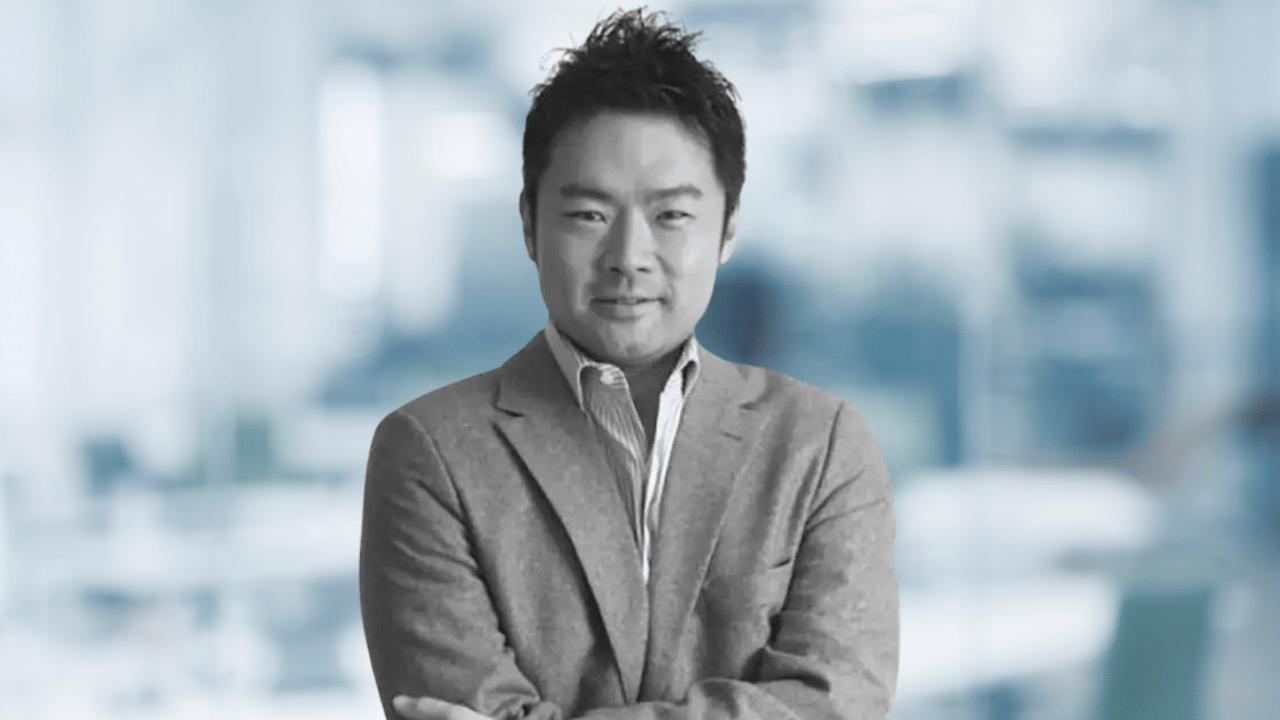
In this exclusive interview, Kazunori Fukuda, Managing Director of Sansan, offers a practical perspective on how leaders can bridge the gap between legacy business practices and a workforce powered by digital coworkers. From the shift away from isolated AI apps toward fully integrated systems that manage the lifecycle of a business interaction, to the growing importance of human-in-the-loop governance in Southeast Asia, Fukuda outlines the structural changes organisations must address now.
At the heart of Fukuda’s leadership philosophy is a defining belief: 2026 will be remembered as the year enterprise leaders evolved into orchestrators, harmonising machine precision with human ingenuity to build resilient, future-ready organisations.
Read Fukuda’s insights below:
Q. Why do you believe 2026 is the turning point where organisations move from experimenting with AI to redesigning work around ‘autonomous agents’?
We saw that the business world is moving past an initial AI gold rush defined by basic experimentation with off-the-shelf tools. We have reached an industry assessment point where leaders expect AI to solve complex business challenges by 2026. This shift is supported by discontinuous shifts in the accessibility of AI technology, such as costs plummeting to a fraction of their past levels.
This shift makes it a financial necessity for companies to move from simple chat tools to autonomous agents that can manage entire workflows.
We believe this marks the end of the trial phase because generic AI often fails when it faces high-stakes problems where an error is a major business liability.
The focus is now shifting from simply using AI to providing it with the right data. High-quality, company-specific data is the only way these autonomous agents can provide actual competitive value, as generic models will always provide generic results.
At Sansan, we have spent about 20 years accurately digitising and structuring proprietary business data. We started with business cards and expanded to invoices, contracts, and other business documentation. We’ve seen that once you use high-quality data as fuel for technology, you can build systems that function as reliable business infrastructure. As something of an AI-native company, the AI shift was quite natural for us and it’s part of our culture.
By May 2025, 99% of our employees, spurred by our “AI-First” annual theme, had incorporated generative AI into their daily workflows, allowing us to focus on higher-grade talent to lead this new era.
Q. What fundamentally changes when AI stops being a tool employees use and becomes a digital coworker that owns entire workflows end to end? In that context, are today’s job roles and key results areas (KRAs) already outdated?
We are moving toward a skills-based workforce where technical ability to evaluate AI output and verbalisation ability are required. The power to frame precise, context-rich instructions for the machine is the new defining workplace skill. This shift marks a fundamental move from humans executing tasks to humans judging outcomes.
When a role is defined primarily by routine knowledge-based tasks, its traditional career path is being disrupted. In this new environment, traditional, static job descriptions and KRAs are indeed becoming outdated as AI begins to handle more complex, multi-step processes.
We are seeing this transformation through the evolution of business infrastructure, where technology is moving away from being a passive repository toward becoming an active partner in day-to-day operations.
By delegating the how of manual execution to automated systems, the human digital coworker is freed to focus on the what, the strategic goals and analytical insights that drive the business forward. This represents a structural change where AI is shifting expectations of what every employee, not just technical staff, can achieve by amplifying human talent rather than erasing it.
Q. How should leaders rethink accountability when outcomes are shaped jointly by humans and autonomous AI agents?
Leaders must accept that AI is a partner in productivity, not just a replacement for labor. In this capacity, humans have to be competent and responsible managers of AI tools.
Accountability now lies in the what, the conceptual ability to define product direction and achieved outcomes, rather than the how of implementation. While AI can generate code or identify invoice discrepancies, a person must take responsibility for the final business liability and ensure the instructions given to the AI are sound.
We’ve established this focus internally at Sansan through a multi-layered governance framework that prioritises security, ethics, and legal considerations in all AI applications. By maintaining a dedicated team that assesses safety before any new tool is used, we ensure that machine precision is always anchored by human judgment.
Q. As AI agents take over data entry and operational decisions, where should human oversight remain absolutely non-negotiable?
Human judgment remains the vital anchor in any area involving ethics, high-stakes context, and deep personal connections. While modern AI can now read and structure complex documents with exceptional accuracy, technology alone cannot determine if the deeper meaning of a document is truly understood or if a resulting decision aligns with a company’s unique long-term values.
There is a subtle sense of being together and a level of creative intuition that emerges from face-to-face discussions that AI cannot replicate. This human element is what transforms a standard process into a meaningful business relationship.
Aside from this, security is also a non-negotiable priority. As AI introduces entirely new categories of risk, such as prompt injection where malicious instructions are used to manipulate a model, human-led governance is essential. We need frameworks for early detection and rapid response that are driven by people, not just algorithms, to protect the foundation of the business and maintain the trust that stakeholders place in us.
Q. Why is the AI ‘trust gap’ increasingly an HR leadership issue rather than a technology challenge, and how can governance protect integrity without compromising speed?
The real AI dividend will go to those who foster a culture where technical and business teams speak a shared language, not those who just buy the fastest tools. If employees are uncertain about what AI means for their careers, their resistance will create a trust gap that stalls progress.
Sansan has invested over 5,000 hours in structured, company-wide discussions on our purpose and values, conducted over an extended period and involving employees, management, and executive leadership to ensure our culture remains resilient.
Governance protects integrity by providing formal, responsible AI frameworks and ethical guidelines. When employees feel secure and understand the why behind the technology, they move from fear to a growth mindset, seeing AI as a force for augmentation that empowers them to do more.
Q. In Southeast Asian markets specifically, what cultural or regulatory factors make human-in-the-loop governance critical?
Asian business cultures often prioritise continuity, consensus, and incremental change over disruption at all costs. In Southeast Asia, nearly 60% of the population is under 35, and they want reassurance that technological change benefits the group, a philosophy of co-prosperity (kyōei).
In markets like Thailand, over 90% of invoices are still exchanged on paper, and handwritten signatures remain a standard. Technology must be re-engineered to respect these local customs rather than forcing a one-size-fits-all digital standard.
Governance must ensure that AI serves as a partner to these human processes, lifting skills across the region while maintaining the institutional knowledge companies depend on.
Q. You’ve spoken about ‘analog drag.’ Why are high performers increasingly frustrated by manual, outdated processes, and what does that mean for retention?
"Analog drag," the burden of paper-heavy, manual workflows, raises operational costs and makes it impossible for businesses to keep pace with rapid technological advances. High performers, especially the digitally native talent in ASEAN, want to redirect their time toward creative and strategic initiatives, not typing in invoice details or searching for paper contracts. If they are forced to spend their energy on tasks that AI could handle, their job satisfaction and market value suffer.
To retain talented people, companies must lower these systemic barriers. For instance, when Thai Takenaka used Bill One to cut invoice processing time by 60%, they saved 4,800 work hours annually, allowing their team to focus on becoming strategic business partners.
Q. Can digitizing functions like networking and accounting realistically become a strategic lever for engagement and performance, not just efficiency?
Yes, because digitisation transforms hidden, siloed information into structuralised corporate assets. When you digitise networking or accounting, you aren't just saving time, but you are creating a treasure trove of knowledge that supports faster management decisions and uncovers new sales opportunities.
This changes the organisational culture. At Nippon Express, for example, the visibility of contact data allowed leadership to monitor field activities in real time and recognized hard-working sales representatives based on objective interaction data. This transparency drives engagement because performance is measured by real results, and employees feel their work is contributing to a larger, data-driven innovation engine.
Q. You describe leaders today as ‘orchestrators.’ What new capabilities must CEOs and CHROs develop to harmonize machine precision with human ingenuity?
Leaders must evolve into cultural bridges who can harmonize different work styles, such as the Japanese focus on continuous improvement (kaizen) with the creativity and adaptability of Southeast Asian teams. CEOs and CHROs must prioritise dialogue and transparency to bridge the integration gaps that technology alone cannot solve.
They need to foster a growth mindset across the entire organisation, encouraging employees to experiment with AI while providing the governance to keep those efforts aligned with the company's purpose.
Ultimately, the role of the orchestrator is to ensure that while the machine provides precision and speed, human judgment, empathy, and clarity of expression remain the central drivers of long-term value.