









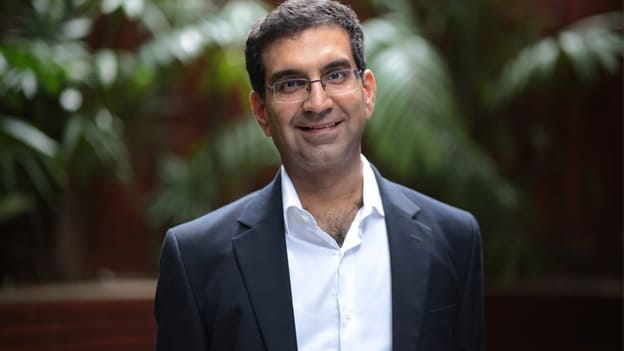
Faridun Dotiwala leads talent-management work for McKinsey in Asia. Since joining McKinsey, he has helped executives pursue operational and performance transformations. This work typically involves deep engagement with the organization, including fostering mind-set and behavior change, supporting leadership development, and helping top teams achieve greater alignment.
While directing performance-transformation initiatives, Dotiwala seeks to shape the organizational culture by changing how people work together and what performance targets they set. The goal is to help organizations be more agile—able to move quickly to seize opportunities. By improving the performance and health of leading companies, he aspires to improve the lives of all employees. He also helps drive leadership development at scale.
Here are the excerpts of the interview.
The world has changed and so has the world of work. Will the workplace we left be the same workplace we join post-COVID-19? How do you see the rise of a new workplace?
At the outset, I think it is very important that we be humble with respect to trying to foresee how all this will pan out and what will happen. The fact is there are many things – both about the pandemic itself and its implications that we simply don’t know.
That being said, I believe there could be significant changes in the world of work. This is not a new phenomenon. For the past 4 to 6 years, organizations around the world had already begun to experiment with elements of what we could call the ‘organization of the future’. This includes being more purpose driven, agile ways of working (breaking down hierarchies, moving to fluid ways of organizing), new norms and ways of decision making, working through ecosystems and putting a greater focus on talent. There was already a felt need that the way the workplace runs - which is at the highest level pretty much the same for the past 50 years - has to change.
COVID-19 will probably dramatically accelerate this on account of two things. One, the harsh economic reality that companies face as a result of this crisis will certainly force changes. Second, the response of organizations over the past few months has amazed leaders of organizations. What seemed previously impossible has been achieved (making decisions in hours instead of days, collaborating seamlessly in new ways, running parts of the organization with fewer people, working from home, less travel and so on). This has led to the shattering of many of the old paradigms organizations held opening up new possibilities
How exactly this will pan out will depend on many factors. A few paradigms have certainly changed. Some of these are, “We all need to be in the same place to be effective (or travel)”, “We need a certain level of processes and checks and balances”, “We have to meet our customers face to face”, “We need at least xx people for a certain function”. The emergence of new possibilities with the shattering of such paradigms can be immense.
Organizations across the globe are hand-in-glove with their business continuity measures to restart their organizations. How can organizations prepare their workplace and workforce for the 'new normal’ in the post-COVID-19 era?
Organizations have to grapple with a lot in these times. From the basics of keeping everyone safe, to ensuring here and now resilience and getting people back to work and finally preparing for the ‘new normal’. It is helpful for organizations to think of four steps:
- Resolve: Keep all employees safe and well informed while ensuring business continuity. This includes the basics of checking on everyone safety, ensuring there is clear communication.
- Resilience: Manage resources carefully while adopting a through-the-cycle mindset. This includes managing cash and resources on a day by day basis.
- Return: Support employees in getting back to work, productively and in good spirits. This step can be quite complex and could include how to man and run operations in shifts, manage supply chains.
- Reimagine: Rethink operating model and ways of working in the next normal. How can we start to create the organization of the future based on what matters most going forward as well as what we have learnt during the crisis?
What matters here is to realize that the “resilience”, “return” and “reimagine” are very different in nature. And getting the same people to work on all three is a mistake - as they will always be stuck in the here and now. Hence, organizations need to create three distinct teams - one for each. So, the ‘reimagine’ team does not have to worry about the day-to-day issues of returning to work.
HR seems at the forefront of many challenges as organizations plan to reopen. What are the top pain points that HR should gear up to tackle when it plans a workplace post-COVID-19?
Indeed, the role of HR is of top priority. COVID-19 is fundamentally a humanitarian challenge - at a collective and individual level. I foresee five top focus areas (or pain points) HR needs to gear up to tackle.
- Safety and well-being: It goes without saying that this is priority #1. Whereas a lot has been said about this and many governments and organizations have put a set of protocols in place, there is still a lot unknown about the way the virus acts and behaves. HR needs to be ahead of the curve on awareness (does it spread over 15 feet or 6 feet, should everyone wear a mask?) and so on. Critical is also the wellbeing of employees. In many organizations and for many people, this is a time of high stress - both economically (salary cuts, possible job losses) as well as emotional fear of safety.
- Communication: Organizations typically under communicate to a factor of 10. At times like these, engaging and communicating becomes even more important. A simple mantra is “one story, one voice, many times”. It is imperative that top management creates a clear narrative around the crisis - what are we doing, why we are doing it, what we expect people to do and what is likely to happen. HR has to ensure that this is communicated in one voice by the senior teams (everyone must say the same thing), and communicate it many times.
- Organization of the future: HR needs to take the lead on what the organization structure would look like during the return. Will it look the same or be different? Will some parts of the organization move to other parts? What structure will best serve the emerging strategy?
- Role clarity: If the world outside has changed, what people do in organizations must change too. When the return happens, people will assume their role is exactly the same as before. This is not true. HR needs to clarify to each person how their role has changed.
- Re-orient and reskill talent: Many parts of the organization could become redundant, and talent will then need to be re-oriented towards new areas. Over time, in some cases, substantial reskilling may be needed.
The COVID-19 crisis is an opportunity to reposition the organization for the future, as experts say. Isn’t this the right time to leverage digital technologies, automation, and AI for organizations to move to the next level of work?
Yes. This is an opportunity to reposition towards the organization of the future. Whereas digital, automation and AI will play an important role, they are not the only elements that will make a difference. This is a chance for leaders to fundamentally rethink what organizations should look like. In addition to automation, three other trends are worth mentioning. These are increased connectivity, lower transaction costs and changed societal expectations. All these together demand an organization of the future.
Fundamentally, we need to think of organizations of the future on three dimensions:
- Identity: How do we redefine ourselves in this crisis (purpose, culture, strategy)?
- Agility: How do we work in more agile ways (structure, decisions, talent and the technology to support)?
- Scalability: How do we setup for rapid scale (data platforms, ecosystems, people)?
How can organizations scale the productivity that can come with new ways of working, specifically the new combination of virtual and onsite work?
New ways of working over the past few months have opened the eyes of organizations as to what is possible. As in any crisis, the inefficiencies have bubbled up to the top and become visible. A common refrain from CEOs around the world is, “We never imagined we could respond in this manner” and “We now know we can never go back to our old ways of working”.
First organizations need to “collect” or put together all the new ways of working that have come about. These include combination of virtual and onsite work, making decisions faster, dealing with customers virtually and getting by with many less people. Some organizations are running “hackathons” to surface and prioritize these. Once that is done, there are two things that need to happen. One, of course, is to institutionalize some of the high value actions already taken and make them a way of life. Of more value is to reflect as to what old beliefs and paradigms are now broken. If we adopt a new set of paradigms, we can see immense new possibilities. And that allows organizations to truly reimagine the future.