









April 29th, two days before the International Workers Day, the International Labour Organization published their latest assessment, where it was said that 68% of the global workforce were impacted by partial or complete lockdown measures related to the COVID19 pandemic. We do not need any ILO statement to recognize the enormous impact of this crisis on society and people’s life, especially for those more unprotected in the informal and gig economy. And there is a great consensus that this impact is not only short term, but a long term one.
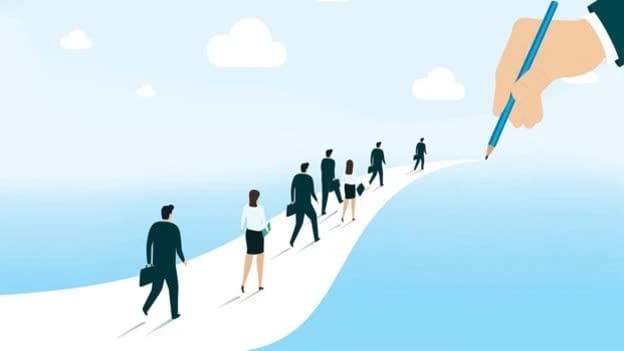
In this situation, business leaders should do three things at once: 1) manage properly the – so called - return to work, 2) understand and leverage the activity put into practice during the crisis, and 3) with all the fluid information available, redefine their strategy and way forward. Organizations have experienced and learned an amazing number of things in the last months. In a way, COVID situation was (and is) an unexpected catalyst for the so called “future of work” in multiple ways… and organizations should learn from this and capitalize on all that they have experienced. Just preparing the return to work properly and safely is not enough to succeed in the ‘new normal’.
First thing first
In the above ILO assessment, they also estimate that in the second quarter of 2020, around 10% of working hours are expected to be lost compared to the fourth quarter of 2019 (last quarter prior to the pandemic). This is equivalent to 305 million full-time jobs. The effect of this crisis is transnational and transversal: immediate and urgent action is needed to protect jobs in parallel to keeping health safety to the highest levels. For this it is crucial to maintain links between employers and employees, keep large and small employers afloat and provide ways for income support and other safety nets directly to workers and households of the less favoured.
In other words, we need to be sure about the present in order to think about the future: managing properly the – so called - return to work should be the first priority.
Companies and in particular the HR Service Industry and in particular staffing organizations should play an important role in this urgency, together with the rest of the stakeholders who influence the job market. Among others, there are three areas that would set a right foundation for a successful exit from this situation:
- Focus on re-employment: Active support to both at-risk and unemployed workers will be critical for businesses and governments. Staffing organizations can play a pivotal role in providing support in the short-term to rapidly redeploy workers from low-demand roles to high-demand roles across companies and industries.
- The importance of upskilling and reskilling: It is critical that employers understand the importance of retraining workers and that governments support upskilling and reskilling directly or via fiscal stimulus to best prepare workers for the post-pandemic economy.
- Do everything under the umbrella of dialog and collaboration: The joint efforts between employers, governments and workers both nationally and globally will be critical to the recovery. Initiatives in this direction are fundamental in creating the right momentum, while keeping everyone included, laying the foundations of a more resilient labour market ahead.
Understand what happened
As organizations are dealing with the unprecedented crisis that COVID19 has created, managers and teams have creatively found ways to maintain business fundamentals and revenue streams while dealing with the health priorities of the moment. We were doing things that in January would be considered ‘impossible’. And I am not talking only about sending complete organizations of hundreds or thousands people to WFH without a prepared plan in just days. Many organizations did this and at the same time were speeding up projects with projected duration of years in just months, were empowering team members to take decisions, were flattening structures, were engaging teams and gathering feedback as never before…
It would take time to understand everything that happened and most importantly, how the things happened in that way. As said before, if you want to utilize this crisis and get catapulted into the array of possibilities available for the future, it is not enough to just prepare for a safe return to work. We need to understand all the changes and adaptations that happened in this very short time and have the capability (at the same time) to chart a new path forward including all these new learnings. Only by keeping this in mind, we would be able to lay the foundations for the “future of work” for our business.
These learnings would be of course different for each organization. We found some common areas that majority of our clients did experience:
- From Work From Home to Flexible WorkOur definition of the word “office” and “workday” has changed a lot since the beginning of the year for the ones able to WFH. It has gone from our desk in the office to kitchen tables and couches, from 9-to-5 to a highly fluid and flexible continuum – especially for parents – where “workday” has become whatever slot you can fit in.
Many organizations embarked into a massive experiment of sending its complete teams into WFH (when it was possible), in majority of the cases without a security net of any advanced planning…. And considering the conditions, the results for the majority don’t look too bad:- The classic fear of some managers that this flexibility will lead to reduced productivity has been proven (in general) wrong. A recent study1 says that working from home during the COVID-19 pandemic has had a positive effect on workers’ productivity, according to 54% of respondents. The reasons for this, they said, were time saved from commuting (71%), fewer distractions from co-workers (61%) and fewer meetings (39%).
- Another research says that 48% of employees will likely work remotely at least part of the time after COVID-19 versus 30% before the pandemic.
- Managers need to understand the results of their experiences in WFH, both benefits and potentials risks, improving their capabilities in managing their newly remote employees the best way possible. COVID has proven WFH can potentially work, we need to find the right “Flexible Work” balance for our organization.
- From Relation-base to Data-based metricsOne of the unwritten rules of the majority of organizations is “try always to arrive before and leave the office after your boss”, even if the majority of managers understand rationally that the hours spent in the office cannot be a metric of success.
The recent WFH period showed clearly that to manage a remote workforce (and in general, to manage better your workforce, regardless of their location) managers need measurable metrics of success for each employee and share them with the team clearly. And even more important, managers need to develop trust in their employees. Trust in your team and trust that the team will continue to do the work for which they are being compensated. Only with metrics and without this trust, it is not possible to develop a successful remote culture both during the pandemic and beyond.
- A defining moment for your Organization CultureThe exceptional situation in the last months created a defining moment to test the culture of organizations and managers. We all experienced to a certain degree an array of primary emotions, mostly fear, and naturally eyes turn into the leaders of the organization.
While some organizations have recognized the humanitarian crisis of the pandemic and prioritized the well-being of employees as people over employees as workers, others have pushed employees to work in conditions that are high risk with little support — treating them as workers first and people second. And this gives a long lasting imprint in the organization culture and values, stronger than any effort any organization might try.
It is not an easy situation and many businesses are in extreme financial stress: sometimes there are not a lot of choices. But if we consider the long term, we need to be mindful of the effects of our actions on employee experience. You might not remember your manager very well when you were 25, but surely you would remember the manager you had through the COVID crisis.
- Communication. Communication. Communication.Leaders should ensure that people feel safe, engaged, informed and useful. But actions are just the first step. It is equally important that managers communicate and connect with their teams and teams also need to trust managers in a challenging situation where they are afraid and not in the office.
There is no magic formula for this, but the most successful organizations we see amongst our clients are using two elements, transparency and authenticity:- Prior to COVID-19, organizations were already facing increased employee demands for transparency. The current situation, where employees are afraid not only about their job security but their own and their families’ health, is only making this demand stronger.
- On the other hand, authenticity in relationships, especially with the younger members of the teams (and clients), has been demonstrated to be very useful to bridge the communication gap that a WFH situation creates. The term “business casual” has taken on a new meaning, as we’ve literally seen into each other’s homes and met each other’s partners, pets, and children. What used to be “unprofessional”, now is “just another day at the office.” This has led to workplace interactions that are more authentic and relaxed.
- But transparency and authenticity are more than this. Without water coolers or lunch breaks, employees may feel as though they only hear from bosses and colleagues when something is needed. Transparency and authenticity is also shown when managers encourage more meaningful connections, not only based on to-do lists, but genuinely caring about the teams, their situation and challenges.
If you manage the situation according to appropriate values and culture and communicate your decisions proactively, the trust of your team would increase exponentially… and most probably vice versa too.
Jump into the future
The speed and depth of the changes with which this situation impacts your strategy and way forward would depend on myriad elements: your sector, size, location, investment capabilities, etc. Every manager should take the learnings from the last months and apply smartly into their vision to create their own ‘future of work’.
To create a clear plan for your organization, think strategically, conduct (and re-conduct) scenario planning—Plans B, C, and D—and be willing to adapt quickly is essential. Ladies and Gentlemen, hope is not a strategy. This is a time to make a difference. You should treat this COVID-19 crisis as a defining moment for yourself, your organization and your country. As the Japanese say, vision without action is only “a dream” while action without vision is “a nightmare”.