









Despite a strong preference for Artificial Intelligence (AI), over 90% of Singapore’s AI natives still want the option to escalate to a human agent during customer interactions, revealed a study by Zoom.
The findings, based on a survey across eight Asia Pacific (APAC) markets, reflect the expectations of a growing demographic — AI natives — defined as individuals aged 18–24, with early exposure to AI and active usage of AI technologies. In Singapore, these expectations are particularly pronounced.
This preference for human escalation is not unique to AI natives; over 75% of non-AI natives in Singapore, those aged 25–45 who did not grow up with AI, also value human support. Still, the desire is stronger among AI natives, who also express higher expectations for speed and quality in customer experience.
“Loyalty in the era of AI will depend on how well and fast organisations can evolve their technology stack to strike the right balance between AI and human connection,” said Steve Rafferty, head of EMEA and APAC, Zoom. “This is how organisations will earn trust, unlock growth and future-proof their business.”
To AI users, good CX means human support as a fallback
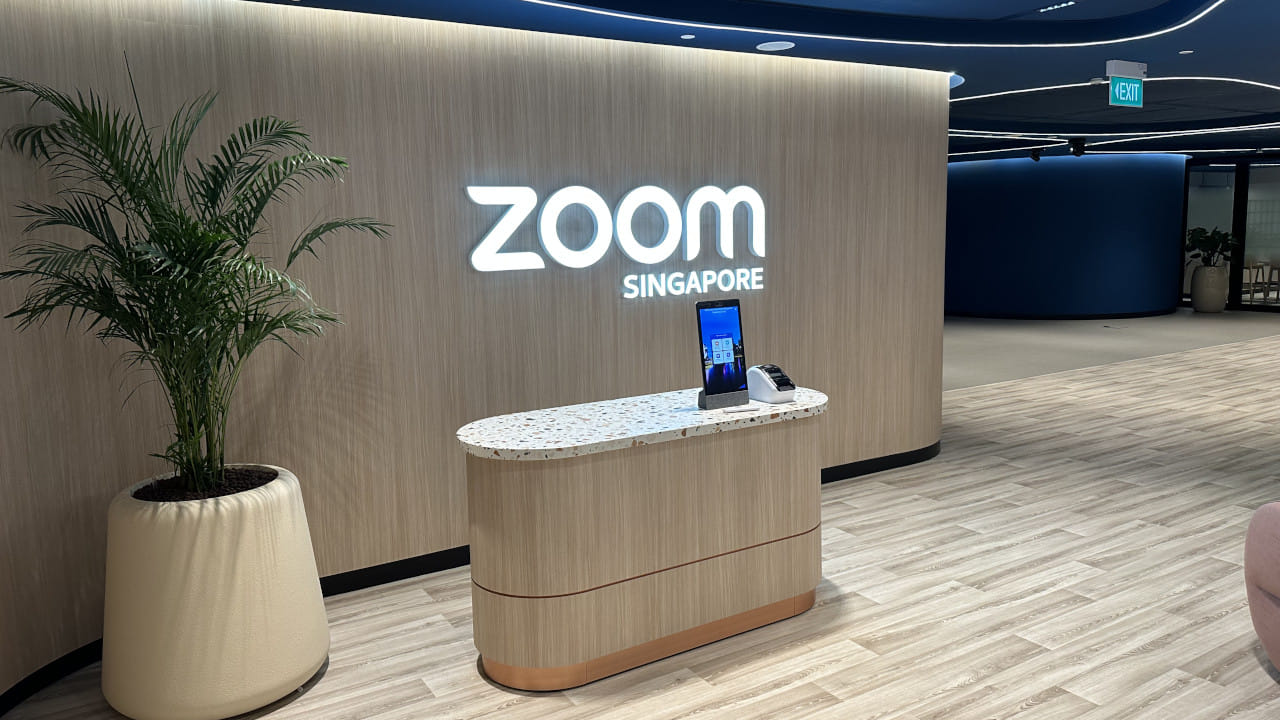
The survey, launched in tandem with the opening of Zoom's new experience hub office in Singapore (above), found that Singapore’s AI natives are significantly more demanding when it comes to customer experience (CX). They expect AI to lead, but not without the safety net of human support. About 75% believe AI should be used for faster resolutions, but also express concern when AI fails to meet their expectations.
One critical issue is consistency. AI natives in Singapore are twice as likely as the regional average (6% versus 3%) to consider switching brands if they encounter disjointed experiences, such as repeating themselves after switching from a bot to a human.
Their top complaint? Generic, copy-and-paste answers, highlighted by at least 53% as the main factor that would impact brand loyalty. For non-AI natives in Singapore, speed of response (56%) is the leading driver.
“Poorly generated responses by AI can in fact undermine brand reputation and loyalty,” said Lucas Lu, head of Asia, Zoom. “When implemented thoughtfully, AI can enhance self-service while empowering human agents to deliver a more personalised and emotionally intelligent response.”
AI at work: Integration is universal, expectations differ
In the workplace, AI adoption is nearly universal in Singapore, with only 4% of respondents saying they do not currently use AI at work. Both AI natives and non-AI natives commonly use AI for writing, editing, brainstorming, and translation.
Satisfaction with AI tools is relatively high: at least 69% of AI natives and 66% of non-AI natives in Singapore report being satisfied with the AI tools provided, though slightly lower than the regional averages (74% and 76%, respectively).
However, AI natives have higher expectations. In Singapore, over 85% of AI natives say it’s important for their employer to provide AI tools, compared to 74% of non-AI natives. This gap is wider than in other APAC countries, where both groups show similar expectations.
Singapore ranks second only to South Korea (90%) in the percentage of AI natives who say employers should provide AI access.
As far as downsides go, Singapore’s AI natives are most concerned about accuracy, at least 57% cite it as their top concern when using AI in the workplace.
Meanwhile, non-AI natives focus on data privacy and security, with 58% listing it as their primary concern.
Even among AI natives, privacy is still a close second, with 50% expressing concern, suggesting a balanced view shaped by experience and familiarity with the technology. Across the APAC region, data security ranks as the top concern overall (56%).
These insights point to the need for businesses to implement differentiated strategies when rolling out AI, addressing the precision demands of AI natives and the security concerns of non-AI natives.
Singapore leads in AI usage gap
Despite high levels of workplace adoption, not everyone is sold on AI. Among the eight countries surveyed — Australia, Hong Kong, India, Indonesia, Malaysia, Singapore, South Korea, and Taiwan — Singapore has the largest gap in AI usage between AI natives and non-AI natives.
AI natives in Singapore use an average of five AI applications, while non-AI natives use just three.
Most common tools include chatbots for customer service (68%) and voice assistants (64%), used both professionally and personally. This suggests that AI natives are entering the workforce with much deeper engagement and higher expectations, demanding more intuitive and accurate tools for both work and life.