









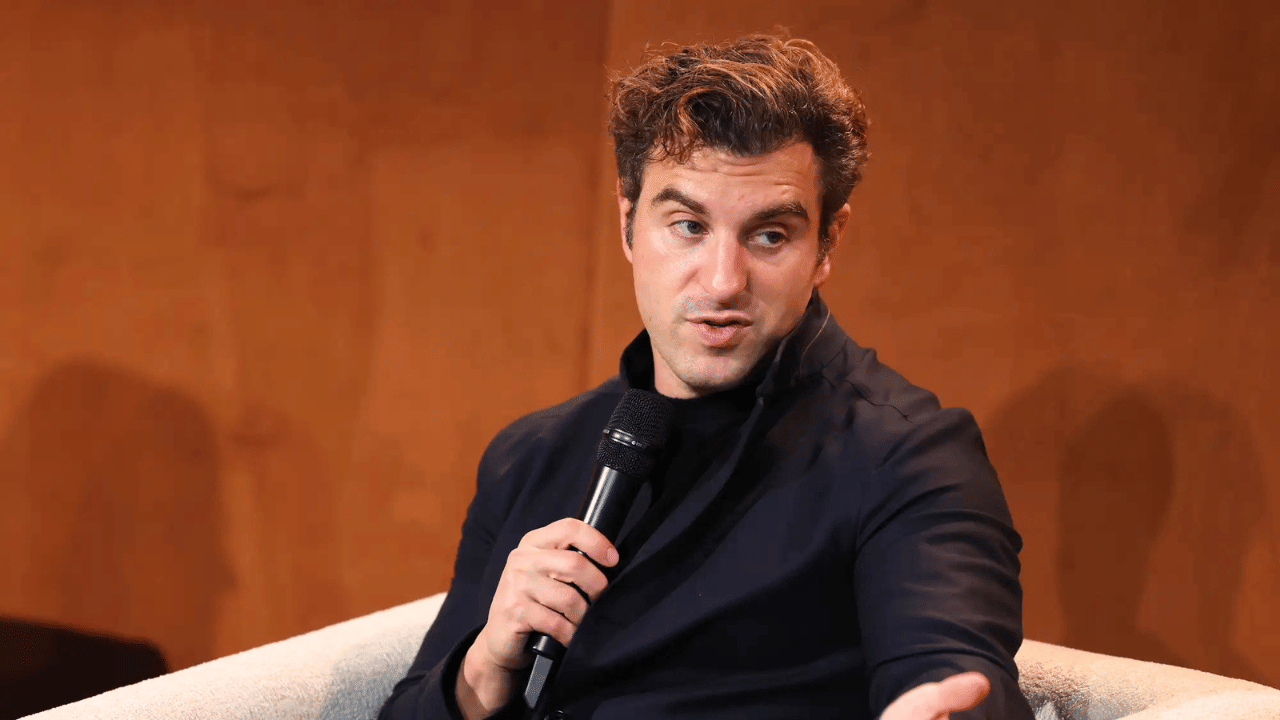
Airbnb CEO Brian Chesky has issued a stark warning about the future of work in the age of artificial intelligence, saying that “pure people managers” and employees unwilling to adapt to new technologies risk being left behind.
Speaking on the Invest Like The Best podcast and during Airbnb’s latest earnings discussions, Chesky said the rapid adoption of AI is transforming how companies operate, reshaping leadership expectations and changing the skills workers will need to remain relevant.
“The two types of people who will not make the shift to AI are pure people managers, and people that are rigid and don’t want to change and evolve,” Chesky said.
The Airbnb chief argued that traditional management roles focused solely on meetings, supervision and employee check-ins are losing value as AI tools become deeply embedded in day-to-day operations. Instead, he said future leaders will need to become “hybrid people managers” who stay directly connected to the actual work being produced.
“I don’t think people managers will have any value in the future. When I mean people managers, [I mean] people that only manage people,” Chesky said. “You can’t just be these managers where you’re people’s therapists, and you’re just doing meetings, you’re doing one-on-ones.”
According to Chesky, managers at Airbnb are already adapting to the shift. He revealed that many design and engineering leaders at the company are “going back to coding or using Claude Code,” the AI-powered coding assistant developed by Anthropic.
The comments come as Airbnb increases its reliance on AI across the business. During the company’s latest earnings call, Chesky said AI now generates nearly 60% of the code produced by Airbnb engineers, helping teams move faster and release products more quickly. “That means our teams are shipping more features and iterating more quickly,” he said.
Airbnb also reported that AI is handling more than 40% of customer support interactions, contributing to lower operational costs and improved efficiency.
Chesky’s remarks reflect a broader conversation taking place across the technology industry, where executives are increasingly urging employees to embrace AI tools rather than resist them.
NVIDIA CEO Jensen Huang has similarly warned that workers who fail to adopt AI may be overtaken by colleagues who use the technology effectively. “You’re not going to lose your job to an AI, but you’re going to lose your job to someone who uses AI,” Huang said at the 2025 Milken Institute Global Conference.
Netflix co-CEO Ted Sarandos has also argued that AI will enhance — rather than replace — creative professionals, but said workers who know how to leverage AI will have a significant advantage.
Despite concerns about disruption, Chesky presented an optimistic view of the future, saying adaptability and a “growth mindset” would be critical for long-term success in an AI-driven workplace.
“The founder-led companies and the companies that are prepared to change and transform are the companies that are going to benefit from AI,” Chesky said in an earlier CNBC interview. “And if you don’t change, you’re going to be disrupted.”