









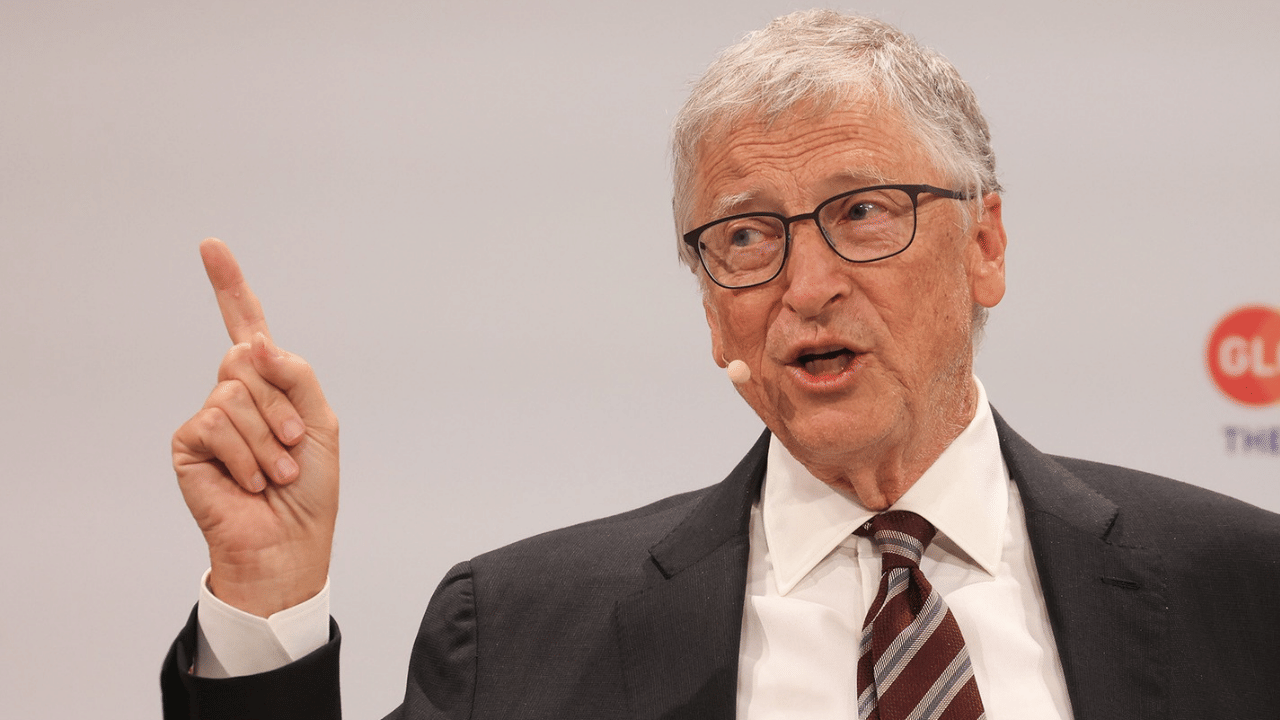
Microsoft co-founder Bill Gates has warned that artificial intelligence (AI) and advances in robotics could trigger prolonged economic and social disruption, affecting jobs across office-based professions, manufacturing, construction and other sectors, even under the most favourable circumstances.
In an interview with the Decoder podcast published in October 2026, Gates described a potentially turbulent 20-year transition as economies adapt to AI, with the technology creating winners and losers before society potentially enters an era of greater abundance.
“My big concern is this 20-year transition period, where they'll have winners and losers and a lot of disruption,” Gates said, according to Anadolu Agency. He stressed that the timeframe was an estimate rather than a firm prediction, noting that the transition could be shorter or longer depending on technological developments and decisions about how quickly AI advances.
Separately, speaking to The Observer, Gates warned that automation could extend beyond professional and administrative roles to physically demanding occupations. As AI systems and humanoid robots become more capable, employers could have greater incentives to replace human labour with machines that perform tasks at lower costs.
The warnings highlight the growing challenge for governments and employers as they seek to capture AI's productivity benefits while preparing workers for potential displacement.
AI and robotics could transform physical labour
AI's employment impact may extend beyond tasks performed on computers. Gates said advances in AI and humanoid robotics could eventually allow machines to undertake physical work currently carried out by humans, including building homes, growing food and performing surgery.
Such developments could increase productivity and reduce shortages of goods and services. However, they could also reshape occupations across industries, particularly if businesses find that automation offers a more cost-effective alternative to employing people.
The extent of disruption will depend on how quickly the technology develops and how reliably and affordably it can operate in real-world environments. Widespread replacement of human workers is not inevitable, particularly in occupations requiring complex judgement, adaptability and interaction with people.
Gates has also suggested that societies may deliberately reserve some activities for humans, including childcare, food preparation, arts and sports, even as machines become capable of performing a wider range of tasks.
Entry-level workers face growing uncertainty
The prospect of automation is raising concerns about employment opportunities, particularly for younger people entering the workforce.
Tasks involving routine analysis, data entry, software development and customer support are among those exposed to AI-driven changes. If employers automate responsibilities traditionally assigned to entry-level employees, young workers could find it harder to secure their first jobs and gain the experience needed to progress in their careers.
Corporate restructuring decisions have added to these concerns. Barclays, for instance, has announced plans to cut 5,000 positions, representing about 5% of its global workforce, by the end of 2026 as part of an effort to improve efficiency using AI.
However, individual restructuring announcements do not establish that AI is responsible for all planned job losses. The broader employment impact will depend on how organisations deploy the technology, whether new roles emerge and how effectively workers transition into changing occupations.
Governments urged to strengthen AI oversight
Gates has warned that governments and societies are not adequately prepared for the pace of AI development. He has called for stronger government oversight and technical safeguards against risks such as cyberattacks and biological threats, arguing that AI companies alone cannot be responsible for managing them.
In the Decoder interview, Gates also acknowledged AI's potential benefits, particularly in healthcare and agriculture. Yet he cautioned that even if the technology is managed successfully, its development could bring one of the most tumultuous periods in human history.
“I hate being the bearer of concerning news on this, but it's even worse not to tell people that this is coming. We have choices as humans to make about how we shape it,” he said.
For labour markets, the challenge extends beyond anticipating which occupations may be automated. Governments will need to consider how education systems, workforce training and social support can adapt if job displacement accelerates.
Employers, meanwhile, will face pressure to invest in reskilling and help employees develop capabilities that complement AI rather than relying solely on automation to reduce costs.
The long-term outcome remains uncertain. While AI could increase productivity and improve access to essential services, the distribution of its benefits will depend on how businesses, governments and societies manage the transition.