









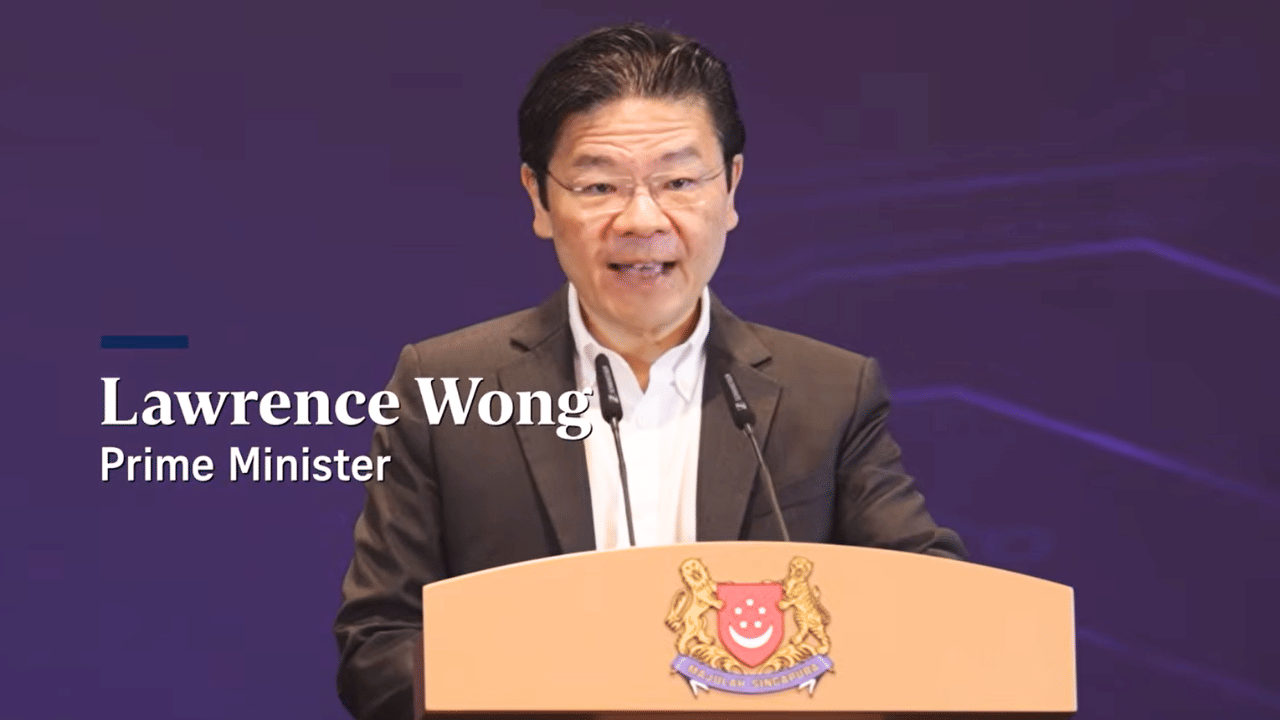
Singapore Prime Minister Lawrence Wong has urged businesses to treat workforce planning as an integral part of business transformation, warning that decisions on people and skills cannot be left to HR after operational changes have already been made.
Speaking on September 16 at the launch of the annual SkillsFuture Festival at the Lifelong Learning Institute, Wong said companies must consider how jobs will change, what new skills will be required and how existing workers can be equipped to move into new and better roles as businesses adopt new technologies, improve processes or change their business models.
“Our workers cannot be an afterthought in business transformation,” Wong said. “When a company transforms, its workers should have the chance to transform with it. So the two must go hand in hand.”
He said Singapore needs to make three shifts in its approach to skills and workforce development: connect learning more closely to jobs and careers; ensure businesses and workers transform together; and make employment and skills support easier to navigate.
Workforce transformation must happen alongside business transformation
Wong said businesses already understand the need to transform to remain competitive, but the workforce dimension is often considered only after key business decisions have been made.
“That is far too late,” he said, stressing that companies should ask at the same time how roles will evolve, what skills will be needed and how existing employees can be prepared for new opportunities.
The government will therefore seek to bring business and workforce support closer together through the newly formed Skills and Workforce Development Agency (SWDA), Wong said.
“Don't just come to the Government for enterprise grants. Talk about workforce grants too,” he said, urging companies to use support for business and workforce transformation together.
The SWDA was formed earlier this year by bringing together SkillsFuture Singapore and Workforce Singapore, with the aim of linking skills more closely with jobs and careers and connecting workforce development with business transformation.
Wong said the objective of the merger was not simply to create a larger agency but to deliver better outcomes for workers and employers.
Skills training must lead to real career opportunities
The second shift is to strengthen the connection between learning, jobs and careers, Wong said. Training providers, education institutions and employers must work more closely to ensure that the skills people acquire remain relevant and valued by industry.
Courses should meet high standards, provide substantive training and build capabilities that can open pathways to better jobs, new roles or stronger career prospects, he said.
However, Wong acknowledged that employers cannot expect education institutions to prepare graduates for every specific job.
“Employers demand graduates that are job ready from day one. Maybe some of you here do. But that's not realistic frankly,” he said.
While education institutions should remain responsive to industry needs, their role is also to provide strong foundations and broader capabilities, including critical thinking and the ability to adapt and continue learning.
Employers, meanwhile, have a responsibility to invest in their workers and provide job-specific training, Wong said. A strong skills development system, supported by employers, training providers and education institutions, is needed to build on this foundation.
Training also cannot remain static, he added, as technology, business models and job roles continue to evolve. SWDA will therefore need to regularly review and refresh its course offerings in partnership with industry and training providers.
New Connect by SWDA centre brings services together
The third shift is to make Singapore's skills and employment support system easier to navigate.
Wong said workers and businesses can find the existing range of schemes, programmes and providers confusing, adding that people should not need to know which government agency runs a particular scheme before they can access support.
As part of this effort, SWDA has launched Connect by SWDA at the Lifelong Learning Institute. The new service centre will bring together learning, career guidance and employment support. Job seekers can assess their current position, understand available opportunities and receive guidance on the skills and steps needed to progress.
The centre will also support employers with advice on workforce transformation, job redesign and skills development.
Wong said smaller businesses will receive additional support, including digital tools to identify transformation opportunities, funding to offset some costs of job redesign and workforce transformation, and support from larger companies that can act as “pathfinders”.
AI will change jobs, skills and career paths
Wong also linked the new approach to the rapid development of artificial intelligence, saying AI will reshape work across Singapore's economy.
While it remains unclear whether AI will ultimately create more jobs than it displaces, he said one outcome is certain: the jobs that exist in the future will not be the same as those people perform today.
“The content of jobs will be different,” Wong said. “So jobs will change, skills will change, careers will become less linear.”
Rather than trying to stop these changes, Singapore's focus should be on ensuring workers are equipped to adapt and take advantage of emerging opportunities, he said.
Wong said workers may need to change jobs or acquire new skills as technology advances, but the country's skills system should ensure they have support through those transitions.
“It's not just more courses and more credits. It's about confidence,” he said, describing SkillsFuture as a means of giving workers confidence that they can continue to progress as technology and the economy change.
He said SWDA would build on Singapore's tripartite model by working with trade associations, chambers, professional bodies, higher education institutions, training providers, employers and unions.
The agency has already launched alliances for action focused on areas including support for senior workers, more flexible work pathways and helping fresh graduates enter the workplace.