









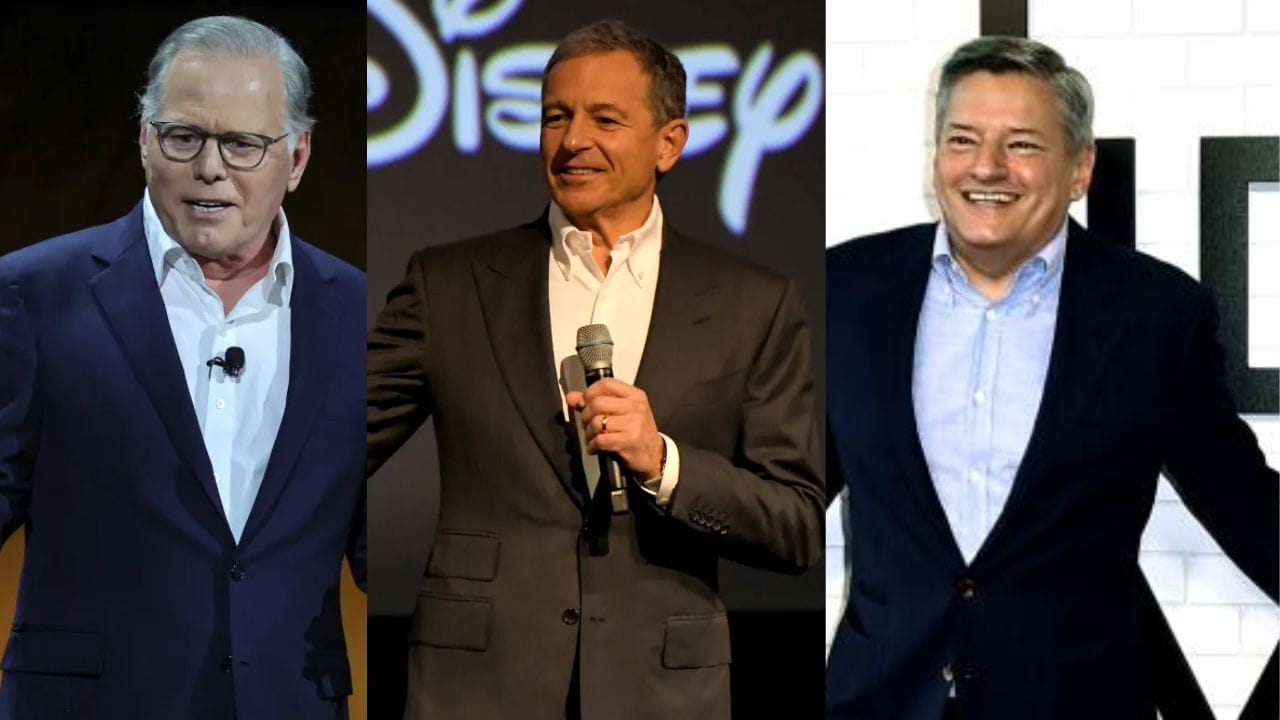
The global media industry is in the middle of one of its most significant transformations in decades, yet executive compensation remains firmly in blockbuster territory.
Recent company filings show that some of the industry's highest-profile leaders collected tens of millions of dollars in pay packages during 2025, even as their organisations grappled with declining television revenues, restructuring efforts, streaming competition and broader market disruption.
The disclosures, highlighted in reporting by The Wrap and based on company filings and proxy statements, reveal a widening contrast between industry cost pressures and the compensation awarded to senior executives overseeing the transition.
Warner Bros. Discovery chief leads compensation rankings
At the top of the pay league table was David Zaslav, Chief Executive Officer of Warner Bros. Discovery, whose compensation reached $165 million during the fiscal year.
According to company filings cited by The Wrap, the package included:
• $3 million in base salary
• $22.6 million in stock awards
• $109.6 million in option awards
• $25.7 million in cash incentives
The compensation was largely driven by equity-based awards and significantly exceeded that of peers across the media and entertainment sector.
The disclosure comes during a challenging period for Warner Bros. Discovery, which has been managing pressure on its traditional television business while investing in streaming platforms including Max and Discovery+.
The company has also faced challenges linked to the loss of NBA broadcasting rights and the impact of changing content distribution agreements.
Streaming leaders receive smaller but substantial packages
While Netflix continues to be viewed as one of the industry's strongest streaming businesses, compensation awarded to its top executives remained considerably below Zaslav's package.
According to Netflix's proxy statement, cited by The Wrap:
• Ted Sarandos, Netflix co-CEO, received $53.9 million in total compensation
• Greg Peters, Netflix co-CEO, received $53.2 million
Sarandos' package included $41.4 million in stock awards, while neither executive received stock option grants during the year.
The absence of stock options stands in contrast to compensation structures at Warner Bros. Discovery and Disney, where option awards represented a significant component of executive remuneration.
Netflix continues to expand its advertising-supported business while increasing investment in live programming and new content formats.
Disney links compensation closely to performance
At The Walt Disney Company, Chief Executive Officer Bob Iger received compensation of $45.8 million during 2025.
Although lower than the packages awarded at Warner Bros. Discovery and Netflix, Disney stated that 97 per cent of Iger's target direct annual compensation was tied to company and share-price performance.
His compensation package consisted of:
• $1 million base salary
• $21 million in stock awards
• $14 million in option awards
• $7.25 million in annual incentives
Disney described the structure as heavily weighted towards performance-based compensation.
The company reported that:
• 49 per cent was linked to performance-based units
• 32 per cent came from stock options
• 16 per cent was tied to annual incentives
• 3 per cent represented base salary
Even when stock option awards are excluded, The Wrap reported that Zaslav's compensation remained higher than rivals, reaching approximately $55.4 million, compared with $31.8 million for Iger.
Industry transformation shapes executive rewards
The compensation disclosures arrive as media companies attempt to balance profitability with long-term investment in streaming and digital businesses.
Several of the industry's largest players continue to face pressure from:
• Declining traditional television advertising revenues
• Subscriber losses in legacy pay-TV businesses
• Rising content production costs
• Intensifying streaming competition
• Investor demands for profitability and cash generation
Warner Bros. Discovery, formed through the 2022 merger of Discovery and AT&T's WarnerMedia assets, continues to manage a portfolio that includes HBO, CNN, Warner Bros. Pictures and Discovery Channel.
Meanwhile, Disney has focused on improving profitability across its streaming operations. Under Iger's leadership, the company achieved streaming profitability by 2025 and integrated Hulu into Disney+ to strengthen engagement and advertising opportunities.
The company also delivered strong theatrical results during the year. According to The Wrap, Inside Out 2 generated $1.7 billion worldwide, while Deadpool & Wolverine earned $1.3 billion globally.
Compensation debate likely to continue
The latest pay disclosures underscore how media companies are rewarding executives tasked with navigating one of the most complex transitions in the industry's history.
While boards continue to emphasise performance-linked incentives and long-term shareholder value, the scale of executive compensation remains a closely watched issue as companies restructure operations, pursue profitability targets and adapt to changing consumer behaviour.
As streaming economics, advertising markets and emerging technologies continue to reshape the entertainment business, executive pay is likely to remain a focal point for investors, employees and governance observers alike.