









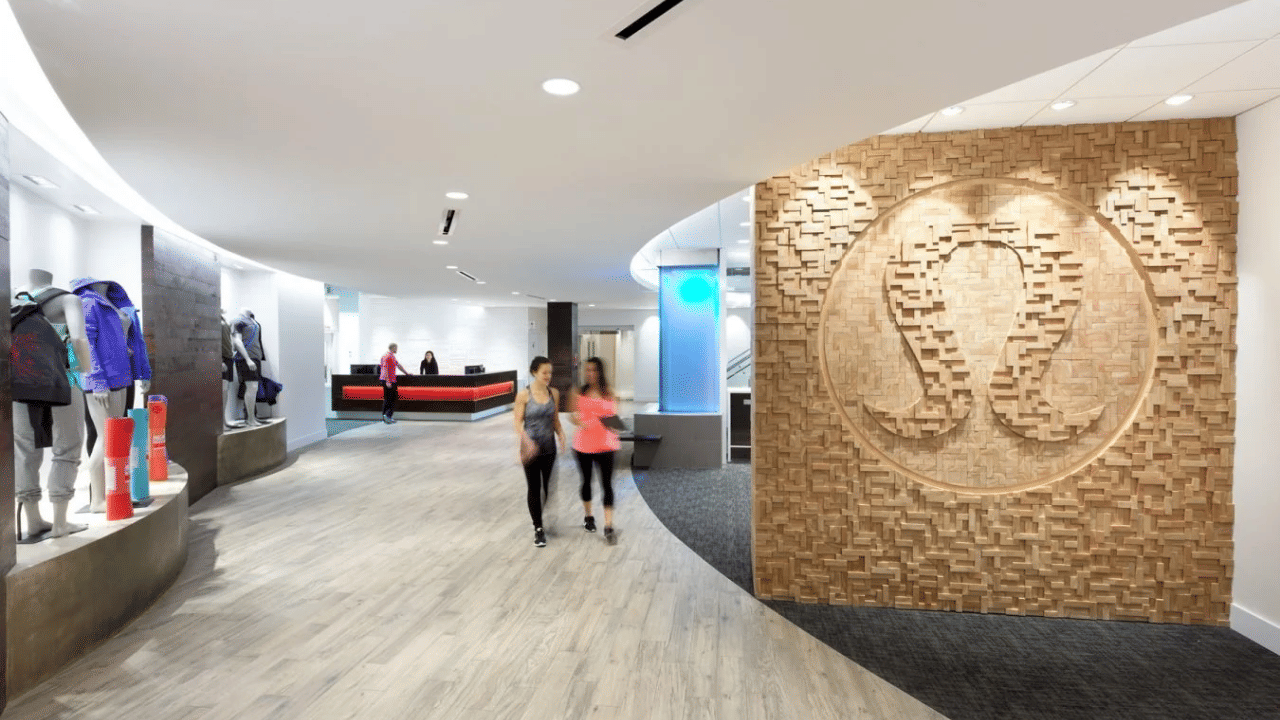
Lululemon founder Chip Wilson has drawn widespread criticism after reportedly suggesting that employers may be reluctant to hire young women because they could become pregnant and take maternity leave, raising renewed questions about gender bias in recruitment and the assumptions that continue to shape women's career prospects.
Wilson made the remarks during a session at the Axis Connects Leadership Forum in Calgary, Canada, on November 23, 2026. The event, attended by more than 700 people, predominantly women, was organised by the non-profit Axis Connects to advance women's leadership and address barriers women face in business and society.
According to attendees who spoke to The Guardian and The Globe and Mail, Wilson suggested that companies could hesitate to hire a 22-year-old woman because she might become pregnant the following year and take maternity leave. He reportedly credited birth control with making employers more willing to hire women in their early 20s, as they could delay starting families.
Wilson also reportedly suggested that some men might seek brides from Thailand because Canadian women were not having as many children as men wanted. His comments prompted audible gasps, discomfort and some audience members to disengage or leave the session, according to attendees.
The session, titled Little Black Stretchy Pants, after Wilson's memoir, was billed as a fireside chat offering insights into the entrepreneur's business philosophy. It was moderated by Nuvyn Peters, chief executive of Axis Connects, but ended 15 minutes ahead of schedule.
Peters subsequently acknowledged the criticism, describing several of Wilson's remarks as "offensive and inconsistent with the values and mission of Axis Connects".
"His comments also underscore an uncomfortable reality: attitudes and assumptions that hold women back in the workplace and in leadership have not disappeared," Peters said, adding that challenging such attitudes remained central to the organisation's work.
Wilson's spokesperson pushed back against the coverage, arguing that it overlooked his record of mentoring women who had gone on to become executives and entrepreneurs.
"This is an effort to discount Chip Wilson's record of mentoring women who have become executives and entrepreneurs in their own right to drive revenue with a clickbait headline," the spokesperson said.
Lululemon also distanced itself from the remarks. In a statement to Daily Hive, the company said Wilson's comments did not reflect its views or beliefs and noted that he had not been directly involved with the company since resigning from its board in 2015. Wilson remains one of the retailer's largest shareholders.
The controversy revives scrutiny of Wilson's earlier remarks about women's bodies. He stepped down as Lululemon's board chair in 2013 after controversy surrounding complaints that some of the company's yoga pants were see-through. At the time, Wilson suggested that some women's bodies were unsuitable for the garments.
At the Calgary forum, attendees said Wilson revisited the controversy, reportedly arguing that his earlier remarks had been misconstrued.
Beyond the backlash, Wilson's remarks highlight a persistent concern for HR leaders: the assumption that women's potential reproductive choices can make them less desirable candidates for employment.
In Alberta, where the forum took place, pregnancy discrimination is prohibited under the Alberta Human Rights Act. The Alberta Human Rights Commission identifies pregnancy-related discrimination as a form of gender discrimination, including in employment decisions such as refusing to hire someone.
Across Canada, pregnancy discrimination has been recognised as sex discrimination since the Supreme Court's 1989 ruling in Brooks v Canada Safeway.
Evidence from the UK also suggests that such assumptions continue to influence recruitment decisions. A survey by charity Young Women's Trust found that nearly one in five HR decision-makers in England and Wales admitted being reluctant to hire women they believed might start families, compared with 13 per cent who expressed the same reluctance towards men.
The financial impact of motherhood on women's careers also remains significant. A March 2026 analysis by CIBC Economics, drawing on 2021 Census data, found an average motherhood earnings penalty of 18 per cent among women with children aged up to five, compared with women without children.
Citing research from Université du Québec à Montréal, the analysis further found that women's earnings fall by 49 per cent in the year their first child is born, with a long-term earnings penalty of 34 per cent.
For HR and business leaders, the controversy underscores how assumptions about women's reproductive choices can intersect with hiring, career progression, pay and leadership opportunities, even as organisations publicly commit to gender equality and inclusive workplaces.