










About 9.9 million Filipinos, which is roughly 22% of the country’s employed population, are now engaged in some form of gig work, according to the Philippine Statistics Authority.
This growing trend reflects how more Filipinos are turning to flexible work to supplement their income and gain greater control over their time. The additional insights on this gig economy trend in the Philippines shows:
- About 9.9 million gig workers, both online and offline,
- 61% of the gig workers do it part-time to boost income from full-time jobs or small businesses.
- 47% of them value the ability to choose their own hours
- 35% of them enjoy the freedom to work from anywhere
An Ipsos study of 1,500 Filipino gig workers found that financial needs and flexibility are the top motivators. Most of the suey respondents said they take on part-time gigs to make ends meet or fund personal goals, while still keeping their primary jobs or businesses.
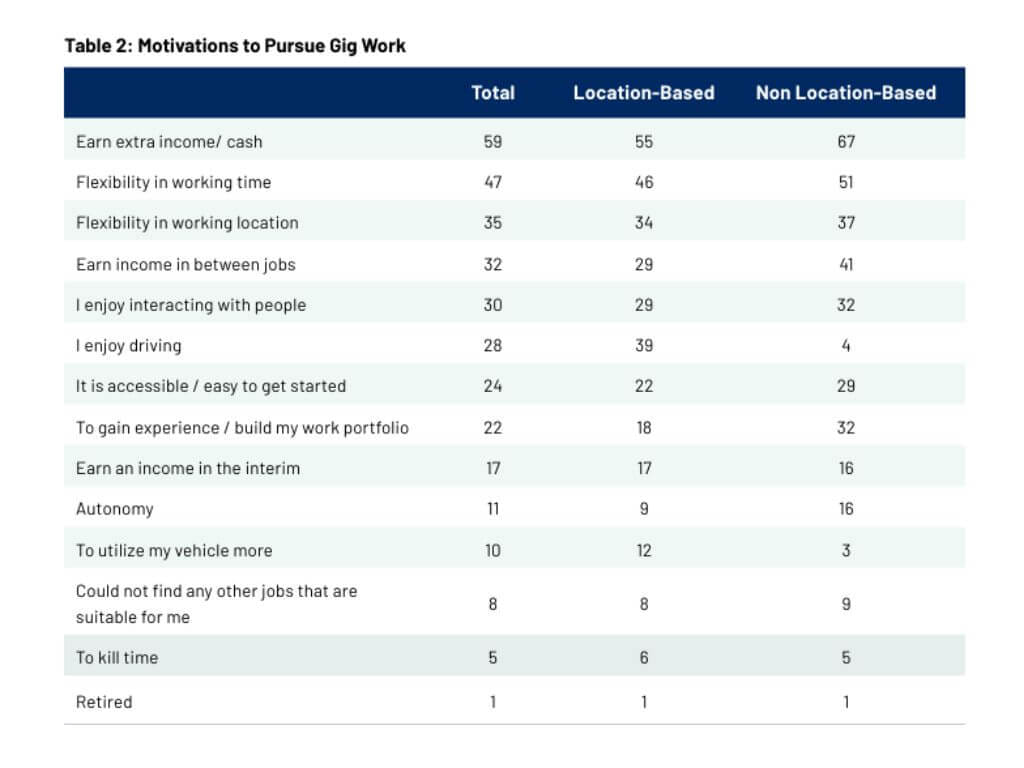
“Gig workers choose this line of work for various reasons, often driven by financial need and flexibility,” the report noted. “With 47% highlighting the ability to choose their working hours, and 35% appreciating the freedom to work from different locations.”
While 78% of gig workers say they’re satisfied with the freedom and earning potential, many also want better protection, from retirement benefits and healthcare to fairer pay structures.
“They want the flexibility to choose or opt into social benefits that suit their needs, like selecting their own healthcare plan or deciding how much to save for retirement,” the study added.
Interestingly, it found that younger Filipinos make up the bulk of the gig workforce, with those aged 25 to 34 accounting for about 37% of all gig workers.
The study also revealed some striking contrasts within the gig economy. Non-location based gig workers, those engaged in online freelancing, digital services, or content creation, tend to have higher educational qualifications, with about 56% holding a college degree or higher.
In comparison, 74% of location-based gig workers, such as ride-hailing drivers and delivery couriers, do not have a college degree.
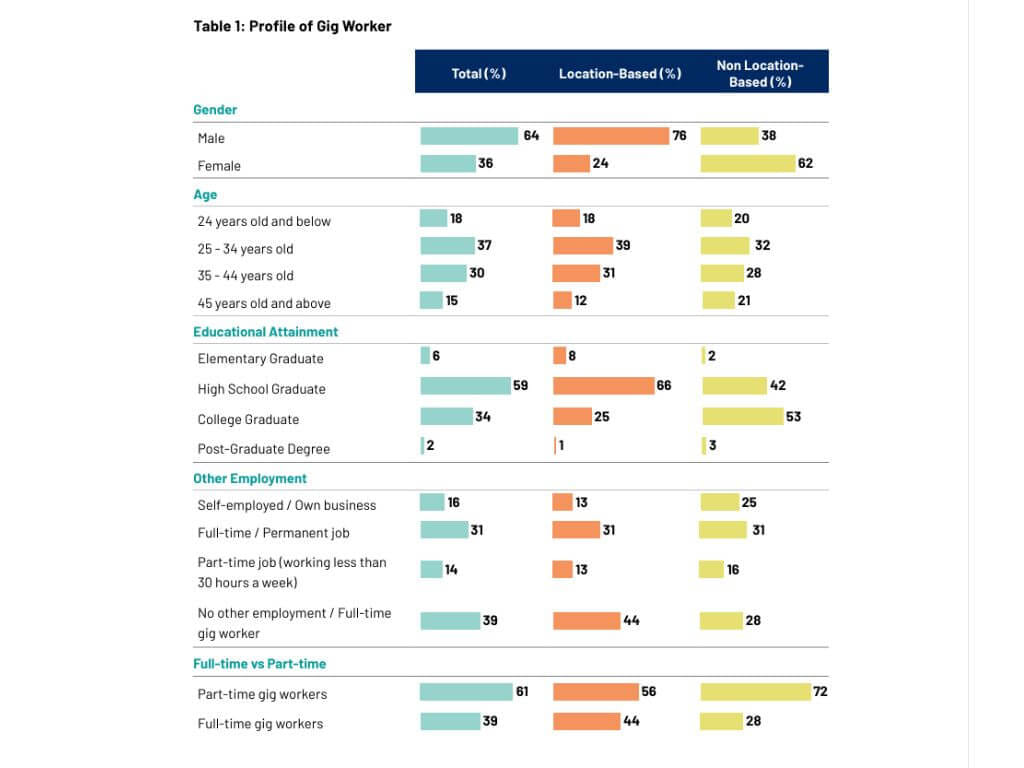
This gap underscores how online gig work often demands specialized skills, while location-based gigs remain more accessible, offering a low barrier to entry for those seeking immediate income opportunities.
Gender differences also shape participation in the sector. Non-location-based gigs attract more women, who make up 62% of workers in that category.
Meanwhile, location-based gigs, often more physically demanding, are male-dominated, with men accounting for 76% of the workforce.
These patterns highlight how education, skill requirements, and the nature of work influence both access and participation in the Philippines’ growing gig economy.
The study also outlined a few ways to make gig work more sustainable in the long run:
- Fair and transparent pay for all gig workers.
- Flexible, app-based access to social protection programs like SSS, Pag-IBIG, and healthcare.
- Upskilling opportunities to help workers grow.
- Better data systems to inform policies and protections.
The gig economy is giving millions of Filipinos more freedom, income diversity, and opportunity. But as the study warned, freedom without safety nets can lead to instability.
With the right policies in place, this growing segment could become a strong, sustainable pillar of the country’s workforce in the years ahead.