









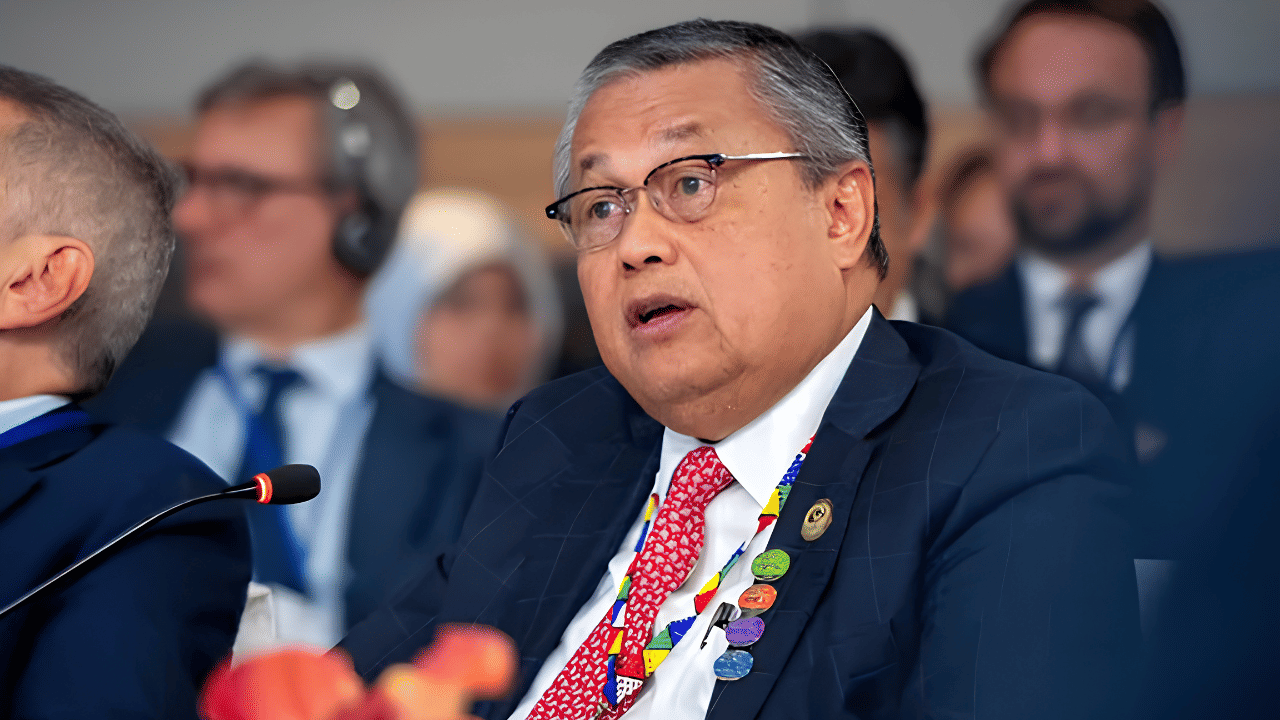
Indonesia's central bank governor, Perry Warjiyo, has resigned from his post for personal reasons in an unexpected move that has heightened concerns over the future direction and independence of the country's monetary policy.
President Prabowo Subianto accepted Warjiyo's resignation after receiving his letter over the weekend, according to State Secretary Prasetyo Hadi. Senior Deputy Governor Destry Damayanti has been appointed interim governor while the government begins the process of selecting a permanent successor.
"The President accepted Mr. Perry Warjiyo's resignation and conveyed his highest appreciation for his seven years of service," Prasetyo said during a press conference at Bank Indonesia on July 27.
Warjiyo, who first became governor in 2018 after serving as deputy governor, was reappointed for a second five-year term in 2023. During his tenure, he played a key role in steering Indonesia's monetary policy through the COVID-19 pandemic, global inflationary pressures and currency volatility.
Destry said Warjiyo had submitted his resignation on Saturday due to personal reasons and assured markets that the central bank would continue to carry out its mandate without disruption.
"Bank Indonesia will always ensure the continuity of its duties and authorities" to maintain rupiah stability and safeguard the financial system while supporting economic growth, she said.
The announcement comes at a sensitive time for Indonesia's economy. Bank Indonesia has faced growing pressure to support President Prabowo's ambitious economic growth agenda while maintaining price stability and defending the rupiah, which touched a record low against the US dollar in June.
Investor concerns have also intensified following the passage of legislation last month that expands Bank Indonesia's role in supporting economic growth while giving lawmakers greater influence over independent financial regulators, raising questions about the central bank's operational independence.
Financial markets reacted cautiously to the news. The rupiah weakened by as much as 0.36% to 18,000 against the US dollar shortly after the announcement, while Indonesia's benchmark stock index traded erratically between gains and losses.
Analysts warned that the leadership transition could weigh on investor sentiment if uncertainty over the next governor persists.
"What must now be anticipated after Perry's resignation is the weakening of Bank Indonesia's independence," said Bhima Yudhistira Adhinegara, Executive Director of the Center of Economic and Law Studies. "Restoring investor confidence will certainly not be easy, especially since the direction of monetary policy is under executive control."
Elandry Pratama, analyst and Branch Manager at Panin Sekuritas Pondok Indah, said markets would closely watch how quickly the government appoints a credible successor.
"In my view, the resignation of the BI governor could put short-term pressure on the Jakarta Composite Index because it directly affects investor confidence in monetary policy and macroeconomic stability," Elandry said.
He added that if the government communicates clearly and swiftly names a credible replacement, any market correction could remain limited to around 1% to 2%. However, prolonged uncertainty could deepen volatility and weigh on foreign capital inflows.
The banking sector sought to reassure investors following the announcement.
"We respect the decision made by the Governor of Bank Indonesia. We hope Indonesia's economy will continue to grow and remain resilient amid ongoing global and domestic dynamics," said Hera F. Haryn, Executive Vice President of Corporate Communication & Social Responsibility at Bank Central Asia (BCA).
The appointment of a new Bank Indonesia governor will require President Prabowo to nominate a candidate, who must then undergo a parliamentary fit-and-proper test before receiving legislative approval.
The leadership change comes just days after Bank Indonesia kept its benchmark interest rate unchanged while introducing new measures aimed at attracting foreign capital to support the rupiah, signalling continuity in its monetary stance even as markets prepare for a new chapter at the country's central bank.
The surprise departure adds to a series of leadership changes across Indonesia's financial sector. Earlier this year, Indonesia Stock Exchange CEO Iman Rachman resigned following sharp market volatility linked to concerns over a potential MSCI downgrade. Although both the leadership exits are unrelated, they underscore a period of heightened investor scrutiny over Indonesia's financial governance, institutional stability and market confidence.