









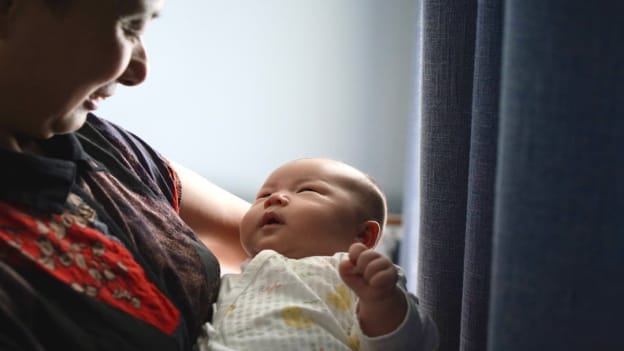
China has announced that it will start handing out annual childcare subsidies as part of Beijing's latest push to stem the country’s lagging birth rate.
The government will allocate 3,600 yuan (around $500) per child up to three years old, according to the state-owned Xinhua news agency. Partial subsidies will also be given to couples with children under three years old born before 2025.
The subsidy, will come into effect retrospectively from January 1 this year, is meant to encourage Chinese couples who are wary of the expenses associated with raising children.
Diminishing birth rates are a growing concern for China, with younger Chinese citizens hesitant to get married and raise families due to rising costs of childcare and education, job uncertainty, and a slowing economy.
Chinese population decline continued for a third consecutive year in 2024, with new births at 9.54 million last year. In comparison, an estimated 18.8 million births were recorded in 2016 when China lifted its one-child policy.
The country has previously offered tax breaks for families, while local authorities have been handing out childcare and housing subsidies, which varied from 1,000 yuan ($139) to 100,000 yuan ($14,000), in the past two years.
Under the new Beijing family policy, it will be the central government that will fund the subsidies, Xinhua said. The subsidies will also be available online and offline, and each province will determine the specific disbursement schedule.
Zichun Huang, China Economist at Capital Economics, said the new subsidies are too small to have a significant impact on the birth rate or consumption. "But the policy does mark a major milestone in terms of direct handouts to households and could lay the groundwork for more fiscal transfers in the future," he added.
“The subsidy is likely too modest to stem a decline in new births, but can be useful in boosting sentiment and consumption. And we continue to hold the view that the program should be expanded to all children to spur spending, as the economy badly needs to revive domestic demand to counter a deteriorating external environment,” economist Eric Zhu wrote for Bloomberg.
There have been cases where subsidies have proven successful. In 2023, Tianmen in central China’s Hubei province began offering subsidies worth more than 90,000 yuan ($12,540) to couples with a second child and additional incentives for those with three children or more. The city saw a 17% increase in births in 2024 compared to last year, according to city officials.
At this year’s National People’s Congress, China vowed that it would provide childcare subsidies and services and additional assistance to pregnant women, without giving details. Several lawmakers and political advisers also proposed extending maternity leave, offering more subsidies, and building a ‘fertility-friendly society.’