









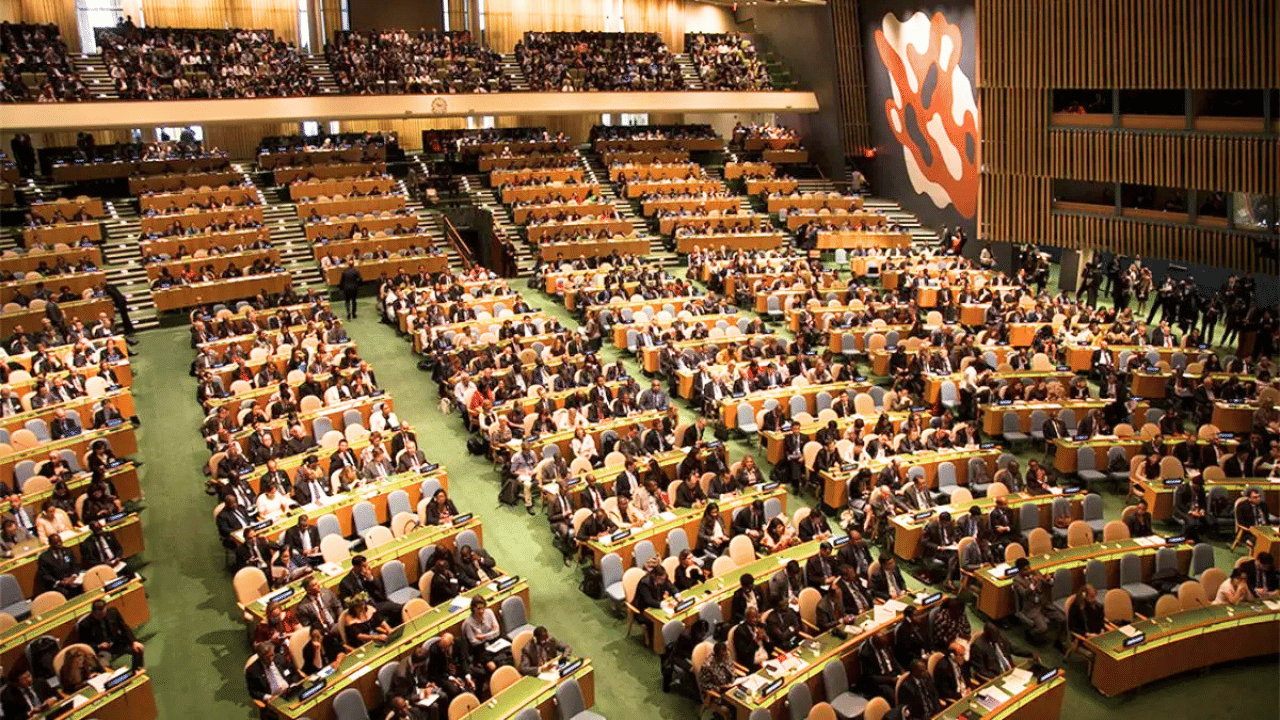
The International Labour Organization (ILO) is placing platform work, workers’ financial health and decent work at the centre of its engagement at the 81st session of the United Nations General Assembly (UNGA81), as technological, economic and environmental changes reshape labour markets.
With the UNGA81 General Debate scheduled for 22–28 September under the theme “Restoring Trust, Managing Transformation: A United Nations that Delivers for All”, the ILO is using the gathering to push for stronger links between economic transformation, workers’ rights and social justice.
Platform work moves up the global policy agenda
A key focus will be the governance of platform work following the adoption in June of the Decent Work in the Platform Economy Convention, 2026 (No. 193). The convention is the first international labour standard specifically dedicated to the platform economy and establishes a global framework for addressing workers’ rights, fair competition and sustainable growth as digital business models expand.
The ILO will hold a high-level event on 25 September to examine how Convention No. 193 applies to digital transformation and artificial intelligence, and how labour standards, social dialogue and labour market institutions can shape the future of work.
The focus signals a broader shift in the debate around technology, with the ILO arguing that innovation and new business models should advance alongside decent work and worker protections.
Financial health becomes a workplace issue
Workers’ financial wellbeing will be another priority at UNGA81. The ILO and the UN Secretary-General’s Special Advocate for Financial Health will convene an event on 24 September examining how workplaces can strengthen financial resilience and inclusion.
The discussion will also address the responsible use of emerging financial services and technologies and their implications for workers.
The ILO is set to launch its Good Practices Guide for Responsible Earned Wage Access, providing guidance as employers, policymakers, financial service providers and other stakeholders consider workplace-linked financial services.
The initiative forms part of the ILO’s work through its Global Centre on Digital Wages for Decent Work, which focuses on ensuring that the digitalisation of wages and financial services benefits workers while protecting their rights.
Decent work positioned as part of economic transformation
Beyond platform work and financial health, the ILO is expected to emphasise employment creation and fair transitions as countries respond to climate change, economic uncertainty and inequality.
Its priorities include productive and sustainable enterprises, living wages, skills development, social protection, the transition from informal to formal employment, fundamental principles and rights at work, and social dialogue.
The underlying message is that technological, economic and environmental transformation should translate into tangible improvements in people’s working and living conditions rather than being measured solely through economic or productivity gains.
The ILO will also connect its UNGA81 engagement with commitments from the Second World Summit for Social Development and the Fourth International Conference on Financing for Development, linking global commitments to policies aimed at expanding decent work, strengthening social protection and reducing inequality.
As preparations begin for the 2027 SDG Summit and discussions around the post-2030 development agenda develop, the ILO is reinforcing its position that full and productive employment and decent work are not only outcomes of sustainable development but also key mechanisms for achieving it.