









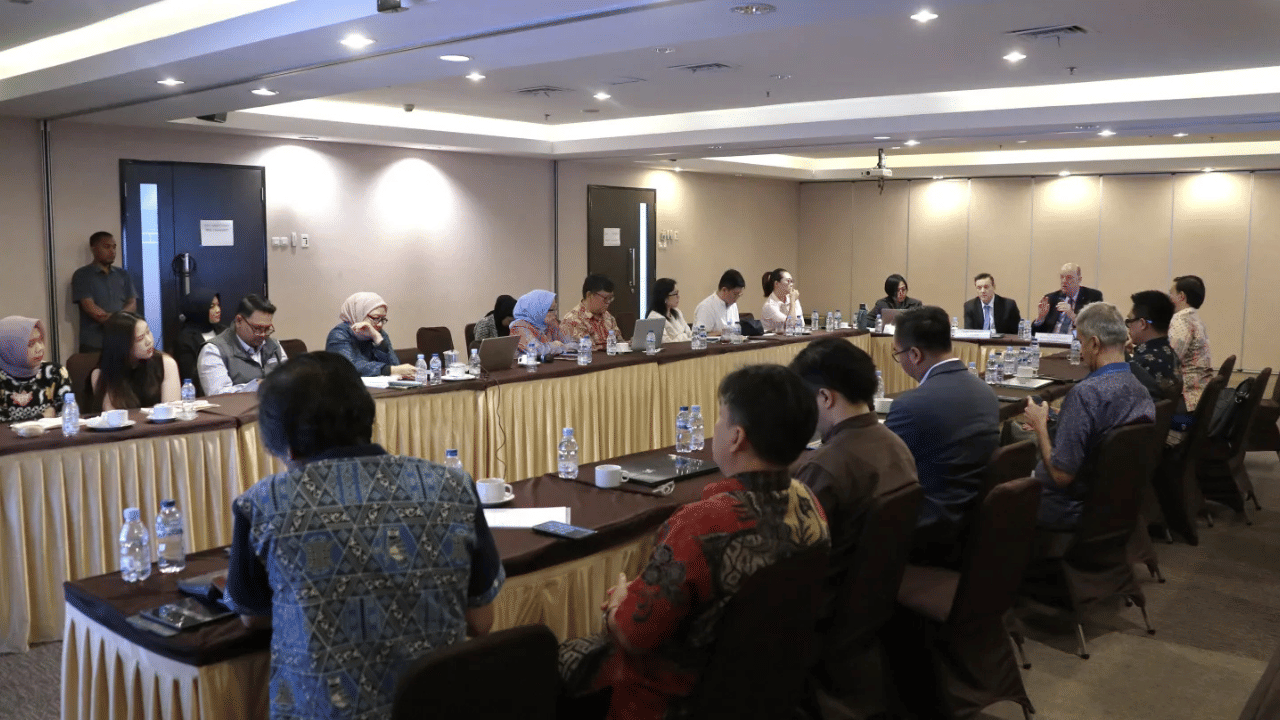
Indonesia’s employers’ organisation APINDO is preparing to play a greater role in shaping labour, skills and responsible business reforms as the country advances towards accession to the Organisation for Economic Co-operation and Development (OECD).
The priorities were discussed at an APINDO Strategy Workshop on OECD Accession in Jakarta on 24 September, where representatives from APINDO, the OECD, Business at OECD and the International Labour Organization (ILO) examined how employers can contribute evidence and policy input to the accession process.
The reforms are expected to affect how Indonesian businesses hire, train and manage workers, comply with evolving labour standards and operate across international markets.
Gary Rynhart of the ILO’s Bureau for Employers’ Activities said APINDO has an important role in ensuring that enterprise experience and evidence inform the reform process.
Three areas have emerged as key priorities for employer engagement: labour policy, skills and responsible business conduct.
On labour policy, APINDO is expected to contribute to discussions around wages, labour inspection, employment relationships, dispute resolution, social protection and platform work. The organisation’s input is intended to help align worker protection with productivity, regulatory clarity and practical implementation.
Skills development is another major focus. As demand changes across manufacturing, digital industries, tourism, fisheries and critical-minerals value chains, employers and sector associations are expected to help identify emerging skills needs, shape training programmes and expand work-based learning.
The third area is responsible business conduct. As labour, human-rights and supply-chain expectations from regulators, investors and international buyers increase, APINDO could support businesses, particularly micro, small and medium-sized enterprises, in translating these requirements into practical measures.
Phil O’Reilly, Chair of the Southeast Asia Contact Group at Business at OECD, said the accession process provides an opportunity for APINDO to strengthen its policy expertise and establish itself as a trusted partner in reforms affecting Indonesian businesses.
He also encouraged APINDO to integrate the OECD accession agenda into its existing committees, member surveys, sectoral engagement and advocacy rather than creating a separate process.
Rinawati Prihatiningsih, Chair of APINDO’s Multilateral Committee, said OECD accession should support competitiveness by helping Indonesian enterprises become more productive, trusted, sustainable and integrated into global markets and value chains.
Massimo Geloso Grosso, Head of the OECD Jakarta Office, highlighted the potential links between accession, investor confidence, investment risks, human-capital development, skills and stronger labour-market and social policies.
The Indonesian government also views the process as a broad national effort. Cahyadi Yudodahono, Assistant Deputy for Multilateral Economic Cooperation at Indonesia’s Coordinating Ministry for Economic Affairs, described OECD accession as a “whole-of-country effort”.
APINDO will now review and validate the priorities through its internal structures. The ILO’s Bureau for Employers’ Activities will continue supporting the organisation in engaging its members, strengthening its evidence base and contributing to reforms affecting Indonesian enterprises and workers.