









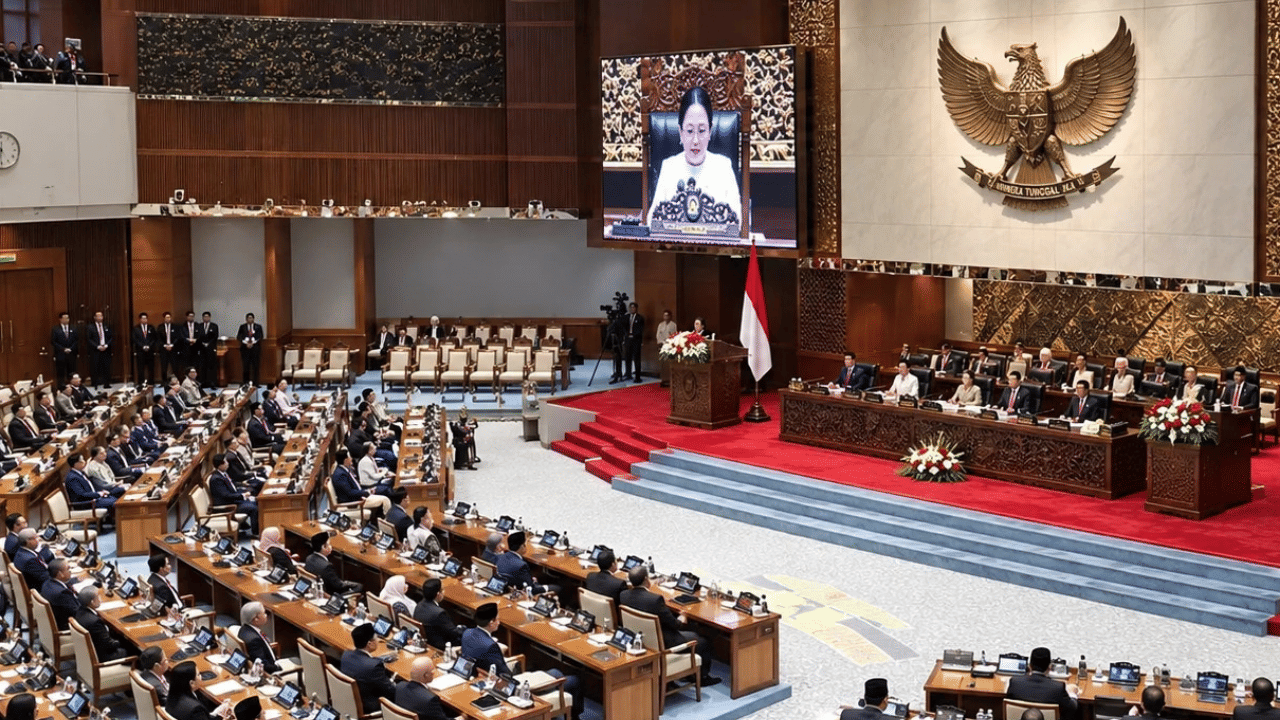
Indonesia’s parliament has passed a new Labor Protection Law that strengthens worker protections across employment contracts, outsourcing, wages, layoffs and severance, while extending safeguards to informal and digital platform workers.
The House of Representatives approved the legislation on October 6, replacing labour provisions that had been incorporated into the 2020 Job Creation Law.
The new law comprises 23 chapters and 313 articles and follows a 2024 Constitutional Court ruling that ordered lawmakers to separate labour regulations from the broader Job Creation Law.
The legislation is expected to require employers to adjust employment contracts, wage structures, outsourcing arrangements and termination procedures to comply with the new framework.
Tighter rules for layoffs and higher severance protection
Employers will face tighter requirements when carrying out layoffs, with the law setting out procedures for preventing termination, the reasons and considerations for layoffs, and workers’ rights after employment ends.
Where layoffs become unavoidable and disputes arise, companies and workers or unions must first engage in bipartite negotiations.
The law also retains workers’ rights to severance pay, service appreciation payments and compensation for other entitlements. The amount depends on factors including the reason for termination and length of service.
It also introduces a severance reserve mechanism intended to ensure companies have funds available to meet their obligations when workers are laid off. Local reports said employers would contribute to the scheme through state insurer BPJS.
The changes reverse some of the pro-business measures introduced under former President Joko Widodo’s 2020 Job Creation Law, which reduced severance benefits and eased employment regulations in an effort to improve Indonesia’s investment climate.
The Indonesian Employers Association warned last month that higher labour costs could discourage formal hiring and affect the country’s competitiveness.
Contract work and outsourcing face clearer rules
The new law also sets limits around fixed-term employment agreements, or PKWT. Contracts can run for a maximum of two years and may be extended twice, with each extension lasting up to one year.
Outsourcing is also restricted to specified categories of supporting work. These include cleaning services, food provision for workers, security, mining and oil and gas support services, and transportation for workers.
The changes are aimed at providing greater clarity around the use and duration of non-permanent employment while balancing worker protection with business requirements.
40-hour working week retained
The law maintains a maximum working time of 40 hours a week. For companies operating a six-day work week, this translates to seven hours a day, while employees working a five-day week can work up to eight hours a day.
The legislation also sets out provisions covering minimum wages, proportional wage structures and scales, overtime payments and wage payments in specific circumstances.
The wage framework is intended to strengthen the link between pay and factors such as position, seniority, education and competence, while also providing a basis for income progression beyond minimum-wage levels.
Protections extended to informal and platform workers
One of the broader changes is the extension of labour protections beyond traditional formal employment.
Informal workers will be entitled to fair and decent compensation that takes into account factors such as working hours, occupational risks and operating costs. They will also receive social security protection.
Digital platform workers will also receive new protections, including rights to reasonable income and occupational safety and health measures.
The law provides safeguards against unilateral termination of platform partnerships or account deactivation without clear reasons and without an avenue to object. The provisions could affect online drivers, couriers and other workers whose livelihoods depend on digital platforms.
Female workers gain additional protections
The legislation also strengthens provisions for female workers, including menstrual rest and maternity leave.
Maternity leave will be provided for at least three months and can be extended by up to another three months in certain circumstances based on medical provisions.
Chair of the Labor Protection Bill Working Committee of Commission IX, Putih Sari, said the legislation is intended to strengthen worker protection while providing greater legal certainty for both employees and employers.
“It also strengthens labor supervision and law enforcement, and creates a balance between worker protection, business sustainability, economic growth, and national competitiveness,” she said.
Manpower Minister Yassierli said the government viewed the legislation as strengthening protection across the labour ecosystem, including for workers, job seekers, apprentices and employers.
For employers, the immediate priority will be understanding the final provisions and adapting HR policies, employment contracts, wage systems, outsourcing arrangements and layoff processes accordingly.
Some provisions will require further implementing regulations before they can be applied operationally, making the next phase of the reform as important as the passage of the law itself.