









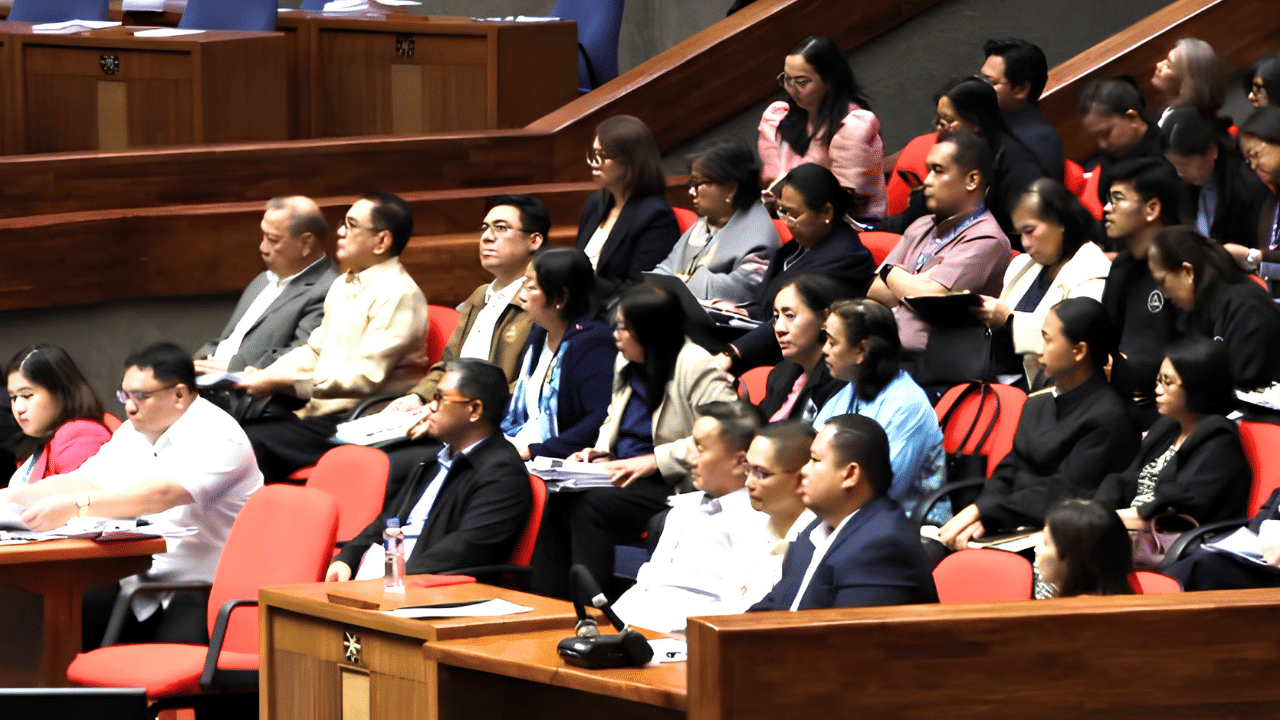
The Philippines’ Department of Labor and Employment (DOLE) has secured House approval for its proposed P47.057 billion budget for fiscal year 2027, with the allocation now set to undergo plenary deliberations in the Senate.
The proposed funding is intended to support employment generation, skills development, worker protection, social protection, labour justice and other labour services nationwide, DOLE said in a 17 September news release.
Labour Secretary Francis N. Tolentino led the department’s delegation during the House plenary deliberations yesterday.
However, lawmakers raised concerns over the proposed allocation, which is around P14.1 billion lower than DOLE’s P61.2 billion budget under the 2026 General Appropriations Act.
Representative Rommel Rico T. Angara, who sponsored DOLE’s budget in the House, called for the restoration of funding cuts, saying the reduction could affect the delivery of employment and labour services, including programmes aimed at preparing workers for changing workplace demands.
The proposed P47.057 billion is distributed across DOLE and its attached agencies. DOLE itself is allocated P20.954 billion, while the Technical Education and Skills Development Authority (TESDA) receives P20.895 billion. The Professional Regulation Commission (PRC) is allocated P2.694 billion, followed by the National Labor Relations Commission (NLRC) with P1.733 billion.
The National Wages and Productivity Commission (NWPC) is set to receive P369.242 million, the National Conciliation and Mediation Board (NCMB) P332.463 million, and the Institute for Labor Studies (ILS) P78.794 million.
AI displacement and workforce reskilling emerge as key concerns
One of the issues raised during the deliberations was the need to strengthen upskilling programmes amid potential AI-driven displacement in the Philippines’ business process outsourcing (BPO) sector.
The discussion comes as the country’s large BPO and IT-enabled services workforce faces changes in the types of tasks that can be automated or augmented by generative AI. For DOLE, the proposed funding will need to support workers in adapting to changing workplace requirements and acquiring skills relevant to emerging roles.
The budget deliberations also covered the Tulong Panghanapbuhay sa Ating Disadvantaged/Displaced Workers (TUPAD) programme, wage orders, the family living wage, the Social Amelioration Program for sugar workers and the Single Entry Approach (SEnA) for resolving labour disputes.
Lawmakers also discussed labour standards and occupational safety and health compliance in economic zones, the welfare of commercial fishing vessel workers and the need to increase the number of labour inspectors.
Angara linked the call for additional inspectors to the Philippines’ obligations under International Labour Organization Convention No. 81 on Labour Inspection.
DOLE is also seeking an additional P75 million for initiatives involving the Labor Attorneys’ Office and the National Academy for Labor Justice, aimed at strengthening legal assistance for workers.
Wage policy remains under judicial scrutiny
Wage policy was another major issue during the deliberations, with Angara reaffirming DOLE’s position on Wage Order No. 27 while noting that its implementation remains subject to ongoing judicial proceedings.
DOLE, together with the Office of the Solicitor General, has maintained that the wage order should be implemented, citing Article 126 of the Labor Code. The department has said it will comply with the judiciary’s final decision once the official document is issued.
Angara also said Wage Order No. 28 is intended to provide immediate economic relief while the judicial process continues.
He clarified that the P60 wage increase under Wage Orders Nos. 27 and 28 is the same and does not reduce workers’ wages.
Why the 2027 DOLE budget matters for the Philippines
The budget is significant because it will shape the government’s capacity to respond to several pressures facing Filipino workers at the same time: changing skills requirements, potential AI-related job displacement, wage concerns, labour disputes, workplace safety and access to employment services.
The allocation to TESDA is particularly relevant to the workforce transition because skills development will be central to helping workers move into roles that require new technical and digital capabilities.
At the same time, funding for labour inspection, legal assistance and dispute resolution affects the enforcement of workers’ rights and access to labour justice.
The proposed reduction from the 2026 budget therefore puts the focus not only on how much DOLE receives, but also on which programmes receive funding as the Philippines navigates an increasingly technology-driven labour market.
The proposed budget will now move to the Senate for plenary deliberations, where its final allocation and any proposed changes will be considered.