









The Philippine government has launched a joint initiative to strengthen supply chain oversight and protect workers' rights by establishing a unified mechanism to identify and prevent the entry of goods linked to forced labour.
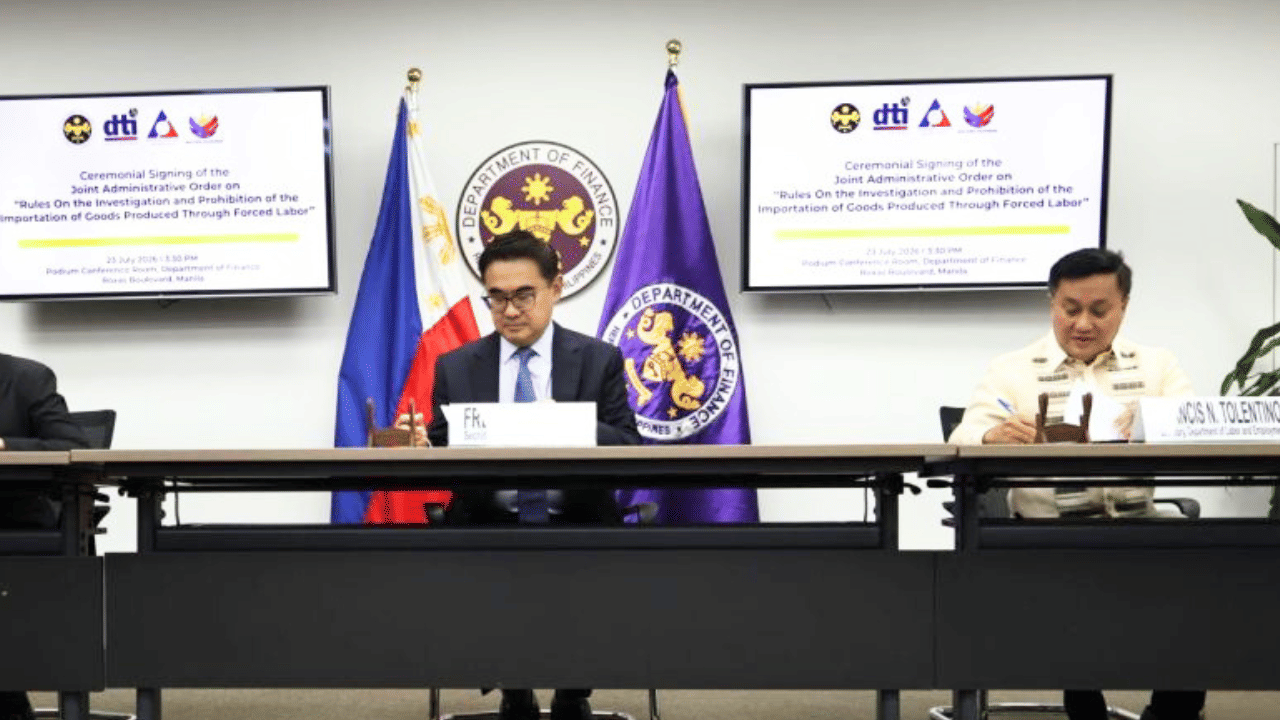
The Department of Labor and Employment (DOLE), Department of Trade and Industry (DTI), and Department of Finance (DOF) signed a Joint Administrative Order on 24 July creating an inter-agency committee that will receive reports on imported products suspected of being produced through forced labour, investigate the claims, and recommend appropriate enforcement actions.
The committee will be chaired by the DTI and vice-chaired by DOLE, with members including the Department of Finance, Bureau of Customs, Board of Investments, and Philippine Economic Zone Authority. The framework aims to improve information sharing among agencies, coordinate investigations into suspicious shipments, and strengthen enforcement against products associated with forced labour.
The move supports the Philippine government's broader efforts to uphold fair labour practices while ensuring that domestic markets remain free from goods produced through exploitative working conditions.
Labour Secretary Francis N. Tolentino described the agreement as a significant milestone in reinforcing the country's commitment to protecting workers' rights and promoting decent work.
"I hope through this mechanism, we will showcase to the entire world, not just the Philippines - not just ASEAN - that the Philippines is trailblazing with respect to prohibition against forced labor, respect to workers' dignity, as well as the integrity of free trade," Tolentino said.
He added that the initiative reflects the country's commitment under the administration of President Ferdinand Marcos Jr. to uphold workers' rights, human rights, and fair competition.
According to the government, the new system is designed to protect workers, consumers, and legitimate businesses from the impact of unfair trade practices while helping the Philippines meet its international commitments to combat forced labour in global supply chains.