









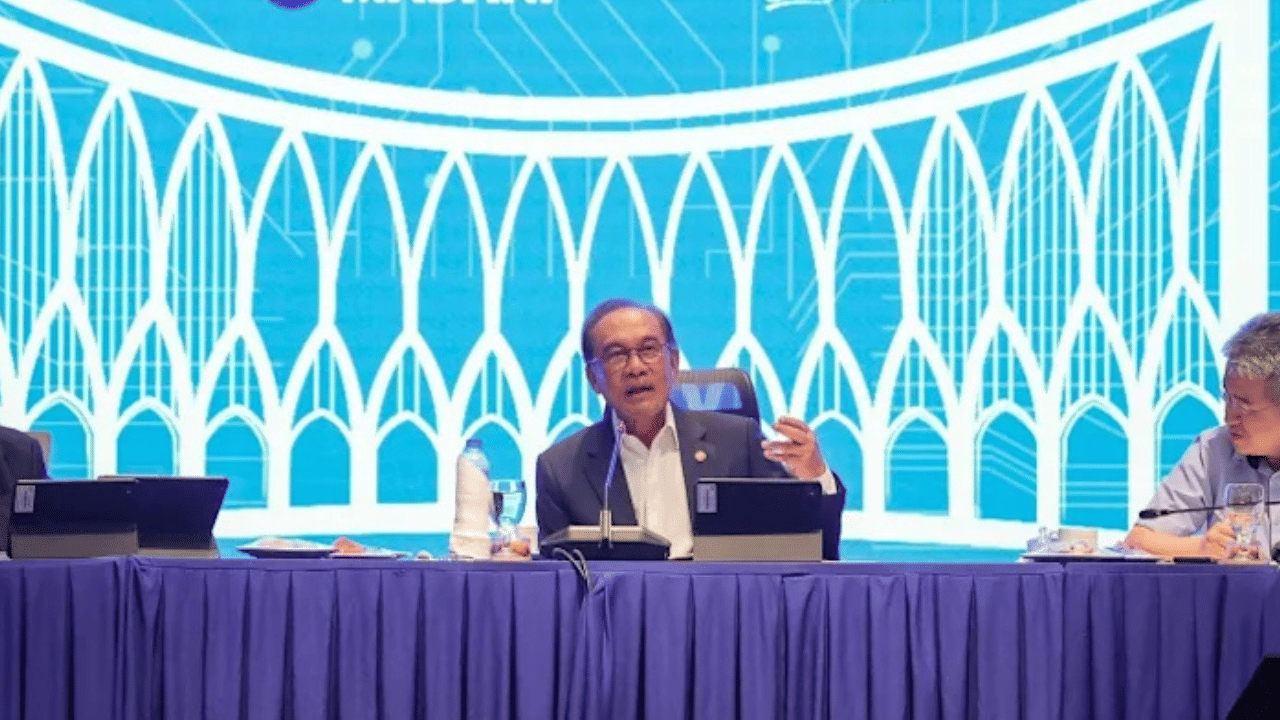
Malaysia will not revive the Goods and Services Tax (GST) as a broad-based consumption tax, Prime Minister Anwar Ibrahim has said, citing concerns that it could increase the tax burden on lower-income households.
Speaking to reporters after officiating at the TikTok Shop Summit 2026 in Kuala Lumpur on August 20, Anwar said the government remained open to improving the existing Sales and Services Tax (SST), including considering selected components of the former GST system.
“Whether we need to make some adjustments in the process to improve the implementation of SST or some components of GST, which we can do,” Anwar said.
“But the core principle of this government is not to increase taxes for the very poor. Therefore, GST as a principle cannot be considered,” he added.
The comments clarify the government’s position amid discussions over whether Malaysia should reform its consumption tax system to broaden the tax base and strengthen government revenue.
Anwar, who is also finance minister, had earlier directed the Ministry of Finance to study a possible hybrid model combining elements of the GST and SST. Finance Minister II Amir Hamzah Azizan is leading the feasibility study.
However, Anwar stressed that the government would not consider the fundamental principle of GST as a broad-based tax because it would apply to consumers across income groups.
“I’m not prepared to consider the basic essence of the GST because it is still a broad-based tax. They will impose tax on every single citizen, including the poorest of the rakyat. So, that principle must be observed,” he said.
The government’s position comes a day after Communications Minister Fahmi Fadzil said the Ministry of Finance had been given time to conduct a comprehensive assessment of the proposed hybrid taxation model before it is brought to the Cabinet.
Fahmi said the study was still at an early stage and would examine lessons from Malaysia’s previous GST implementation as well as challenges under the current SST system.
He added that no specific deadline had been set for the study and there was no confirmation that any decision would be included in the upcoming Budget announcement.
Malaysia introduced GST at a rate of 6% in April 2015 under the administration of former prime minister Najib Razak. The tax was abolished following the 2018 general election, with the country reverting to the SST system in September that year.
The debate over GST has resurfaced as the government seeks to strengthen public finances and broaden the country’s tax base. Proposals have included reintroducing certain GST features and exploring other ways to increase tax revenue.
For now, however, Anwar’s latest remarks indicate that Malaysia is not considering a return to a full, broad-based GST, with the government instead focusing on reforms that it says can improve revenue collection without placing additional pressure on the poorest households.