









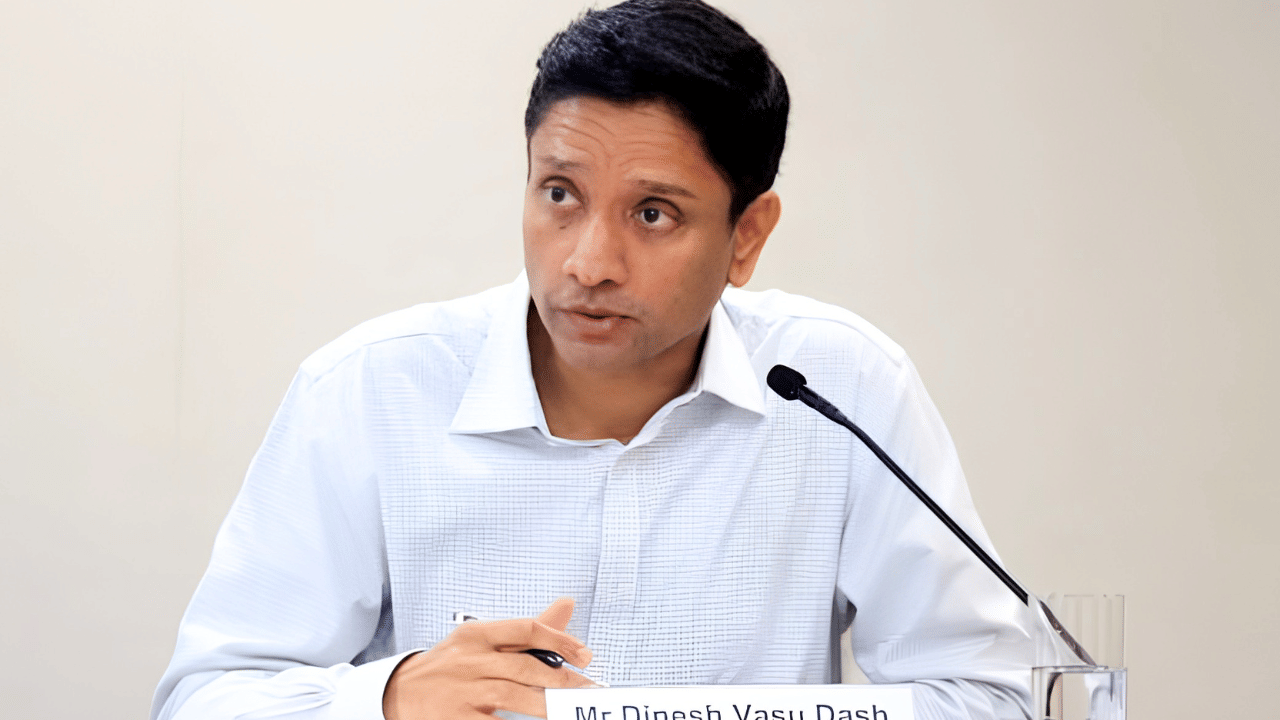
Singapore needs to do more to improve employee engagement and workplace culture if it is to remain economically competitive in an era shaped by artificial intelligence and rapid technological change, said Minister of State for Manpower Dinesh Vasu Dash at the launch of Singapore Workplace Report 2026.
Dash also underlined that while Singapore performs relatively well on employee wellbeing, workplace engagement remains a challenge.
According to the Global Workplace report, he noted that 40% of employees in Singapore rated their lives positively, outperforming both the Southeast Asian average of 36% and the global average of 34%. However, only 14% of employees reported being engaged at work.
“This prompts us to ask the question: how can we build an engaged workforce and a workplace together?” Dash said.
According to the minister, creating good jobs is central to improving engagement. He outlined three key pillars of a quality workplace: fair wages and employment conditions, opportunities for employee development and autonomy, and strong relationships between workers, supervisors, and teams.
Dash emphasised that engagement is not merely an employee experience metric but a business imperative. Engaged employees are more likely to collaborate, innovate, and contribute to organisational success, while companies benefit from higher productivity, stronger talent retention, and greater resilience.
He also stressed that workplace culture and employee engagement are critical to Singapore’s long-term economic growth and social cohesion.
The minister highlighted ongoing efforts by the government and tripartite partners to strengthen workplace fairness and inclusion.
Among these is the Workplace Fairness Act, passed in 2025 that aims to enhance protections against workplace discrimination. He also noted that a review of the Employment Act is underway, with recommendations expected later this year.
Beyond regulation, Dash called on business leaders to elevate human capital management as a strategic priority rather than treating it solely as an HR function.
“For many organisations, human capital is treated as an HR function rather than a strategic discussion on workforce capability and resilience. This may even be a strategic liability,” he said.
To support organisations in measuring workforce outcomes, he pointed to the recently launched Singapore Opportunity Index (SOI), which uses data from nearly 1,500 companies and close to one million residents to assess metrics such as pay, progression, hiring, retention, and gender parity.
Dash also warned that AI and changing business needs will significantly reshape workforce skills over the next five years. Referencing the World Economic Forum’s Future of Jobs report, he noted that two in five skills are expected to be transformed or become obsolete during that period.
To prepare workers and businesses for this transition, the Singapore government has expanded access to AI-related learning through SkillsFuture, including AI-focused courses and free six-month subscriptions to premium AI tools for selected participants. Plans are also underway to establish a Tripartite Jobs Council that will bring together employers, unions, and the government to help navigate the shift towards an AI-driven economy.
Dash urged employers, workers, and policymakers to work together to build workplaces where both people and businesses can thrive.
“The findings in today’s report are a reminder that good workplaces are where workers thrive and where businesses succeed,” he said, adding that strengthening workplace culture and engagement will be essential for Singapore to remain competitive in a rapidly changing world.