









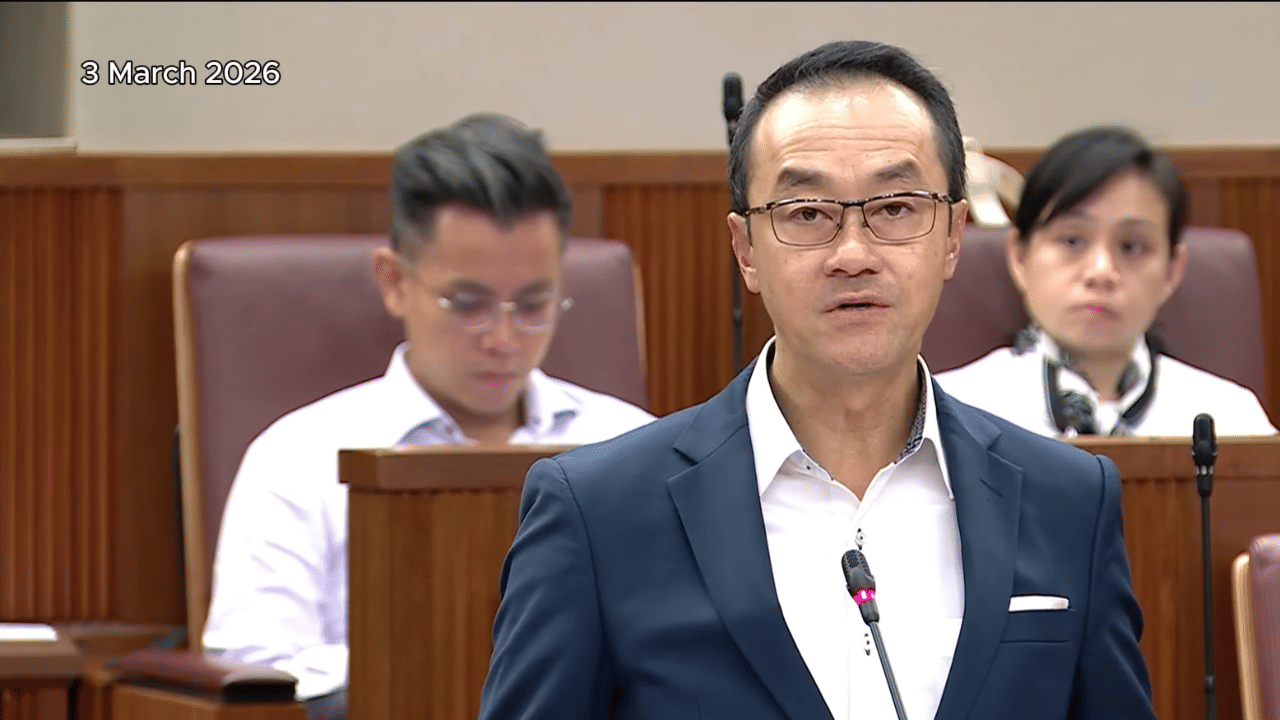
Ministry of Health (MOH) will intensify efforts to secure a sustainable healthcare workforce, even as global competition for talent tightens and domestic demand rises, Parliament heard on 3 March 2026.
Responding to questions from Chua Chu Kang GRC MP Dr Choo Pei Ling, Senior Minister of State for Health Koh Poh Koon underscored that manpower resilience remains central to healthcare reform.
“So ensuring an adequate healthcare workforce to meet rising healthcare demand is a foremost priority for the ministry,” Koh said. “We adopt a multi-prong workforce strategy to ensure sufficient healthcare manpower while maintaining care standards and regularly update our plans as circumstances change.”
Building a stronger local core
At the core of MOH’s workforce approach is strengthening the local talent pipeline while maintaining service standards. “Our focus continues to be to build up the local core of our healthcare workforce through diversifying training pathways, increasing local intakes for healthcare programmes and ensuring that job roles are attractive and salaries are competitive,” Koh said.
While foreign hires remain necessary in areas of shortfall, the ministry is taking steps to reduce vulnerability to external shocks.
“We bring in qualified foreign healthcare workers in areas of shortfall. And to ensure resilience, we diversify the sources of foreign recruitment and secure government-to-government bilateral manpower cooperation agreements with regional countries,” he added.
Beyond manpower supply, sustainability also hinges on demand management. “We will continue to invest in good preventive health and right-site patients to appropriate care settings to keep our healthcare system sustainable,” Koh said.
The emphasis signals a workforce strategy that spans pipeline development, international recruitment resilience, and systemic redesign.
From team-based to shared-care models
Pressed on how productivity gains would translate into sustainable workloads, Koh outlined a shift in care delivery models.
“We are shifting from more team-based care to a more shared-care model,” he said, explaining that healthcare professionals are being cross-trained in adjacent domains.
Under this model, professionals can provide lower-intensity care outside their primary area of expertise, easing bottlenecks and preventing overburdening of specific roles.
“For example, in the allied health professions, a physiotherapist and occupational therapist may share the same patient,” he said. “They can actually provide some degree of support or guidance to a patient who needs adjacent sector of care. So that would not require an overburdening of another fellow professional.”
MOH is also transforming care team structures. “One idea is to change the idea of a specialist being always the principal doctor in charge of a patient to having someone else who can coordinate the care other than a specialist so that the workload can be better distributed and care is less fragmented,” Koh said.
The redesign reflects a broader workforce insight: productivity improvements must be embedded in role redesign and skills flexibility — not simply achieved through higher output expectations.
Retaining experience through purpose and protection
Retention of mid-career and senior healthcare professionals, whose institutional knowledge underpins system resilience, is another focus.
“We looked at making sure the salary is competitive across compared to other sectors so that there will be a good reason to retain them,” Koh said.
But remuneration alone is insufficient. “Through redesigning the job and making the career progression pathway a lot more seamless and more fluid, we allow these professionals to practise at the top of their licence so that they actually have satisfaction in their professional career.”
Workplace environment and psychological safety are also being prioritised. Each healthcare cluster has appointed a chief welfare officer to oversee staff support initiatives.
“We also have systems in place to prevent harassment and abuse at the workplace of a healthcare professional and take a zero-tolerance stance,” Koh said. “We also send a signal that we are protecting their workspaces and supporting them in the work that they do.”
Aligning workforce planning with transformation
As Singapore shifts more care into community settings, workforce planning is being recalibrated to match. “We are also creating new career tracks,” Koh said. In hospitals, a new category of doctors known as hospital clinicians has been introduced. “These are paced similar to how a specialist would progress in hospital.”
The move opens alternative pathways for doctors within hospital settings, broadening career options beyond the traditional specialist track. In primary care, family medicine has been designated as a specialty to grow the pool of higher-trained general practitioners.
“We will grow the pool of family medicine specialists designating family medicine as a specialty itself, so that we actually can then grow the pool of
GPs who are prepared to train at a higher level and deliver care at a higher level in the community,” Koh said.
The changes aim to align workforce structure with Singapore’s broader push toward community-based care and appropriate right-siting of patients.
No plans to professionalise domestic workers
Separately, Bishan–Toa Payoh GRC MP Cai Yinzhou asked whether foreign domestic workers, around 300,000 of whom support many seniors at home, could be placed on a professionalised track in palliative or geriatric care, or transition into community care roles.
Koh gave a clear response, “The short answer to that is that we have no plans to turn foreign domestic workers into healthcare professionals in the formal sense.”
The stance reinforces MOH’s focus on structured, regulated pathways within the formal healthcare system, even as home-based eldercare needs continue to grow.
A system redesign for long-term resilience
Taken together, the measures reveal a workforce strategy that goes beyond recruitment targets. By investing in local training, diversifying foreign recruitment sources, redesigning care models, expanding career tracks, and strengthening workplace protections, MOH is attempting to future-proof the healthcare workforce against demographic and labour market pressures.
For policymakers, the challenge is no longer just filling vacancies, it is reshaping roles, retaining experience, and aligning manpower strategy with healthcare transformation itself.