









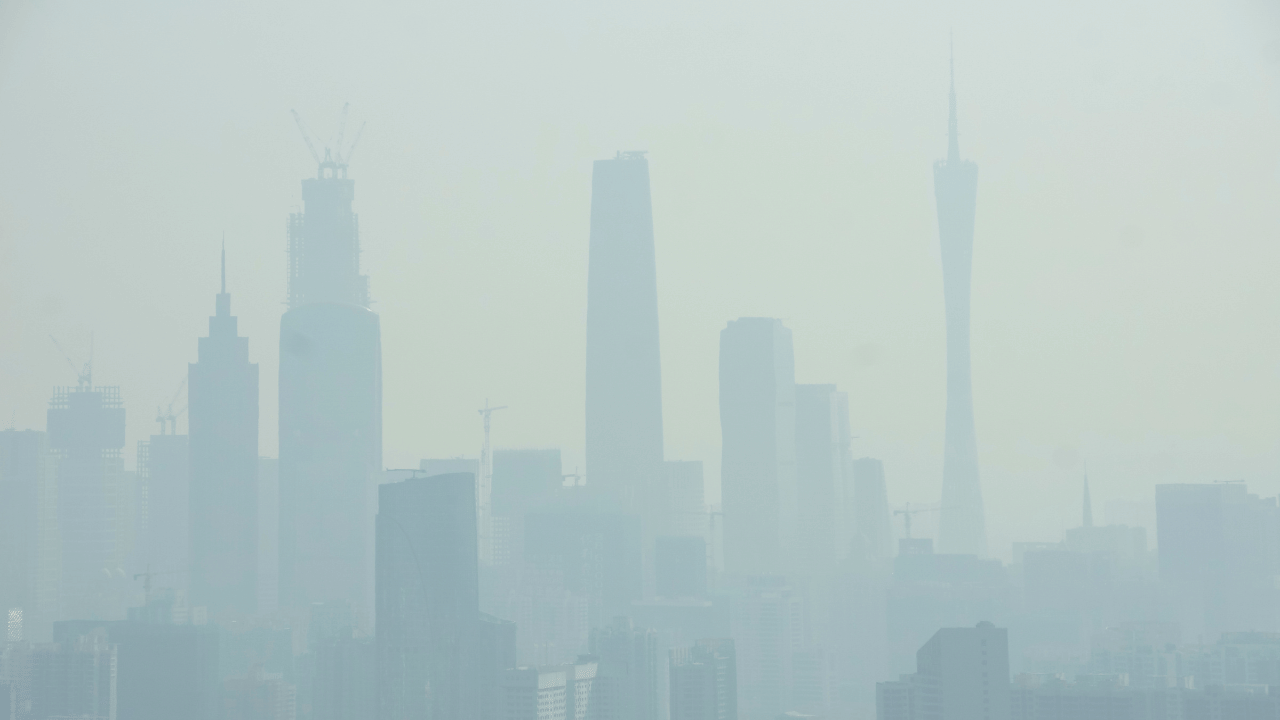
Singapore’s Ministry of Manpower (MOM) has issued additional guidance for employers on managing outdoor work during haze, advising businesses to adjust work activities based on hourly PM2.5 readings and provide stronger protection for vulnerable employees.
Issued on October 20, 2026, the guidance supplements existing recommendations based on the Pollutant Standards Index (PSI) forecast. While the PSI forecast helps employers plan outdoor work for the following day, hourly PM2.5 readings allow them to make timely adjustments as air quality changes.
Under the new guidance, employers should progressively reduce outdoor work as PM2.5 levels rise, with stricter restrictions for elderly employees, pregnant women and workers with chronic heart or lung diseases.
When hourly PM2.5 readings reach the elevated band of 56–150 micrograms per cubic metre (µg/m³), employers should reduce strenuous outdoor work for healthy employees and avoid such activities for vulnerable workers.
1-hour PM 2.5 level | Healthy employees | Vulnerable employees | General measures to be taken by employers |
Band 1 (Normal) (0 – 55 µg/m3) | Normal activities | Normal activities | Monitor the haze situation |
Band 2 (Elevated) (56 – 150 µg/m3) | Reduce strenuous outdoor work | Avoid strenuous outdoor work | Mitigate risks through mechanical aids, job rotation, instituting indoor rest breaks, ensuring adequate hydration, etc. |
Band 3 (High) (151 – 250 µg/m3) | Avoid strenuous outdoor work | Avoid outdoor work | If strenuous outdoor work is not avoidable, masks should be provided. |
Band 4 (Very High) (251 µg/m3 and higher) | Minimise outdoor work | Prohibit outdoor work | 1. Prohibit outdoor work for vulnerable employees. 2. Defer non-essential jobs or reducing the intensity and duration of outdoor work. 3. If outdoor work is not avoidable, masks or appropriate respirators should be provided. 4. Affected workers should be given hourly rest breaks (e.g. 10 to 15 mins). Rest breaks should be taken indoors where an indoor area is available. 5. Risk assessment should account for reduced visibility, particularly for lifting operations involving tower and mobile cranes |
At high readings of 151–250 µg/m³, healthy employees should avoid strenuous outdoor work, while vulnerable employees should not undertake outdoor work. When readings reach the very high band of 251 µg/m³ or above, employers should minimise outdoor work for healthy employees and prohibit it for vulnerable workers.
Where outdoor work cannot be avoided at high pollution levels, employers should provide N95 or equivalent masks when strenuous work is required. At very high readings, employers should provide masks or appropriate respirators, alongside hourly indoor rest breaks for affected workers.
PSI forecast | Healthy employees | Elderly, pregnant employees | Employees with chronic lung disease, heart disease | General measures to be taken by employers |
≤100 (Good / Moderate) | Normal activities | Normal activities | Normal activities | Initiate preparatory measures to protect the safety and health of employees against the effects of haze |
101-200 (Unhealthy) | Reduce prolonged or strenuous outdoor work | Minimise prolonged or strenuous outdoor work | Avoid prolonged or strenuous outdoor work | Take risk mitigating measures such as use of mechanical aids, job rotation, instituting indoor rest breaks, ensuring adequate hydration, etc. |
201-300 (Very Unhealthy) | Avoid prolonged or strenuous outdoor work | Minimise outdoor work | Avoid outdoor work | 1. Take risk mitigating measures such as use of mechanical aids, job rotation, instituting indoor rest breaks, ensuring adequate hydration, etc. 2. If prolonged or strenuous outdoor work is not avoidable, and an employer still requires an employee to do so due to extenuating circumstances, masks should be provided. |
> 300 (Hazardous) | Minimise outdoor work | Avoid outdoor work | Avoid outdoor work | 1.Take additional risk mitigating measures such as job redeployment, reducing the intensity and duration of outdoor work, institute regular indoor rest breaks or deferment of non-essential jobs. 2. If outdoor work is not avoidable, and an employer still requires an employee to do so due to extenuating circumstances, masks or appropriate respirators (e.g. full face respirators for prolonged outdoor work at PSI forecast >400) should be provided. 3.Risk assessment should consider the additional risk posed by poor visibility for work activities such as lifting operations involving tower and mobile cranes. |
MOM has also recommended measures such as using mechanical aids, rotating jobs, providing indoor rest breaks and ensuring workers remain adequately hydrated.
Employers should consider postponing non-essential tasks and reducing the intensity and duration of outdoor work as conditions deteriorate.
The ministry has urged employers to review their haze management plans, identify workers who are more susceptible to the effects of haze and determine which outdoor activities should be reduced or rescheduled. Businesses should also establish clear criteria for restricting outdoor work as air quality worsens.
Employers with staff who work outdoors should maintain at least a one-week supply of masks as part of their haze-related business continuity plans.
Minister of State for Manpower Dinesh Vasu Dash said: “The health and safety of our workers must always remain a priority, especially during periods of haze. The additional guidance will help employers respond promptly to changing air quality and make informed decisions on outdoor work arrangements.”
He urged employers to remain alert to haze conditions, take appropriate precautions and pay particular attention to workers who are more vulnerable to its effects.
“With timely adjustments to work arrangements and the right protective measures, we can better safeguard workers while supporting business continuity,” he added.
The additional hourly monitoring guidance complements existing measures based on the PSI forecast. Under the PSI framework, employers are advised to reduce or reschedule prolonged and strenuous outdoor activities as pollution levels rise, with more stringent restrictions when forecasts reach very unhealthy or hazardous levels.
Employers can access MOM’s haze guidelines at www.mom.gov.sg/haze. The PSI forecast and hourly PM2.5 readings are available at www.haze.gov.sg.