









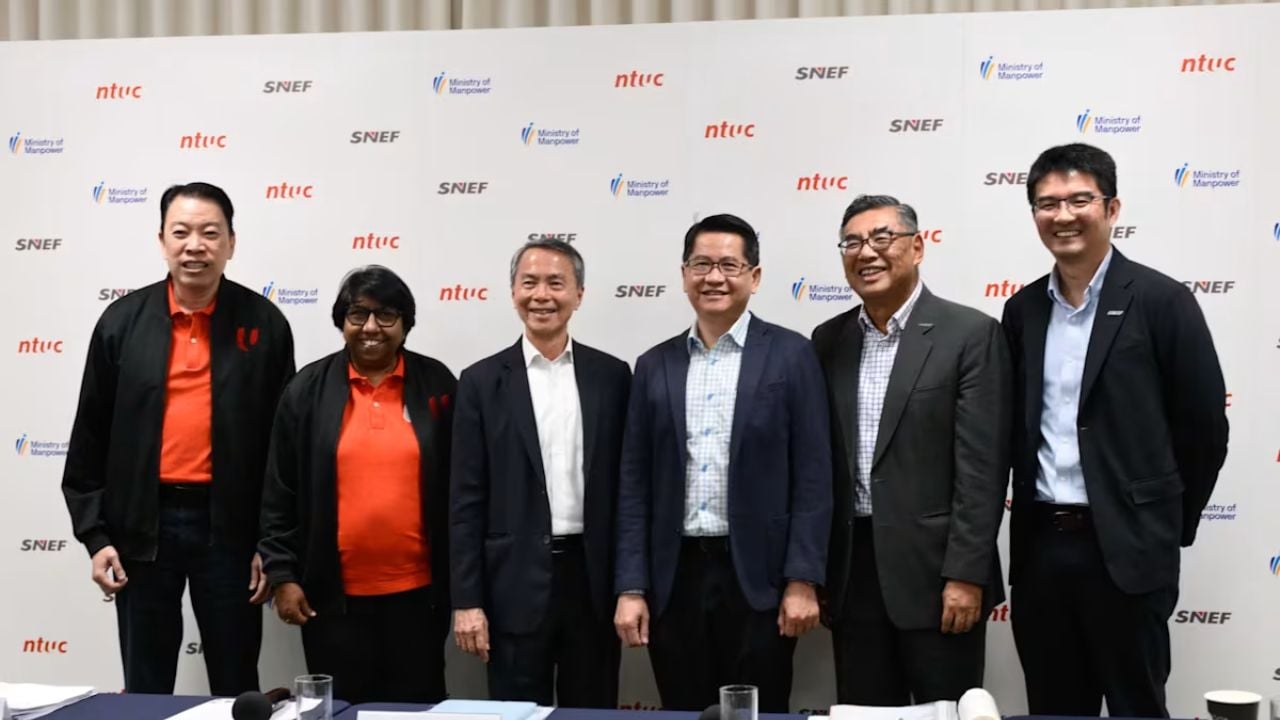
Singapore’s National Wages Council (NWC) has recommended wage increases of 6% to 8% for lower-wage workers earning up to S$2,800 a month, urging employers with strong business performance to share productivity gains with employees.
The recommendations, covering December 2026 to November 2027, call for a “positive-leaning” approach to wage increases as Singapore navigates economic growth, inflation and the impact of artificial intelligence (AI) on jobs, CNA reported.
Employers that have performed well and have positive business prospects should provide built-in wage increases at the higher end of the recommended range, or at least S135toS170, whichever is higher.
Businesses that have performed well but face uncertain prospects should offer increases around the middle of the range. Those that have underperformed but remain profitable should provide increases at the lower end, or at least S$120, whichever is higher.
For the first time, the guidelines also cover businesses that have performed poorly and are unprofitable.
These employers should provide a built-in wage increase of at least S$120.
“If business prospects subsequently improve, employers should review wages and consider further wage increases for their lower-wage workers,” the NWC said.
Singapore pushes for wider wage growth
The council said lower-wage workers’ salaries must consistently grow faster than the median wage over the decade to narrow the pay gap and ensure they benefit from Singapore’s economic growth.
It also urged employers to implement the flexible wage system in full, including annual and monthly variable components.
The system allows businesses to manage costs during downturns while adjusting wages during periods of growth to retain talent.
The government has accepted the recommendations.
The Ministry of Manpower said the guidelines aim to provide meaningful wage increases while allowing employers to respond to economic and business conditions.
However, adoption of previous recommendations remains a challenge.
MOM permanent secretary Stanley Loh said uptake was slightly above 25% last year as companies adjusted to expanded coverage and higher recommended increases.
The adoption rate had exceeded 70% at its peak.
NWC chairman Hsieh Fu Hua clarified that the figures did not mean other employers had done nothing for lower-wage workers, but that they had not provided increases in line with the recommendations.
Employers urged to prepare workers for AI-driven jobs
Alongside wage growth, the NWC has called on employers to invest in employee training and prepare workers for changing job requirements as AI reshapes the workplace.
The council said AI could boost productivity, create new sources of value and strengthen Singapore’s competitiveness. It urged workers to develop AI literacy alongside human skills and judgement.
Employers should support reskilling and upskilling, redesign jobs and allocate adequate budgets for continuous training, the council said.
The recommendations come as structured training participation declines.
The proportion of employers providing structured training fell from 66.4% in 2024 to 64% in 2025, while the share of employees receiving such training dropped from 52.6% to 48.1%.
National Trades Union Congress president K Thanaletchimi backed the recommendations but called on employers to provide “protected training time”, allowing workers to pursue training without having to choose between learning and their work responsibilities.