









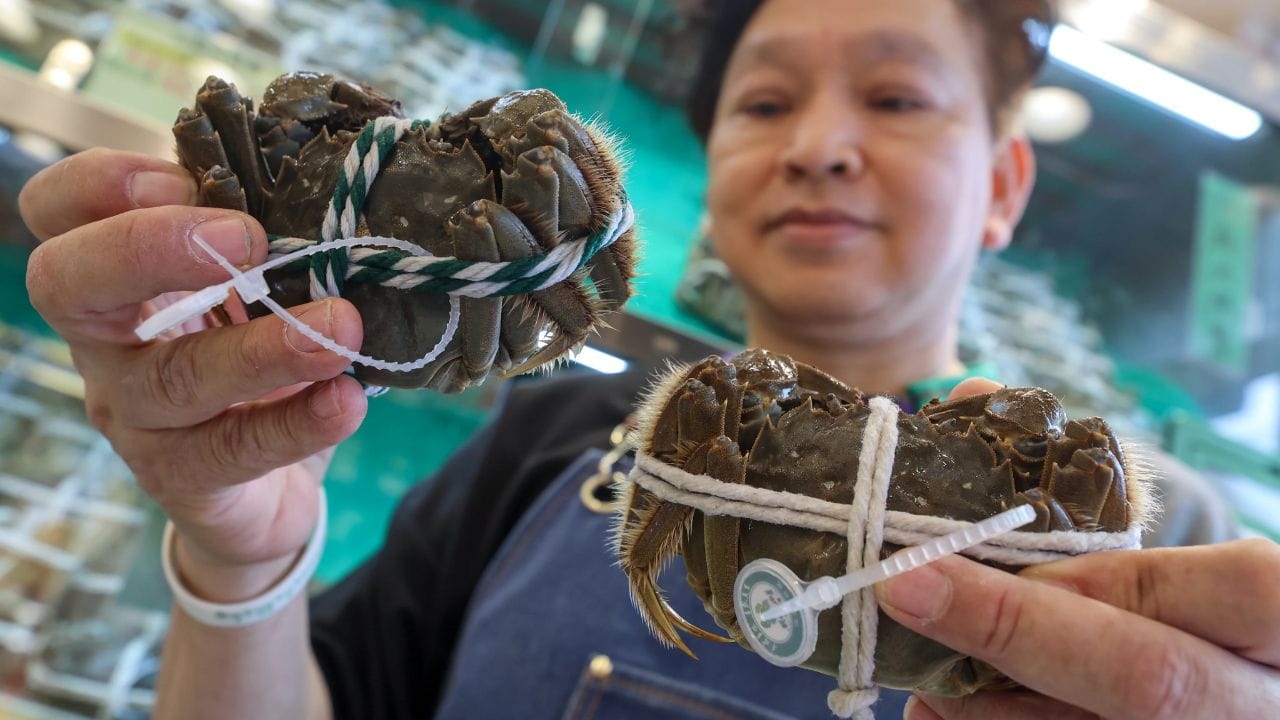
The US decision to block imports of Philippine blue swimming crab has sent shockwaves through the country's seafood sector, forcing job cuts and raising fears over the future of a multi-million-dollar export industry, as reported by sunstar.
Jobs lost
Seafood exporter Phil-Union Frozen Foods Inc. (Puffi) has cut more than 200 agency workers after losing access to the lucrative US market.
The company said the move was a direct consequence of the US restriction on Philippine-origin Blue Swimming Crab products and had nothing to do with product quality, food safety or regulatory compliance.
At least 245 agency-based workers were displaced on 16 May at Mactan Economic Zone 1 in Lapu-Lapu City. So far, 65 affected workers have sought assistance from the city's Public Employment Office.
Puffi president Kunho Choi stressed that the layoffs should not be viewed as a failure of the business.
"The resulting workforce reductions within the industry should not be interpreted as a consequence of operational failure, product quality concerns, or non-compliance by individual seafood processors," Choi said.
“Rather, these measures have become necessary due to the loss of access to the United States market following the [National Marine Fisheries Service] (NMFS) comparability determination affecting the Philippine Blue Swimming Crab fishery,” Choi said.
Why US acted
The restriction stems from a May 2026 determination by the US National Marine Fisheries Service (NMFS) under the Marine Mammal Protection Act Import Provisions.
US regulators concluded that Philippine Blue Swimming Crab fisheries had failed to demonstrate marine mammal protection measures comparable to those required in the United States.
According to Puffi, the decision was driven by insufficient documentation covering marine mammal bycatch monitoring, mandatory reporting of marine mammal deaths and injuries linked to commercial fishing operations, and evidence showing the effectiveness of bycatch mitigation measures.
The company emphasised that the issue was unrelated to the safety or quality of Philippine crab products.
“The restriction on Philippine Blue Swimming Crab exports is an industry-wide issue with significant economic, social and employment consequences. It is not the result of any food safety issue, product quality concern, manufacturing deficiency, or regulatory violation by Puffi or other Philippine seafood processors,” Choi said.
Industry shock
The impact is already rippling across the sector.
The Philippine Association of Crab Processors Inc. (Pacpi) warned that the ban threatens an industry that will export more than 2,400 metric tonnes of crabmeat worth over $50 million to the US in 2025.
The United States accounts for around 90 per cent of Philippine crab exports, making it the industry's dominant market.
Pacpi said the restriction, which took effect on 12 May, has already triggered cancelled orders, shrinking operations and the loss of long-standing customers.
“What was once a thriving fishery is now at risk of closure and create a generational impact,” Pacpi said.
Industry leaders warned that the fallout extends well beyond processing plants.
Thousands of fishermen, crab pickers, factory workers, logistics providers and suppliers now face uncertainty as demand weakens.
Operations continue
Despite the setback, Puffi said it remains operational.
The company continues to process and export other seafood products, including octopus, shrimp, fish and crab products destined for markets outside the United States.
“The current restriction affects only Philippine-origin Blue Swimming Crab products intended for export to the United States and does not affect the company’s other seafood processing and export operations,” Choi said.
Calls grow
Pressure is mounting on Philippine authorities to respond quickly.
Industry stakeholders have urged the Bureau of Fisheries and Aquatic Resources, the Department of Agriculture and the Department of Environment and Natural Resources to address the deficiencies identified by US regulators.
They are calling for stronger marine mammal monitoring systems, better reporting mechanisms and improved fisheries management practices.
The goal is clear: restore access to the US market before further damage is done.
Puffi warned that thousands of livelihoods depend on a swift resolution.
“We respectfully request the understanding, cooperation and support of all stakeholders as we work together toward restoring the competitiveness, sustainability and long-term viability of the Philippine Blue Swimming Crab industry,” Choi said.
The appeal highlights the urgency facing the sector. Unless the Philippines can satisfy US requirements and regain market access, thousands of workers and fishing communities linked to the blue swimming crab industry could face prolonged economic uncertainty.