









Singapore has warned of a more volatile global economy marked by supply chain disruptions, inflationary pressures and rapid workplace transformation driven by artificial intelligence (AI), while assuring workers that the government would continue supporting reskilling and job creation.
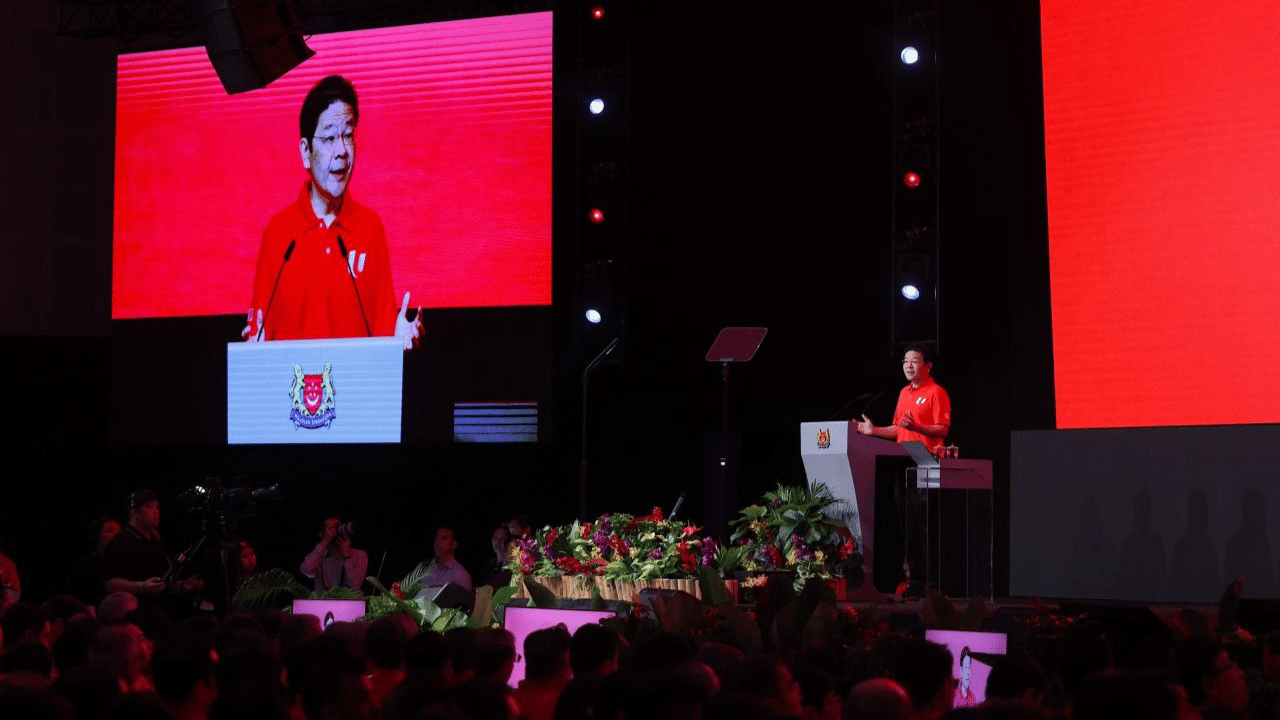
Speaking at a labour movement event, Singapore Prime Minister Lawrence Wong said the country was entering a period of “storm after storm,” citing geopolitical tensions in the Middle East, disruptions to global energy supplies and the accelerating impact of AI on businesses and jobs.
Referring to the prolonged closure of the Strait of Hormuz amid escalating tensions involving Iran and the United States, Wong said the disruption was already affecting fuel supplies, shipping and manufacturing across Asia.
“Supply disruptions will persist and may worsen in the months ahead,” he said, warning that inflation could spread from energy to food and other essentials, while some economies may slip into recession.
He compared the current risks to the oil shocks of the 1970s, cautioning that the world could face renewed stagflation, a combination of economic stagnation and high inflation.
“Some economies may well slip into recession,” Wong said, adding that Singaporeans should prepare for “a more difficult period ahead.”
Despite the uncertainty, Wong stressed that Singapore was better positioned than many countries due to decades of investments in energy resilience, including the development of Jurong Island, petrochemical infrastructure and underground storage facilities.
He credited Singapore’s “tripartite” model, collaboration between government, businesses and unions, for helping the country weather earlier crises without large-scale job losses.
“Companies did not simply cut costs and abandon workers. Unions did not resist change. We worked together, adapted and came through stronger,” he said.
A major focus of the speech was the transformative impact of AI on the future of work. Wong described AI as “the defining technology of our time,” noting that it was already changing how companies operate and how jobs are structured.
Citing examples from Google, Wong said AI-generated code had risen sharply within the company over the past few years, changing the role of software engineers from coders into “architects, orchestrators and system builders.”
He also highlighted the growing use of AI agents capable of handling complex workflows such as drafting reports, managing administrative work and running social media operations.
“The impact will be massive. AI will not just improve productivity. It will disrupt and reshape entire industries,” he said.
To prepare Singapore for the shift, Wong said the government had established a National AI Council aimed at building AI capabilities, driving adoption across industries and positioning Singapore as a regional AI hub.
He pointed to investments by global technology firms, including Google DeepMind establishing its first Southeast Asia AI research lab in Singapore, as well as the expansion of AI startups into the country.
Singapore is also ramping up worker support measures, including integrating skills training with job matching services through a new Skills and Workforce Development Agency.
Wong said workers would receive expanded support through SkillsFuture initiatives, including easier access to AI-focused training courses and six months of free access to premium AI tools for selected programmes.
Acknowledging growing concerns about job displacement, Wong admitted that some roles would disappear as AI adoption accelerates.
“I cannot promise that there will be no disruption,” he said. “Jobs will change. Some will disappear and the pace of change will be faster than anything we have seen before.”
However, he pledged continued support for workers navigating the transition.
“We may not be able to protect every job, but we will protect every worker,” Wong said.