










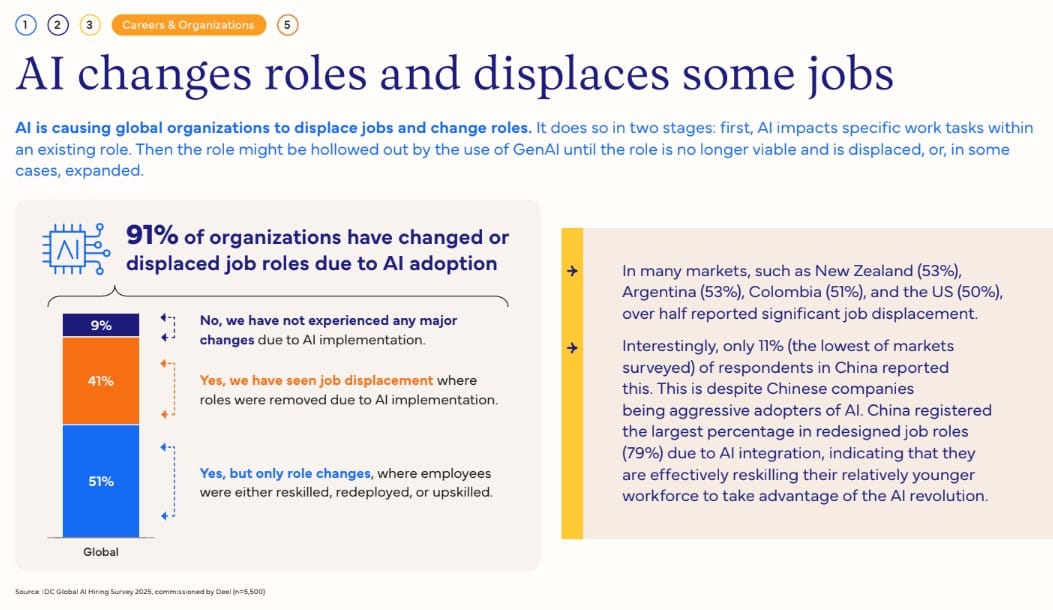
91% say roles are already changing or disappearing because of AI, finds a new global study by IDC, commissioned by Deel.
According to the report titled, ‘IDC InfoBrief “AI at Work: The Role of AI in the Global Workforce’, the workforce is entering a period of accelerated disruption, one where AI is transforming roles faster than companies can rebuild their talent pipelines.
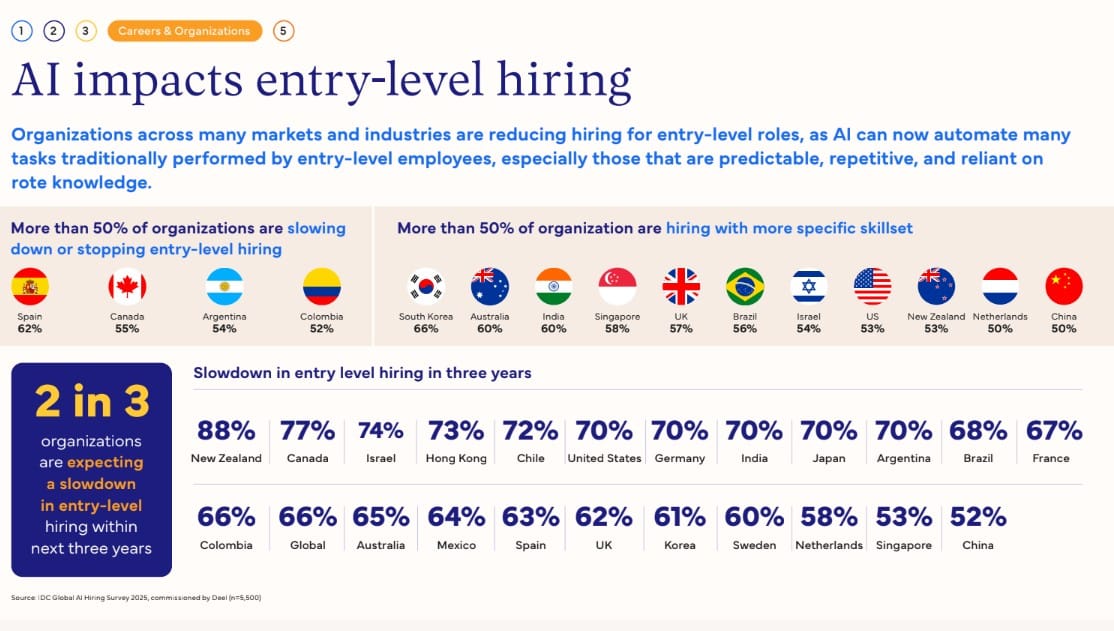
Some of the key insights indicate that two in three global organisations (66%) expect to slow entry-level hiring over the next three years, resulting in a widening skills gap, diminishing on-the-job learning opportunities, and growing pressure on companies to rethink how they develop future leaders.
Amid this disruption, the study also points to a proactive shift, with nearly 67% of organisations are already investing in AI training programmes as they race to upskill workers and future-proof talent pipelines. The findings come from a survey of 5,500 business leaders across 22 markets.
“AI is no longer emerging, it’s fully here,” said Nick Catino, Global Head of Policy at Deel. “Entry-level jobs are changing, and so are the skills companies look for. This isn’t just about staying competitive. It’s about staying viable.”
A workforce in flux, roles redefined, pipelines under pressure
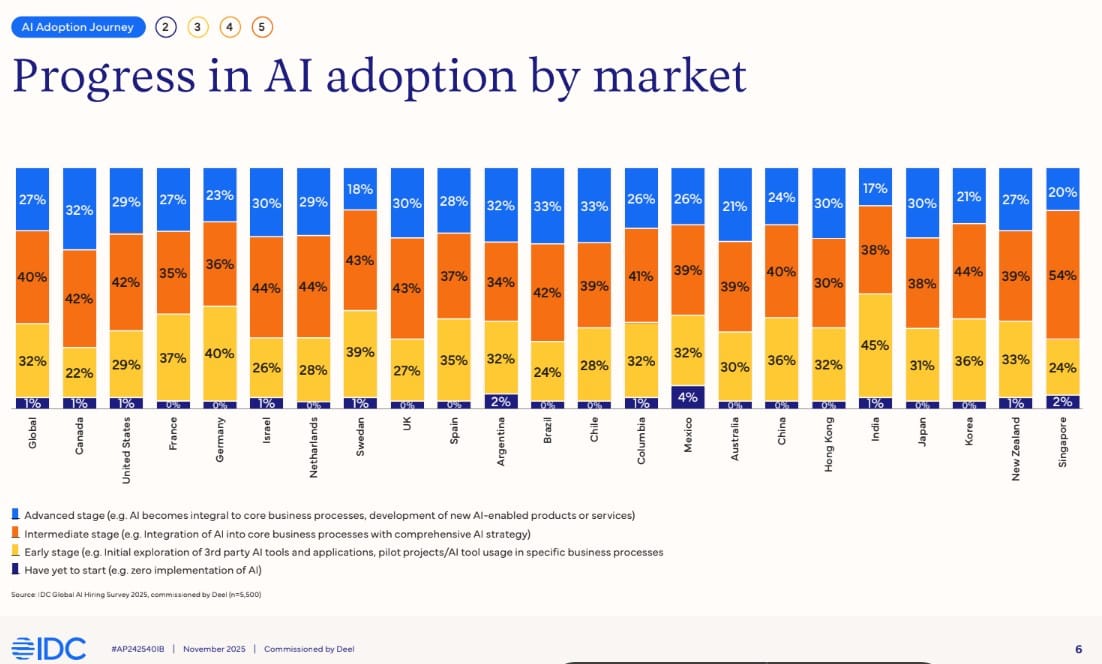
AI adoption is now near-universal, with 99% of organisations using AI and almost 70% fully integrating it into operations. But with automation swallowing routine and knowledge-based tasks, the impact extends beyond job displacement.
As entry-level hiring slows, companies are struggling to maintain leadership pipelines and early-career training channels:
- 75% of Singapore firms report difficulty developing future leaders due to shrinking entry-level learning pathways — higher than the global average of 71%.
- 70% say on-the-job development opportunities for junior staff have declined.
Industries feeling the most pressure globally include media, retail, healthcare, professional services, and logistics.
Job displacement and role redesign
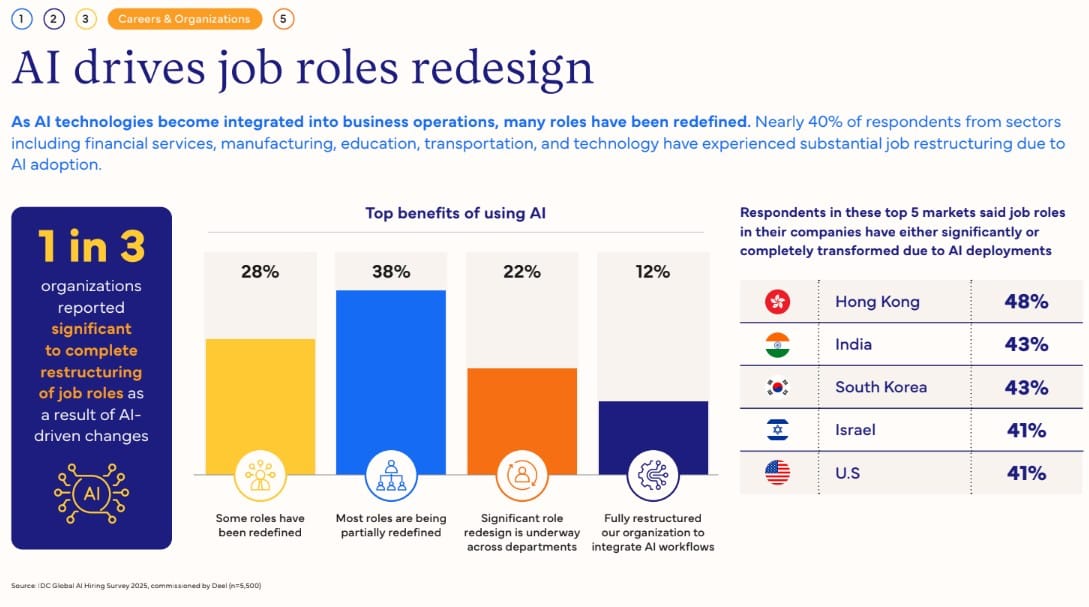
The report shows 91% of organisations have experienced role changes or displacement, with one-third undergoing significant workforce restructuring to integrate AI.
Singapore records the highest job displacement in Asia at 48%.
China stands out, with just 11% reporting displacement. Instead 79% of Chinese firms emphasise job redesign, supported by national reskilling initiatives.
Reskilling accelerates, but engagement and accountability lag
The report shows, while two-thirds of companies are investing in AI training, the road to reskilling is far from smooth:
57% cite limited employee engagement.
51% struggle with budget constraints.
45% lack expert trainers.
Only 3% have cross-functional teams to coordinate AI reskilling.
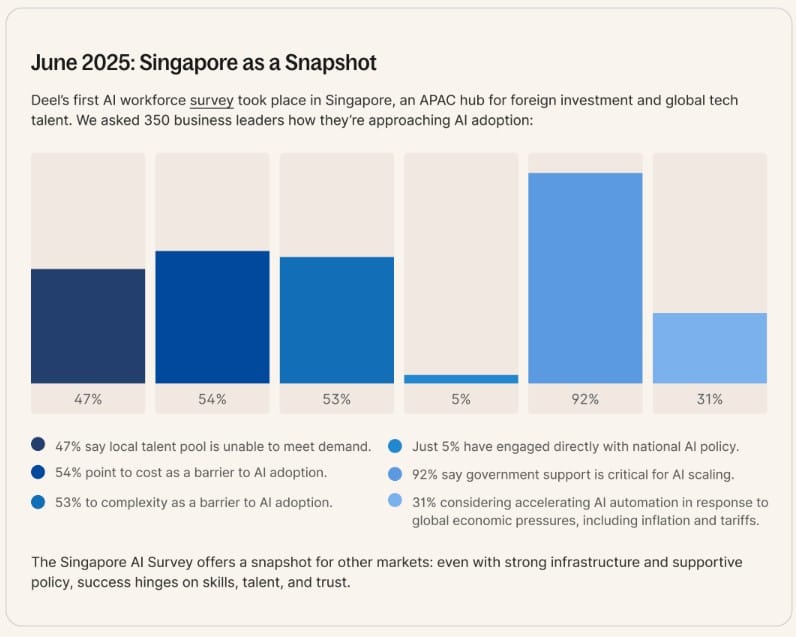
It ranks third globally in AI training investment, yet has the lowest employee engagement (64%) in the region. Budget constraints remain a major barrier, reported by 56% of Singapore firms.
New rules for entry-level talent, practical skills trump degrees
With roles changing, the traditional degree-first hiring model is fading fast. Only 5% of global organisations, and just 2% in Singapore, consider university degrees essential for entry-level roles.
Instead, companies now prioritise:
Technical certifications and AI tool proficiency (66%)
Problem-solving and critical thinking (59%)
Communication and collaboration skills (51%)
Singapore’s expectations run even higher:
69% value technical certifications
61% prioritise critical thinking
And 50% now want entry-level candidates to show a portfolio of work, signalling a shift toward proof-of-skill over academic credentials.
AI talent shortage and legacy systems slow progress
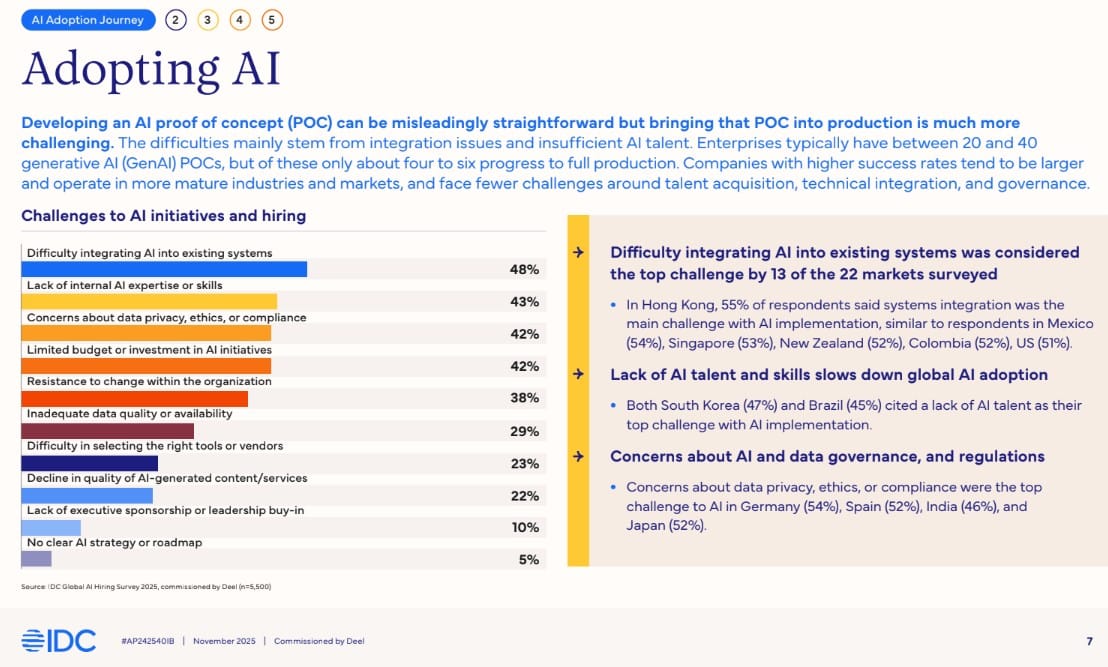
Even with training initiatives underway, structural challenges remain. The report shows nearly 48% of companies agree that legacy systems hinder AI integration, while 43% cite a shortage of skilled AI talent.
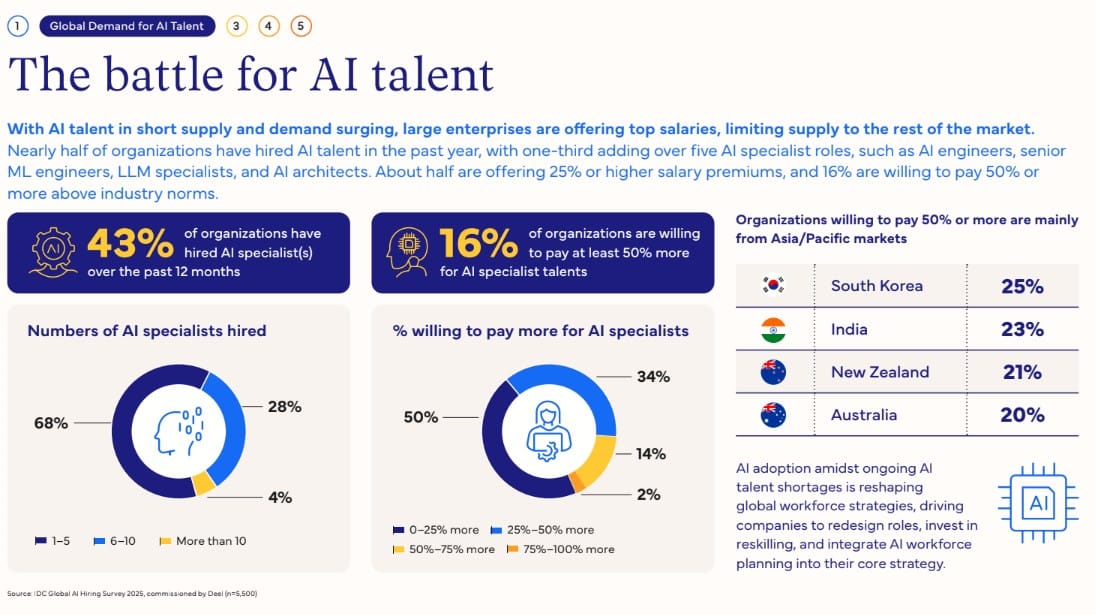
As demand outstrips supply, organisations are raising compensation to compete:
50% of employers are willing to pay AI specialists 25%–100% more.
In Asia-Pacific, Korea (25%), India (22%), New Zealand (21%) and Australia (20%) lead in offering the highest premiums.
Singapore follows at 15%, and sources most of its AI talent from Southeast Asia (73%), followed by South Asia (39%) and East Asia (32%).
Companies are also using non-monetary incentives, such as access to advanced AI tools and clearer career paths to retain top talent.
The governance gap, as AI use outpaces AI policy
The report flags a significant regulatory and governance gap as AI adoption accelerates:
Only 16% of firms are very familiar with local AI regulations.
Just 24% find these rules clear or supportive.
Internally, only 22% have formal policies on employee AI use.
Most organisations, including 56% in Singapore, rely on informal guidelines, exposing them to compliance risks and ethical blind spots.
“Artificial intelligence is reshaping the global workforce at an unprecedented pace, outstripping any recent technological shift,” said Dr. Chris Marshall, Vice President for AI in Asia Pacific at IDC.
“Companies that will thrive are those that pair automation with a human-centred vision, reskilling workers, redesigning entry-level opportunities, and ensuring governance keeps pace with innovation.” Marshall added.