








AI & Emerging Tech
How upskilling the Filipino workforce can turn AI into an ally





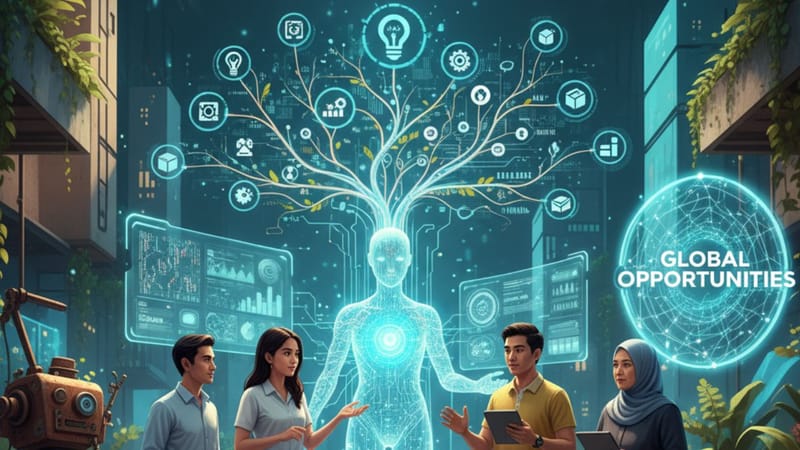
Upskilling the Filipino workforce is the key to turning AI from a disruptor into a collaborative force for inclusive growth.
Not long ago, the biggest workplace fear was outsourcing. Today, its algorithms. Across industries, automation and artificial intelligence are no longer distant disruptors; they are here, rewriting job descriptions, reshaping industries, and putting pressure on workers to adapt or risk being left behind.
But disruption doesn’t equals disaster. If companies can pivot from reactive to proactive, they can turn AI from a threat into a tool, future-proofing their workforce by investing in one critical asset: continuous learning.
In the Philippines, where millions of workers power global industries like BPO, IT, and creative services, the stakes are even higher. The challenge is not just to protect jobs, but to prepare people for the kinds of work that don’t even exist yet. That’s where upskilling becomes more than a buzzword, it becomes a survival strategy.
From fear of obsolescence to empowered agility
At the World Economic Forum earlier this year, one term resonated with business leaders: FOBO, or Fear of Becoming Obsolete. It’s not paranoia, it’s reality. As AI tools accelerate, even highly skilled employees worry about their relevance.
Boston Consulting Group executives have argued that AI should not replace people but complement them, shifting human workers into new roles in oversight, orchestration, and risk management. But to achieve that, employees must evolve their skill sets, and companies must provide the tools and pathways to make that possible.
The message is clear: reskilling isn’t optional; it’s the only way forward.
Why continuous learning matters more than ever
In the Philippines, the need for continuous learning is especially urgent.
The Private Sector Advisory Council (PSAC) recently launched a program to train 340,000 BPO workers and students each year, equipping them with digital and AI-ready skills.
The IT & Business Process Association of the Philippines (IBPAP) has set an ambitious target to upskill one million workers by 2028, with a focus on AI literacy, data analytics, and cybersecurity.
These programs highlight a bigger truth: companies that embrace continuous learning can protect both productivity and people.
How companies can future-proof their workforce
So, what concrete steps can organisations in the Philippines take to get ahead of automation and AI disruption?
Adopt a skills-first mindset: Shift hiring and career development from rigid job titles to adaptable, skills-based roles.
Build personalised learning journeys: Use AI-powered training platforms to tailor programs to individual career paths.
Empower citizen developers: Train employees outside IT to use low-code tools, enabling them to automate everyday tasks and innovate from the ground up.
Make learning part of culture: Reward employees who upskill, and showcase success stories to inspire others.
Balance efficiency with knowledge transfer: Use AI as a co-pilot, supporting, not erasing, entry-level roles where workers gain critical experience.
Where ideas meet action: TechHR Pulse Philippines 2025
For leaders ready to move from theory to practice, there’s a rare opportunity to connect with global and local experts. On September 12, 2025, the People Matters TechHR Pulse Philippines conference is scheduled to take place at Marriott Manila.
Know more about the TechHR Pulse Philippines here.
Unlike traditional HR conferences, TechHR Pulse goes beyond trends. It offers hands-on workshops, real case studies, and conversations with top HR and business leaders who are actively rethinking how organisations can thrive in an age of AI.
It’s where strategies on upskilling, skills-based hiring, and employee resilience become actionable roadmaps. And for Filipino companies navigating the twin challenges of automation and opportunity, it’s a timely platform to find direction.
The way forward
AI and automation are rewriting the rulebook of work. The winners won’t be the fastest adopters of technology, but those who invest in their people making learning as constant as change itself.
For the Philippines, this indicates movement, bridging skill gaps, and embracing continuous upskilling not just as policy but culture. The gig economy, BPO, IT, and even traditional industries will depend on it.
The future of work isn’t something to fear, not if we prepare. And preparation begins with one bold step: teaching our workforce to outlearn disruption.
Author
Loading...