








AI & Emerging Tech
HR needs to be a frontline department not a backend function: Dr. Eugene Fidelis Soh





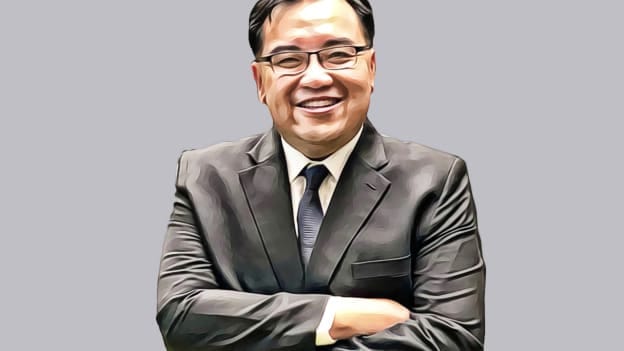
In an exclusive interaction with People Matters, Dr. Eugene Fidelis Soh, shares how leaders can accelerate digital transformation in their respective organizations and key critical areas which the future workforce in healthcare needs to focus on to be future ready.
Dr. Eugene Fidelis Soh is CEO of Tan Tock Seng Hospital (TTSH) and Central Health. TTSH is the flagship hospital of the National Healthcare Group (Singapore), an AON Hewitt Best Employer (Singapore) 2013 & 2015, Hay’s Employer of Choice at the HR Management Asia Awards 2018, and Association for Talent Development Best Awardee 2019. He is the Chairman of the Centre for Healthcare Innovation (CHI) Co-Learning Network established in 2016. Since 2010, Dr. Soh has led the development and launch of Singapore’s first integrated master plan for a new medical hub – HealthCity Novena Master Plan 2030. He leads the Leadership & Organizational Development for the National Healthcare Group. Nationally, he contributes to the innovation and development of the future workforce in healthcare.
In an exclusive interaction with People Matters. Dr. Soh, shares how leaders can accelerate digital transformation in their respective organizations and key critical areas which the future workforce in healthcare needs to focus on to be future-ready.
How do you instil a digital transformation mindset in your organization?
“A digital transformation has less to do with technologies and more to do with the people.”
Everyone loves innovation but no one loves to change. If you look around your organization, you will see many digital innovation pilots unable to sustain, scale or spread. It happens when pilots go chronic or get stuck; where innovation does not lead to transformation. In order to drive digital transformation, we need to innovate innovation itself to empower a digital transformation mindset.
We believe that a systems-based mindset to transformation is key. We call this our Innovation Cycle that starts with understanding and redesigning our business models (or in healthcare, our care models). This enables innovation to focus on what our customers value. Once the future state is redesigned, we enable it with technologies to optimize its value and remove no or low-value tasks. This then enables our workforce to focus on higher-value work by redesigning their jobs. The Innovation Cycle is iterative as change is continuous in a transformation journey. The result is a better value for our customers and better jobs for our workforce.
What role does culture play in shaping the journey of digital transformation of any organization?
Culture is both a process and an outcome. One of the privileges I have as a CEO is to personally meet my colleagues who reach their retirement milestone with our organization. When I meet them at their work station, I take the opportunity to ask them what enables them to stay and not just stay but strive in the organization. They all tell me the same. They find the work they do meaningful; they have best friends at work; they treasure the learning opportunities to develop themselves. It is key that in our pursuit of organizational excellence that we also build the health of our organization. Organizational Health is our organization’s capacity for change and longer-term sustainability. In organizational health, we focus on what is below the waterline, what is less visible in our organization. This includes our capacities for renewal, relationships and learning.
In renewal, we need to develop our people beyond competencies to capabilities. Competencies enable us to do our jobs well; whereas our capabilities enable us to do our jobs better and differently, in order to do our jobs well. The idea with capabilities is to learn to fish and you will fish for life. In relationships, we need to build collective leadership throughout our organization. It is leadership more than leaders, and it is leadership at all levels of our organization. Collective Leadership embraces engagement tools for the individual to build a common language in the organization, teaming tools to build great teamwork across units, and networking tools to work across teams and organizations. In Learning, we need to shift from formal to social learning anytime anywhere in Communities of Practice. We need to also shift our mindsets from a performance-based assessment to a coaching-based growth one. Through Renewal, Relationships and Learning, we have our stay and strive factors that lead to meaningful work, meaningful relationships, and opportunities to learn & grow.
How can leaders accelerate digital transformation in their respective organizations so that it becomes a seamless journey from top to bottom?
If leaders focus on people, the people will focus on the business. Our colleagues are in the best position to make change happen. As leaders, we create the best environment for our colleagues to make change happen. In some organizations, 80% of the workforce does the BAU - Business As Usual and 20% focus on innovation. In other organizations, 80% of time spent on work is BAU and 20% is innovation for every staff. To accelerate digital transformation, we need both where we have innovation units but also that every job is empowered for change. This enables innovation at an organizational level and collective leadership across the organization to own our future.
What strategies can organizations adopt to digitize yet humanize at the same time?
“Better technologies should lead to better jobs, and in turn better customer value.”
It is often that we focus on better technologies and better customer value without better jobs. Every technology even those that are fully automated, are here to reproduce and replicate a human function. This should then enable our jobs to focus more time on the human touch. Today, our nurses spend an inordinate amount of time (from 70-90%) in managing the ward processes and paperwork from admission to discharge. If better technologies and automation can free them up from low or no value work, they will have better jobs that spend more time with patients. In this way digitalization leads to more human touch, keeping complexity at the back and humans at the front.
What is your key piece of advice to fellow HR and business leaders who are about to undertake their digital transformation journeys?
HR needs to be a frontline department not a backend function. How we deliver value to our people will resonate in how our people deliver value to our customers.
To enable a digital transformation, it is imperative for HR to go digital too. Going digital, HR can be anywhere anytime to enable staff to access HR on the job. The digital transformation of the workplace starts with HR. From onboarding to scheduling to micro-learning to coaching, such digital applications can enable staff to have HR at the frontline with them as they do their jobs. We can also build communities of practices online with chat groups and access key company information through chatbots.
HR needs to be in the boardroom, not the backroom. The key to digital transformation lies with our people. The investment into our learning budgets and manpower strategies enables our digital transformation journey. Investments into developing technologies without parallel investments into developing people is a sure disaster waiting to happen. As advocates, HR leaders play a strategic role in renewing and building our digitally-ready workforce for the future.
How is work automation going to change the future of the healthcare industry? What would you say would be the major trends?
“Automation in healthcare is about returning meaning to our workforce to find joy at work.”
Doctors and nurses spend significant time in administration and coordination of patient care, and therefore less time with patients themselves. The introduction of electronic medical records meant also that the doctor stares at the computer more than he or she sees the patient. If automation can free up mundane low-value tasks from our doctors and nurses, it will mean better decision support for them, better communication with patients and more time to engage patients in their health.
With an ageing population and the increasing burden of chronic diseases, healthcare is seeing a renaissance to shift care beyond the hospital back into the community. This means a more mobile healthcare workforce and working closely with community care providers in order to deliver care at home and in our communities. Today, the patient goes to where the care is, be it the hospital or clinic. Tomorrow, care should follow the patient. We need a transdisciplinary team to deliver effective care for our patients from beyond the hospital into the community. This means our digital tools need to go mobile, healthcare technologies need to be mapped to patient care, and patients empowered to own their health. Technologies with a system-based approach to innovation can transform our healthcare workforce and enable care to go beyond healthcare to health.
What do you think are the key critical areas which the future workforce in healthcare needs to focus on to be future-ready?
The future digital workforce in healthcare must be agile in change; and empowered by renewal capabilities, collective leadership and opportunities to learn and grow.
Author
Loading...