








Business
Miguel Enriquez on the shift from BPO to KPO and the future of outsourcing talent






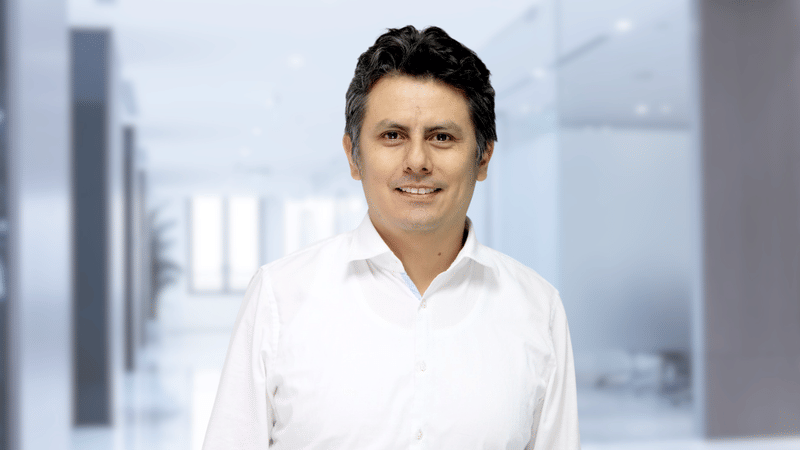
Asiatel Outsourcing's Enriquez explores how jobs will evolve over the next three years and why HR leaders must rethink career paths and reskilling.
AI is reshaping Asia’s outsourcing industry, pushing it beyond volume hiring towards deeper, specialised capabilities. In the Philippines, the shift from a 2028 headcount target to an “AI-enabled” workforce target reflects this transition, as BPO moves towards KPO and roles requiring analytics, research, underwriting and human judgement gain prominence.
In this exclusive interview, Miguel Enriquez, EVP for KPO and Centers of Excellence at Asiatel Outsourcing, shares insights on why traditional volume hiring models are breaking down, what the BPO-to-KPO transition demands in hiring and training beyond a simple rebranding of roles, and what replaces headcount-led growth when judgement becomes the core deliverable. He also explores what this shift means for talent strategy across outsourcing markets, beyond the Philippines.
Read the insights below:
The “AI-enabled” workforce shift, and what it means for the future of outsourcing in the Philippines
It's worth being precise about what actually changed, because it's more interesting than a simple downgrade. IBPAP's July revision lowered its 2028 revenue and headcount ranges from US$59 billion and 2.5 million jobs to US$43.3–$50.5 billion and 1.85–2.14 million jobs, and alongside that cut, it introduced a target that never existed before: two million AI-enabled digital Filipino workers by 2028. That's not a footnote. It's the industry telling itself, in public, that headcount is no longer the measure that matters most.
The signal underneath is a mix problem. Employment isn't collapsing. In fact, the industry grew jobs 4% to roughly 1.9 million in 2025 while AI adoption accelerated, and revenue crossed US$40 billion, up 5%, ahead of the global market's 3%. Volume hiring is losing its economics for a specific reason: once AI absorbs the transactional, rules-based layer of a process, adding entry-level seats stops being the fastest route to growth.
The faster route is adding people who can direct AI output, own client relationships and take on work that carries real accountability. We are seeing the talent mix change quite visibly.
Demand is moving beyond traditional execution roles toward more specialised capabilities from engineering to technology implementation and domain-led operations. Many of these roles barely featured in outsourcing conversations five years ago. Today, they are increasingly becoming part of the story.
For HR leaders reading the shift, the practical takeaway is that a target denominated in “AI-enabled workers” rather than raw headcount is an instruction to redesign job architecture before it becomes a hiring plan. Organisations that keep scoring growth by seats filled will find they've optimised for a metric the industry itself has just made secondary.
How is the shift from BPO to KPO changing the talent profile companies need to hire
The simplest way to describe it is a move from talent to transformation. BPO hiring optimised for throughput: how many agents, how quickly trained, how consistently scripted. KPO hiring optimises for judgment: can this person handle the exception, explain the reasoning, and be trusted with a client relationship that has no script to follow. Those are different hiring funnels, different interview processes, and frankly different people.
Four capabilities shall be rising fastest in our own recruiting. Domain expertise in fields like finance, engineering and ESG, where prior industry knowledge would shorten ramp time in a way generic BPO experience never could. Exception handling, the ability to recognise when a case doesn't fit the standard pattern and needs escalation rather than automation.
Client-facing communication, because as AI absorbs first-line interaction, the humans left in the loop are increasingly the ones clients speak to directly. And AI fluency, understood not as a technical credential but as comfort directing, verifying and correcting AI-generated output rather than either trusting it blindly or ignoring it.
What hasn't changed is the value of continuity. Our core team has stayed with us close to a decade on average, and that kind of institutional memory isn't something a job posting can manufacture.
The skills gap the industry is chasing is real, but it closes faster inside organisations that keep people long enough for judgment to compound, not just organisations that hire for it once.
What replaces the traditional volume-hiring model
Volume hiring optimised for one variable: time to fill a seat. What replaces it isn't a single new model, it's a different question at the top of the funnel. Instead of “how fast can this person be trained to follow the process,” the question becomes “how much adjacent judgment does this person already carry, and how fast can we get them productive inside our specific client context.”
That changes where recruitment teams look. We hire more from adjacent professional backgrounds now, engineering, finance, sustainability, rather than purely from the BPO talent pool, because domain instinct is harder to teach than our internal tools and workflows are.
It also changes pipeline structure. Volume hiring runs on a funnel that widens at the bottom. Expertise hiring runs closer to an apprenticeship model: fewer people in, paired deliberately with senior staff, given real client exposure early, and evaluated on judgment calls rather than throughput metrics. That's expensive per hire, but it pays off through retention.
We run well below industry-average attrition on our core team, against an industry that treats far higher turnover as normal, and an average tenure north of ten years, and that retention is the actual return on an apprenticeship-style pipeline. You can't buy institutional judgment on the open market. You have to grow it and then keep it.
The honest caution for HR leaders is that this model doesn't scale the way volume hiring did. You can't 10x an apprenticeship pipeline in a quarter. Companies redesigning around expertise need to accept slower, more deliberate growth in exchange for a workforce that's actually harder for competitors to replicate.
What does effective training look like in an AI-enabled KPO environment?
Honestly, not yet, at least not uniformly. McKinsey's State of AI research found 88% of organisations now use AI in at least one business function, but nearly two-thirds haven't begun scaling it across the enterprise. That gap between running a pilot and redesigning how a team actually works is exactly where training programs tend to fall short.
Most curricula still teach tool proficiency, how to prompt, how to use a dashboard, when the harder skill is judgment: knowing when to trust AI output, when to override it, and when to escalate.
The ecosystem response has been real, which is encouraging. The industry is putting roughly ₱1.4 billion, or about US$25 million, a year into training, and programs like the ₱740 million Project UNLAD with DICT and TESDA, and the PEZA AI Tech Academy in Cebu are aimed squarely at this transition, alongside a government commitment to upskill more than 300,000 BPO workers.
What effective training actually looks like, in our experience, is less classroom and more embedded. We operate as an extension of our clients' own teams, so training happens inside live workflows, under their controls, with experienced staff reviewing AI-assisted output alongside newer hires rather than a separate curriculum running parallel to the work.
Critical thinking and decision-making develop through repeated exposure to real exceptions with a mentor in the loop, not through a module. Organisations that try to build analytics and judgement skills through generic e-learning, disconnected from the actual work, are the ones most likely to end up owning the tools without the capability.
With nearly 2 million Filipinos in BPO, how can companies and regulators strengthen worker protections without affecting the sector’s global competitiveness?
The ‘protections’ question gets easier to solve the less a workforce looks like a revolving door. A large share of what shows up in this conversation, unpredictable scheduling, thin healthcare access, workers who feel replaceable, tends to correlate with high-churn, seat-filling operating models. It's harder to under-invest in someone's wellbeing when you expect to work with them for the next decade than when you expect to backfill their seat next quarter.
That's the operating model we've built around. Attrition on our core team runs well below what's typical for the industry, and tenure averages north of ten years, because we operate as an embedded extension of our clients' teams rather than a seat-filling BPO.
People are part of a continuing relationship, not a rotating roster, and that changes the incentives around safety, healthcare access and how seriously a rest-break policy actually gets enforced day to day.
As a publicly listed company, we also operate within a more formal framework of reporting, oversight, and governance, which reinforces the importance of consistency and accountability across the organisation. Audited reporting, board oversight and formal governance controls don't stop at financial statements, they extend naturally into how consistently workplace policies are actually applied, because the same accountability structures apply.
On competitiveness, my view is that this isn't a trade-off in the way it's sometimes framed. Clients in regulated markets increasingly want a partner whose internal standards look like their own, so treating workers well and staying competitive for enterprise contracts point in the same direction.
What I'd leave regulators and companies both with is a simple principle: clear, consistently enforced standards are more valuable to the industry's reputation than any single company's internal policy, however good it is.
Could the BPO-to-KPO shift widen talent gaps across Asian outsourcing hubs? What should governments, educators and employers do to close them?
Yes, and it's already visible. The Philippines competes for the same specialised talent as Vietnam, Colombia, Egypt and Poland, and every one of those markets is chasing the same narrow pool of people who combine domain expertise with AI fluency. Unlike commodity BPO seats, where scale advantages are somewhat portable across geographies, expertise-led KPO talent takes years to develop and doesn't transfer as easily between hubs. That makes the gap structural rather than cyclical, and it will widen before it narrows.
The Philippines still holds real advantages here; a leading share of the global outsourcing market and one of the deepest English-speaking services talent pools anywhere; but depth of pool isn't the same as depth of specialised expertise, and that's the gap that needs closing deliberately rather than assumed away.
Closing it needs the three parties named in the question moving together, not in sequence. Employers need to fund training that's tied to actual deployment, not generic upskilling divorced from client work, which is where I think our own embedded model has an advantage.
Educators need curricula that treat AI fluency and domain knowledge as core rather than elective, closer to what the PEZA AI Tech Academy in Cebu and Project UNLAD are attempting than a standard IT curriculum.
And the government's highest-leverage role is standing behind portable, recognised credentials for judgment-intensive KPO roles, the equivalent of what professional certifications did for finance and engineering, so specialised talent has a clear, verifiable career ladder rather than an informal one that only insiders can navigate.
By 2030, which outsourcing roles will grow, decline or change most due to AI, and how can workers and HR leaders stay ahead?
Third-party estimates put the global BPO market growing from roughly US$280 billion in 2023 to US$525 billion by 2030, a growth rate that, if it holds, will not be evenly distributed across role types. I'd flag that figure as third-party industry data rather than an Asiatel forecast, but directionally it matches what we're seeing in our own pipeline of client work.
Roles built around single-step, rules-based transactions, first-line data entry, basic tier-one queries, simple document processing, will keep shrinking as a share of total headcount, even if the industry keeps growing overall. What grows is work that pairs domain expertise with AI orchestration: engineering support, ESG and sustainability reporting, SaaS implementation and customer success, finance and compliance functions where judgment carries legal or financial weight.
And an entirely new category is emerging in between, roles whose whole job is verifying, correcting and improving AI output, something that barely existed as a job description three years ago and will likely be a standard rung on the career ladder by 2030.
For workers, the most useful thing to build isn't a specific tool skill, tools will keep changing, it's a track record of judgment calls that held up.
For HR leaders, that means redesigning career ladders so promotion criteria reward documented decision quality and exception handling, not just tenure or ticket volume, and building reskilling pathways before roles disappear rather than after.
The organisations that treat 2030 as a hiring problem to solve later will be competing for the same narrow expert pool everyone else waited to chase. The ones that start redesigning career paths now will have grown their own.
Author
Loading...