








Diversity Equity Inclusion
“Women face a ‘double vulnerability’ in the AI era”: Belinda Pervan on why organisations must prioritise inclusive growth





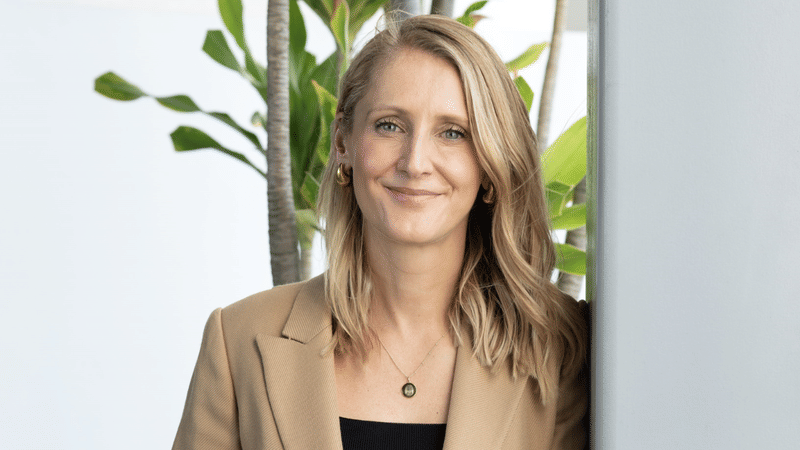
Organisations must first understand what holds women back in their specific context, says Belinda Pervan of Veeam Software, urging leaders to address inequities and avoid one-size-fits-all solutions built around historically male workforces.
As conversations around equity and inclusion continue to grow, the journeys of women leaders remind us that progress is often built on confidence, mentorship, and the courage to speak up.
In this International Women’s Day conversation, Belinda Pervan, Vice President, Asia Pacific & Japan Marketing at Veeam Software, reflects on overcoming self-doubt early in her career and the mentors who helped her reframe failure as growth.
She shares why strong communication, data fluency, and diverse experiences are becoming essential leadership skills, and why inclusive cultures and meaningful mentorship are key to helping more women step into leadership. Belinda also offers her perspective on how Southeast Asia’s tech sector is gradually opening new pathways for women to lead in the digital economy.
The journey from doubt to opportunity
The challenges I faced were ones I think are innately more prevalent in women, and chief among them was confidence. I was often the only female, and also the youngest, in the room.
Speaking up, trusting my opinions, believing I belonged there was something I struggled with. Research has shown that imposter syndrome is often more prevalent amongst women and that self-doubt can quietly limit how we show up.
What turned it around for me was having really good mentors and coaches who gave me the tools to reframe from how I saw failure. If someone is giving you an opportunity, they already believe you can do it. It’s important to have the same confidence in yourself, to put yourself forward even when you feel uncomfortable, and to treat mistakes as feedback.
Confidence is not something you wait for – it has to be built through action, reflection, and repetition.
Skills that shape future women leaders
Communication is the distinguishing factor. The ability to work with different stakeholders across levels and functions brings diverse perspectives into decision-making that translates into better outcomes for the business. This involves adapting your message for different audiences, being perceptive to different opinions and criticisms, and cultivating mutual respect and trust so that conversations can take place openly and constructively.
Being comfortable with data is increasingly non-negotiable to boost confidence and credibility with the business. When you understand what the numbers are telling you, you gain a level of visibility into what drives performance that shifts you from simply executing to actively shaping decisions and determining how to drive strategy.
Finally, seek breadth. Exposure to different markets, business models, and team dynamics builds adaptability. Senior leadership demands the ability to operate across cultures, manage ambiguity, and lead through change. The more varied your experiences, the more equipped you are to navigate complexity with confidence.
What inclusive workplaces should look like
This starts from making a conscious effort and embedding inclusion at even the most basic layer. Managers must be trained on unconscious bias — actively identifying and mitigating them — to ensure that everyone has equal opportunity to contribute and be heard, and that inclusion programs are meaningful rather than just tick-box exercises.
Psychological safety matters too: people need to feel secure to ask questions, take risks, and challenge assumptions without fear of judgement. When that baseline exists, the quality of thinking across the whole team improves.
I am a strong advocate for mentorship programs both within organisations and beyond – having a leader to learn from and aspire to changes the trajectory of a career in ways that formal training alone cannot. At Veeam, the Women in Green program supports the professional development of female employees through webinars, leadership workshops, and one-to-one mentoring, while the Elevate program offers an annual program with various components to mid-career, high potential women. Mentorship, to me, is about helping individuals build on their strengths, develop confidence, and realise their potential.
Beyond Veeam, I co-lead Mentor Walks Singapore, an Australian-founded initiative designed to make mentoring accessible to women everywhere. Mentors and mentees are thoughtfully matched based on experience and needs, and they walk and talk for an hour of knowledge exchange. In collaboration with Lean In Singapore, we have hosted large-scale Mega Walks with more than 150 women participating. These initiatives demonstrate that structured, accessible mentoring goes beyond just developing individuals, it builds a community of women who uplift each other.
How organisations can accelerate women’s leadership
Take the time to understand what is holding women back in the specific organisational context — examine whether there are inequities or silenced voices in decision-making and resist the temptation to apply generic solutions. The answers need to reflect the actual differences in experience, not simply replicate what has worked for a historically male workforce.
It is also important to redefine leadership archetypes.
If leadership continues to be unconsciously equated with a narrow set of traits or styles, organisations will continue to overlook capable women who lead differently. Expanding the definition of what strong leadership looks like creates space for diverse strengths to thrive and be valued.
Through my years of participation in mentoring programs, I have seen that investing in individual relationships built on trust and honest feedback moves the needle in a way that policies alone cannot. When people feel seen, supported, and challenged constructively, confidence grows and with this comes the willingness to step into bigger roles.
Progress and possibilities for women in Southeast Asia
We have finally reached the stage where Southeast Asian companies recognise that they were behind, hence spearheading a shift. A 2024 study found that 70% of tech companies in Southeast Asia now have initiatives to improve the recruitment, retention, and advancement of women – a jump of more than 20 percentage points from 49% in 2020. Singapore leads the region with women making up 40% of the tech workforce. These are meaningful signals of progress worth celebrating.
However, I think we're still in the early stages of understanding the differences in the challenges and opportunities that women need to thrive. With the acceleration of AI adoption comes a double vulnerability risk as women now face underrepresentation in high-growth AI roles, and overrepresentation in functions most vulnerable to automation.
We need to be intentional about reskilling and redeploying talent, so women are not left behind in the next wave of digital transformation. Involving women in building and governing AI systems, for instance, ensures that technology is shaped by diverse perspectives from the outset.
A message to women leaders and those aspiring to lead
What gives me the most hope is the way women are showing up for each other. There's a growing culture of lifting one another up rather than competing, of celebrating each other's wins openly – and I think that has the potential to create a tsunami effect. When women get into leadership, they advocate for other women who would advocate more women. I’d like for us to keep the spirit going.
Author
Loading...