








Economy Policy
Protecting your workforce from climate change



|
Updated on


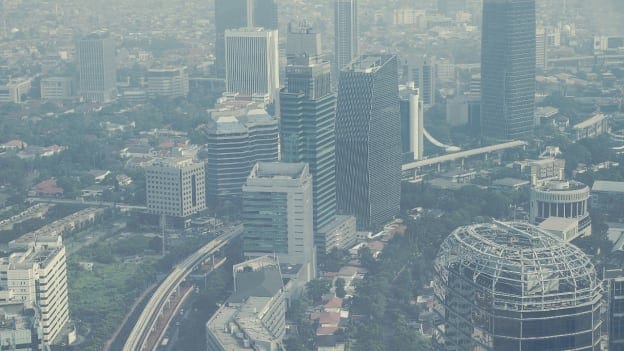
Handing out PPE and making work schedules heat-friendly is only addressing the surface problem. Companies need to look deeper.
2024's disastrous heat wave came back again this year, and although it was slightly less severe, the pattern is clear: the heat is here to stay, along with increased risk of typhoons, floods, droughts, wildfires, and severe disruption to critical industries including agriculture.
The economic impact of climate change has been quantifiable for years. The Swiss Re Institute estimated a few years ago that ASEAN countries could lose more than a third of their GDP to extreme weather in the next two decades. In particular, Indonesia, Malaysia, the Philippines, Singapore and Thailand would lose more than seven times their 2019 GDP by 2050.
The human impact is even more drastic. The Asian Development Bank found that more than 225 million people in the Asia Pacific were displaced by climate disasters between 2011 and 2021, with 69 million of those displacements happening in the ASEAN region. Indonesia, the Philippines, Thailand, and Vietnam were among the top 10 nations with the most number of natural disasters recorded in 2022.
Calls for change should not be ignored
In Thailand, 37% of SMEs surveyed reported that their employees were unable to come to work during climate-related events. In sectors such as manufacturing and agriculture, rising temperatures are affecting workers' health, safety, and productivity. Women, who make up 80% of the workforce in Vietnam's textile and footwear sector, are particularly vulnerable due to their occupational patterns and access to resources.
Simple measures like changing work schedules and implementing hydration breaks so workers can avoid the hottest part of the day and not suffer heat exhaustion are increasingly common. But these are just plasters over a deeper wound. Southeast Asian companies and indeed entire countries need to make a shift toward sustainability. This is not to recover from the damage that has already been done to the climate, but to prevent even worse damage from happening.
On a global scale, a shift toward sustainability could generate $43 trillion in economic benefits between 2021 and 2070, while avoiding losses of up to $178 trillion. For companies, this represents a business case to create long-term business value while improving workforce security.
There is now a concept of the “green-collar” workforce reflecting this shift. Like the blue-collar and white-collar categories of previous industrial revolutions, green-collar work spans all sectors. It is not defined by job titles, but by the influence of decarbonisation on tasks and skills. New jobs are only part of it, there are also changes to existing roles that need to adapt to green processes, and phasing out of jobs that will be made obsolete either by more sustainable ways of working or simply because climate change has affected an industry.
Skills upgrading as a strategic lever
One of the most interesting findings for business leaders is that 80% of the skills needed in the short to medium term for the green collar workforce already exist among current workers. This allows companies to focus on strategic skills upgrading rather than complete retraining. Prioritising skills over professional qualifications enables a more agile and inclusive transition.
Companies should view skills development as a high-return investment. Creating in-house training programs, partnering with educational institutions, or offering modular learning, such as micro-credentials, can ensure that the workforce evolves at the pace of business needs.
Several ASEAN member states are already moving in this direction. Policies are being implemented to integrate green skills into education and training systems, and public-private partnerships are paving the way for their practical application.
Aligning with the circular and green economy
The ASEAN Circular Economy Framework presents clear pathways for businesses to invest in resource efficiency, waste management, and green innovation. These sectors are poised to create alternative employment for people affected by environmental changes.
Through the ASEAN Declaration on the Promotion of Green Jobs (2018), member states have committed to recognising and promoting “green jobs” that promote equity and inclusive growth. Many companies are now aligning themselves with national net-zero strategies and are taking advantage of decarbonisation technologies that not only reduce emissions but also create jobs.
Protecting workers through social safety nets
Despite the high prevalence of informal employment in the region, strong social safety nets remain essential. This includes ensuring that migrant workers have access to social security during crises and after returning to their countries of origin.
The ASEAN Guidelines on Climate-Induced Mobility assign shared responsibility to sending and receiving States to protect workers throughout the migration cycle. The private sector also has a role to play in enforcing these standards and involving civil society and migrant communities in decision-making.
Forward-thinking companies are assessing and strengthening six capital assets: human, social, physical, natural, financial, and political. For workforce resilience, human and social capital are particularly important. This includes:
Health and safety at work: installing ventilation and cooling systems; offering medical check-ups and support for hydration; and providing climate-adapted benefits such as subsidies for healthcare or home insurance.
Community-based training: educating farmers on soil and water management or training local actors in emergency response. For example, ECOM Agroindustrial Corp. in Vietnam and Mars Indonesia train farmers in climate-smart agriculture.
Investments in infrastructure: Build flood-resistant facilities and weatherproof communications systems. For example, Vietnam's Furama Resorts is working with tourism associations to prepare for typhoons by preparing infrastructure and workforce.
Finally, climate resilience should be integrated into corporate governance. Companies are encouraged to designate dedicated staff or cross-functional teams to oversee climate risk assessments and resilience-building initiatives. These measures should be integrated into human resources strategy, corporate social responsibility, and business continuity plans.
Topics
Author
Loading...