








EMPLOYEE RELATIONS
How Sinopec shares growth with its employees


|
Updated on


The company's pledge: that no employee's family will suffer poverty or neglect.
Global energy giant Sinopec has a clear concept to its culture: a company cannot grow without its people, and vice versa. Under this principle, long-term business growth and employee well-being reinforce each other, as Sinopec's success has demonstrated over many years.
In a sector—and a regional context—where performance metrics often dominate and people practices are secondary, Sinopec tells a different story: one where people, not just projects, are the true measure of progress. Its employees are not treated as a cost or resource, but as co-creators of innovation and success. This approach is a deep-seated corporate philosophy of “shared growth.”
This philosophy came into sharper focus throughout 2024 and early 2025. Amid global economic pressures, rising raw material costs, and intense competition across Asia, Sinopec not only maintained its profitability but deepened its investment in people.
The company achieved a record-low accident rate of 0.3%—far outperforming the regional industry average of 1.6%. Workplace incidents declined by 25%, and mental health services expanded through 24/7 psychological support, digital tools, and frontline stress-reduction programs like the “Mindfulness Express Frontline Tour.” Rather than prioritising short-term margins, the company reinvested its success into well-being, equity, and resilience.
An outlier where people-centric policies remain rare
To understand what sets Sinopec apart, it’s important to place its efforts within the broader landscape of Asia’s industrial and construction sectors. Across much of the region, including China, the Philippines, Vietnam, and parts of South Asia, heavy industry is still shaped by intense production pressure, long work hours, and limited attention to mental health, labour participation, or inclusion.
While China has strengthened labour regulations in recent years, especially regarding safety and pay compliance, enforcement can vary widely. In many firms, especially in large-scale infrastructure and energy, employee input into corporate decisions is minimal, and benefits like mental health services or family support remain extremely limited.
Against this backdrop, Sinopec’s employee policies are exceptional. With over 30,000 employees and revenues of RMB 80 billion in 2024, it is one of the largest players in its field, yet it operates with a level of human-centred care typically associated with smaller, mission-driven organisations.
Its “Three Unallowables” pledge—that the company will not allow any employee to have their family fall into poverty, face medical neglect, or have children drop out of school due to financial hardship—is a rare example of institutionalised care in the sector.
The company's commitment to inclusion also reflects a progressive stance not always found in regional counterparts. With structured protections against discrimination, legal oversight of all labour contracts, and proactive support for women, migrant workers, and people with disabilities, Sinopec is helping to push the industry toward more equitable standards.
A holistic model for employee empowerment
Central to the company’s approach is a belief that business success must translate into personal development. This is backed by major financial and organisational commitments. In 2023 alone, the company invested an estimated CNY1.2 billion (over US$167 million) in research and development, not only to stay competitive, but to expose employees to cutting-edge tools, knowledge, and best practices. Programmes like the “Stronger Operation Competency” model and skills competitions foster a mindset of continuous improvement, helping staff to build future-proof careers.
Safety, both physical and psychological, is another pillar of the company’s values. Structured training, technology adoption, and compliance protocols have led to remarkable results. But the real innovation lies in the company’s integrated mental health model: employees have access to digital resources like the “EAP Cloud Classroom,” personal counselling, and dedicated crisis support via the “Mindfulness Express” initiative. These are core elements of how the company defines workplace dignity.
Compensation is structured to reflect contribution. While profit-sharing schemes tied directly to net income have not been publicly disclosed, the company uses a balanced system of base salary, performance bonuses, and long-term incentives to reward impact and initiative. Additional benefits—including parental leave, supplementary health insurance, and corporate annuities—offer life-stage support and financial security well beyond basic legal requirements.
The company’s governance system is another hallmark of its “shared growth” ethos. Through the Workers’ Congress system, elected employee representatives help decide on matters such as pay, benefits, and working conditions. This mechanism, though available in many Chinese state-linked enterprises, is often symbolic; at Sinopec, it is functionally integrated into corporate decision-making.
The company also builds connections beyond the office. Family visits, hardship assistance, seasonal support programmes, and emergency aid form a wide social safety net. This reflects a view of employees as whole people with lives, families, and responsibilities that extend far beyond the worksite.
As Sinopec continues to expand its global reach—especially in markets across the Middle East, Southeast Asia, and Africa—it brings with it a model that redefines what it means to be competitive. Rather than see care and profitability as opposing forces, the company shows how each can strengthen the other.
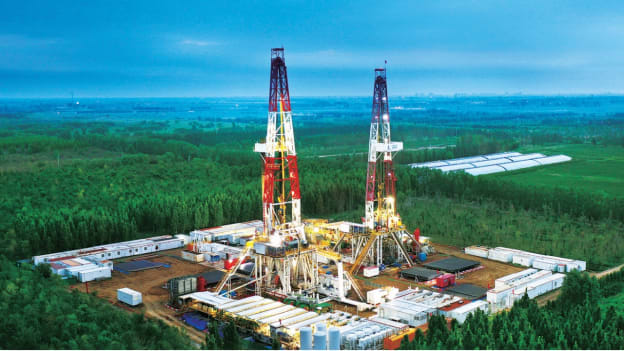
Image from Sinopec's 2024 annual report.
Author
Loading...