








Employee Skilling
When tech changes the industry, change how you develop talent






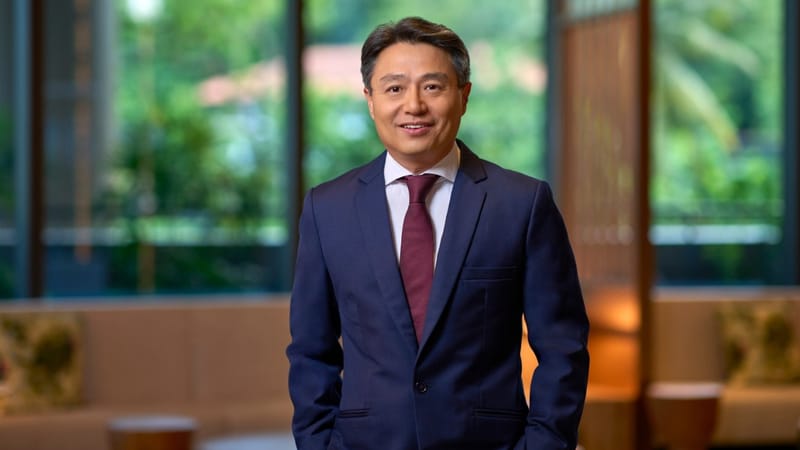
Digital transformation is shifting the way people work in the hospitality industry. What does that mean for talent development? Lee Ngor Houai, COO for EMEA, South Asia and China at The Ascott Limited, explains.
Ascott made headlines earlier this year with its ambitious plan to open 300 new properties in the next three years, with a tandem expectation to hire for at least 12,000 roles worldwide.
There's no shortage of talent in the industry - job boards like Indeed have recorded increasing interest in hospitality and tourism jobs over the last twelve months. But training that volume of talent, in a relatively short period of time, for customer-facing work that can be highly demanding, is another challenge entirely.
People Matters asked Lee Ngor Houai, Chief Operating Officer for the EMEA, South Asia and China regions at The Ascott Limited, for some additional insights into how the company plans to ramp up its workforce to match the expansion. Ngor Houai, who co-chairs the Ascott Learning Council alongside Chief Strategy Officer Wong Kar Ling, shared that the top-of-mind consideration right now is how technology is changing the nature of work in the industry.
"The future of work in hospitality is being redefined by rapid digital transformation," he said. "Technology is reshaping the roles of our associates, from streamlining front-of-house operations to automating back-end processes."
And it is insufficient for those in the industry to just adapt to such a profound change, he pointed out; they have to actively take a hand in leading or at least shaping the transformation.
The importance of shared accountability
"Business and people leaders must co-own talent outcomes, not just hand off requirements," Ngor Houai explained. "This means aligning on core business priorities and translating them into specific talent strategies that work both globally and locally."
For example, the Ascott Global Academy for Excellence (AGAX), the company's central platform for training and development, was created as a joint initiative with business leaders and accredited learning partners. This was the best way to ensure that learning tracks on the platform directly support operational needs.
There is also a large element of employee engagement involved, in acknowledgement of the fact that getting people to learn needs to be about internal motivation rather than external prescription. A very large part of it is creating relevance, Ngor Houai said, especially when it comes to digitalisation and implementing new technological initiatives.
"What we have found most valuable is focusing on solving real operational challenges rather than digitising for its own sake, like addressing skill gaps during busy seasons or easing technology adoption," he said.
And on a broader scale, relevance need not be confined to someone's immediate role, but also to the larger operations of their location, their region, or even the company as a whole.
Why localisation makes a big difference
Relevance also comes from ensuring that people learn in a way that is most suited to their needs. For example, said Ngor Houai, a housekeeper in Jakarta will have different learning needs and constraints than a revenue manager in London, and whatever training and development opportunities are offered to them have to work with that difference.
"We have learned that one-size-fits-all does not work in hospitality talent development. Each region has its own unique cultural and operational nuances. EMEA, South Asia and China are made up of many different local markets that require tailored talent strategies and a deep understanding of stakeholder expectations, be it from our associates, guests, owners or developers."
"In China, for example, we are investing heavily in digital fluency and tech-forward service delivery because guests expect seamless mobile integration. In EMEA, our focus is on multilingual capabilities and cultural sensitivity given the diverse guest mix. South Asia requires entrepreneurial skill-building as we are often working with local partners who value business acumen alongside hospitality excellence."
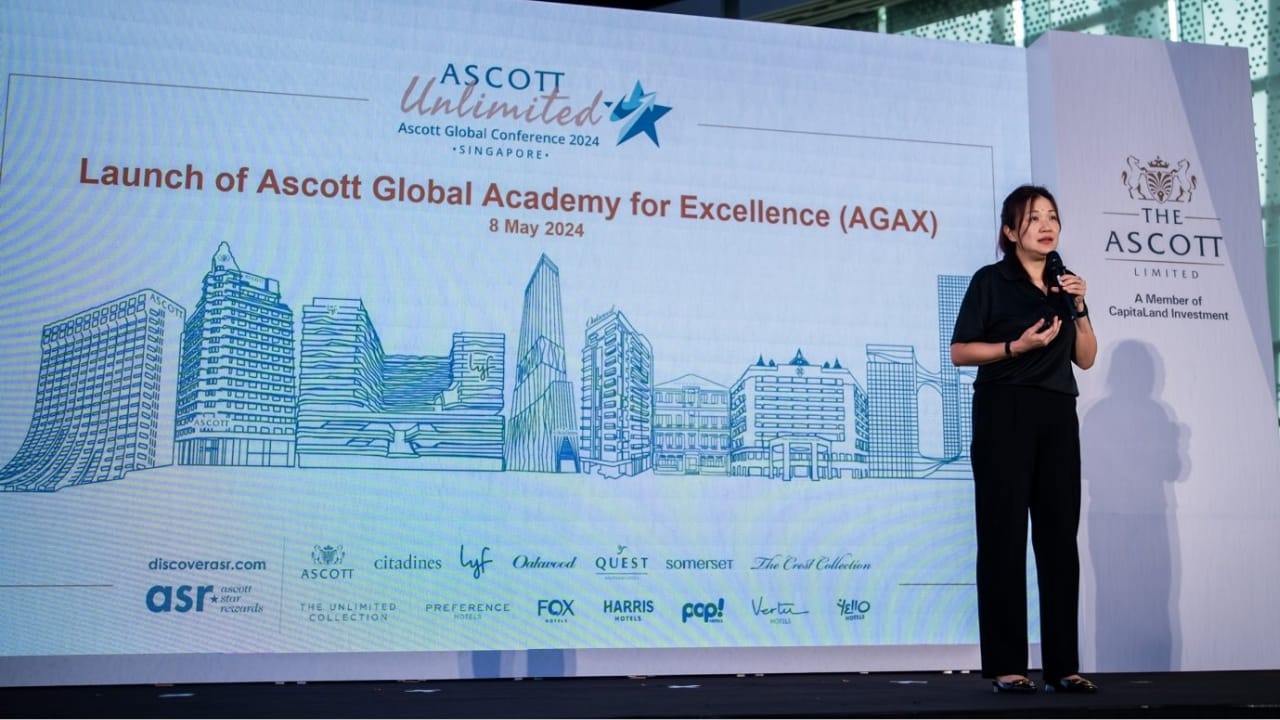
Here are some of the talent management initiatives Ascott has rolled out.
The Ascott Global Academy for Excellence (AGAX) - a unified platform that provides talent development programmes for career growth, on-the-job training for real-world experience, and immersive learning events. It covers apprenticeships, hospitality training, and service excellence programmes, with both in-person and virtual courses for greater accessibility.
Ascott Accelerate - a structured talent management initiative within AGAX that fast-tracks high-potential associates into leadership roles through three progressive tracks: Aim, Advance, and Aspire, each tailored to different leadership levels. The programme uses a combination of mentorship, on-the-job training, project-based learning, and e-learning to support career growth from entry-level roles to key property leadership positions.
The Ascott Global Exchange (TAGEX) - a programme within AGAX that offers associates the opportunity to gain exposure through short-term overseas postings, fostering cross-cultural learning and shared best practices.
Learn@Ascott - a digital learning platform under AGAX that provides bite-sized learning designed to fit into busy operational schedules.
The Ascott Learning Festival – a regular event featuring in-person masterclasses with industry thought leaders on everything from F&B innovation to change management.
The Ascott Innovation Challenge - a programme to encourage creativity in delivering brand experiences.
The future of people strategy in the hospitality industry
Given the concerns across multiple sectors that technology will displace jobs, where might the talent strategy for this particular industry be headed? Not in that direction, Ngor Houai is firm. Even though job scopes and roles may be redesigned, people will still be a core part of the strategy.
"A rapidly digitalising landscape requires greater technology integration, not the replacement of human potential," he said. "As technology transforms the work of our associates, we are prioritising retraining and reskilling initiatives in our people strategy to ensure they have the exposure and confidence to navigate evolving technologies."
It is not just about upskilling, but also fostering a mindset shift, he said. The idea is to empower people to not only see themselves as users of technology but also future innovators in hospitality.
For example, when Ascott introduced an AI chatbot to handle basic customer queries in 2023, the technology freed up various teams to focus on complex guest needs rather than simple but time-consuming tasks.
"Technology should amplify human potential, not replace it," Ngor Houai said. "When done right, it creates more confident, capable teams who can deliver exceptional guest experiences."
Topics
Author
Loading...