








Employer Branding
How Starbucks Singapore inspires staff with purpose



|
Updated on


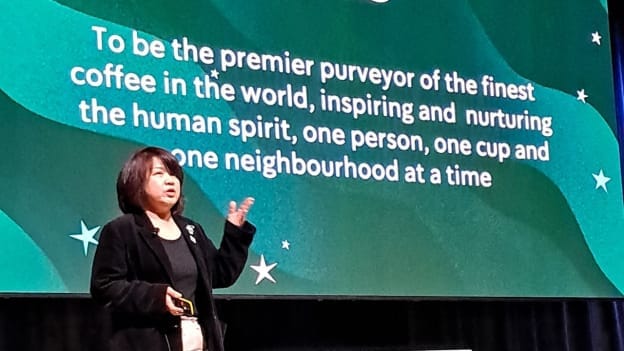
In a metric-driven world, Starbucks Singapore leads with heart. HR Head Celestina Lee shared how purpose, connection, and care fuel a people-first culture that truly engages its partners.
In today’s fast-paced, digital world, where work is often measured by Key Performance Indicators and performance metrics, Starbucks Singapore continues to lead with a different approach, that is putting people first. At last month's HR Learning Fest hosted by Singapore Polytechnic, Celestina Lee, HR head at Starbucks Singapore, delivered an inspiring keynote on how the company engages its employees, whom it calls “partners”, through purpose, connection, and opportunity.
Lee greeted the audience with a playful nod to the room’s distinguished guests and quipped about how best to address everyone. The lightness quickly gave way to a more grounded tone as she emphasised the real takeaway: “The important thing is that you’ve started your day right, and you’re here.” That balance of sincerity and approachability set the tone for what followed: a deeply human story of culture, care, and commitment.
Not just employees, but partners
Lee, who recently celebrated 11 years with Starbucks, reflected on why she’s stayed so long in the company. “It’s a testament to how the company really takes care of not just the customers, but employees — we call ourselves partners.”
The term “partner” isn’t symbolic. It reflects the belief that everyone, from a barista to a store manager to the Support Center team, is a stakeholder in the company’s mission: to inspire and nurture the human spirit, one person, one cup, and one neighborhood at a time.
“We’re not just giving you coffee,” Lee explained. “We’re also interacting with you. We’re also making sure there’s human connection when you step into the store.” This belief permeates every layer of the business, from front-of-house operations to HR strategy.
Lee also made a powerful point about employer branding: “Your teams already know that your employees are your best advocates. You don’t need to spend more money on beautiful posters or websites.”
When employees are genuinely engaged and supported, they tell the company’s story better than any campaign. As one partner aptly said, quoting Hallmark, “Don’t confuse work with purpose and meaning. It’s a two-way street. Love what you do, but the company should love you back.”
Opportunities for growth, not only jobs
Career mapping is another core part of how Starbucks supports its partners. Each team member has a clearly defined development path, including options to pursue coffee leadership or explore roles within the corporate Support Center.
There are ample chances for partners to grow across functions. For example, some store leaders work cross-functionally with other departments, enhancing both their career progression and understanding of the business. Others are selected to represent Starbucks at national and regional talent showcases, a testament to how the company supports internal mobility and celebrates potential.
Training is not limited to technical skills — it extends into coffee education. Starbucks provides coffee training and even sends partners to coffee farms worldwide. There, they learn not just about cultivation, but also the broader business of coffee. These immersive experiences allow partners to return as internal educators and brand ambassadors, helping others grow through shared knowledge.
One of the most impactful shifts Starbucks Singapore has made recently is removing performance ratings from its HR process. “There’s no performance rating,” Lee said. “Instead, we hold regular conversations with our partners. We discuss what they’ve learned over the past quarter, what lies ahead, and most importantly, we ask them, how can I support you? How can I be a better leader to you?”
The language used in these conversations is the key. “We focus on growth — so we use words like learning, owning, advising,” she said. “We steer clear of terms like expectations, unacceptable, outstanding, or exceedingly outstanding.”
These intentional conversations reflect the company's cultural belief in growth mindset and collaborative development, creating an environment where feedback flows in both directions and leadership is a partnership.
Culture in action: Everyday moments that matter
Lee’s insights were echoed by Starbucks employees, or partners, who spoke about their experiences in a video. One recalled joining the company 18 years ago and meeting a district manager who immediately recognised her and remembered her story. “It made me feel seen,” she said. “Every decision here is about taking care of people first.”
Another partner shared a story of serving an elderly couple visiting Singapore who returned to the store daily. Their warm routine underscored the brand’s deeper value: “We created consistency — a safe space of comfort and connection.”
Others reflected on the importance of autonomy and ownership. One partner, responsible for managing Starbucks Singapore’s LinkedIn page, highlighted how much trust is placed in individuals. “There’s a lot of autonomy in how I manage content — whether it’s videos, articles, or creative concepts,” the partner said. “It’s empowering.”
Starbucks also champions flexibility, especially for those balancing work and family. One working mother spoke about how supportive her store team is in accommodating her schedule. “I can work specific days and my manager makes it work,” she said. “This flexibility helps me maintain a healthy work-life balance.”
Others, including long-tenured partners of over two decades, spoke about how their roles have evolved with their lives. With maturity came mentorship, and with experience came the responsibility, and privilege, to lift others. “I realised I have the opportunity to inspire others and ensure everyone is seen for their true potential.”
A 'Third Place' to belong
Lee emphasized that in an increasingly digital world, authentic human connection is more vital than ever. “Loneliness is creeping up all over the world,” she said. “It’s important that we stay connected to our family and our friends. That’s why we all need a third place.”
“First place is your home. Second place is your work. Third place? It’s where you meet your friends and connect,” she said. In many ways, Starbucks is that third place, for customers and partners alike. The company’s latest innovation is its first Community Store dedicated to mental wellness, built in partnership with the Garden Fund. The store offers wellness workshops for children, seniors, and persons in recovery. Coffee tastings hosted by partners are paired with casual, meaningful conversations, creating moments of connection and care.
Starbucks’ values also extend beyond traditional work boundaries. One inspiring story shared by Lee involved a store development director who retired last year, but chose to return under the company’s re-employment policy, this time as a community outreach ambassador. Her role now focuses on making a lasting impact in the community, proof that Starbucks values contribution at every life stage.
Even sustainability is integrated into everyday operations. Partners actively engage customers in eco-friendly practices, including teaching them how to upcycle coffee bean bags into wallets, a creative effort that supports a greener future.
Final thoughts: A culture built on purpose
Lee’s keynote, alongside the voices of partners from across Starbucks Singapore, painted a vivid picture of a company that places its people at the center of its purpose.
From eliminating performance ratings in favour of meaningful conversations, to empowering partners with global opportunities, supporting work-life balance, and driving community initiatives, Starbucks isn’t just brewing coffee. It’s brewing a culture of belonging, care, and personal growth.
In Lee’s words, “For us, success in internal employer branding is when our partners have great moments at work every day and say that we are proud to be partners.”
Topics
Author
Loading...