








Leadership
A Global Leader’s Playbook: Kazunori Fukuda on building a ‘Third Culture’ to power digital transformation





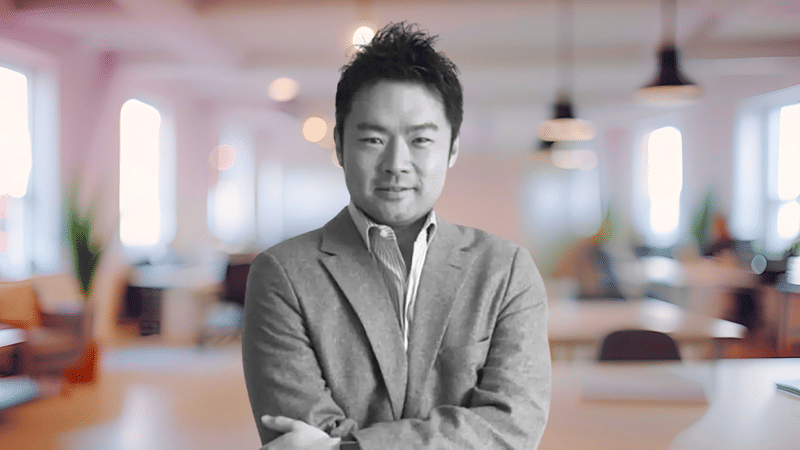
In a world where technology transcends borders but culture still defines connection, Fukuda’s journey offers valuable lessons for the modern leader.
Kazunori Fukuda, the newly appointed Managing Director of Sansan Global (Thailand), brings more than just global business expertise to his role. He brings a story of leadership shaped by cultures, continents, and continuous learning.
From his early days at Mitsui & Co. spanning Japan, Chile, and the UK, to now driving Sansan’s growth across Thailand and Singapore, Fukuda has mastered the art of building global teams that thrive on both diversity and shared purpose.
His leadership philosophy blends Japanese innovation with local insight, creating what he calls a “third culture”, a space where collaboration, trust, and creativity flourish.
In a world where technology transcends borders but culture still defines connection, Fukuda’s journey offers valuable lessons for the modern leader.
We had the opportunity to interview Fukuda to explore the global leader’s playbook, his vision of building a “third culture”, and his perspective on the future of work.
Read on for his insights:
Becoming a hands-on global leader: From human behavior or team dynamics
I’ve found that context can change but people’s core motivations do not. Everyone wants to do important work, be respected for their craft, and see progress that they can own.
That’s why my leadership is deliberately hands-on and this is what I learned from my ex-bosses throughout my career. I spend time at the “gemba” (the place where the work is done) with customers, ops, and engineers because this helps me understand how the frontline behaves. From experience, the frontline truth provides richer insight for our biggest strategic decisions than any perfectly structured presentation can.
I’ve also found that maintaining small, consistent rituals has a bonding and lasting effect, such as writing decisions down or starting meetings with a quick sharing of progress we’ve made.
This practice builds trust faster than long, one-sided speeches in meetings and I always encourage my team members to speak out and share decisions rather than waiting until being asked.
Finally, I learned to calibrate speed and precision.
Generally in Japan, we prize precision; in Southeast Asia, teams often move with bold speed. However, as Sansan was still a start-up company when I joined in 2017, the speed factor was highlighted in the company to achieve early growth and I realized the best, most sustainable results come when you consciously pair the two, using speed to gain momentum and precision to ensure quality execution.
Building a ‘third culture’ by blending different work cultures, and sparking innovation
Our "third culture" successfully blends disciplined Japanese innovation with the speed and customer empathy of local markets, such as our team in the Sansan Global Development Center’s hiring process in Cebu, Philippines.
The Japan-based engineering managers chose to personally conduct all candidate interviews to guarantee the highest technical and cultural fit for our new global team. The primary challenge was the language barrier, forcing the team leader, the only English speaker, to fully step out of coding and dedicate himself to management, translation, and clarifying project designs.
Yet, this initial difficulty sparked an unexpected strength: because the global team was launched with minimal English documentation, the new members developed remarkable self-reliance, actively identifying problems and finding their own work.
This culture of proactive ownership resulted in the formation of "Haraya," a high-influence team that grew from zero to eleven members in a year, proving that this blended approach helps develop camaraderie and talent across different cultures.
Unique opportunities and challenges in diverse regions, keeping the excitement up
Two things excite me in particular. The first is the scale and urgency of SME digitization in Thailand. Because invoicing, contracting, and sales pipelines are often still managed on paper and/or spreadsheets, a well-implemented cloud workflow can help firms optimise their business operations.
The second is Singapore’s clear, stable business laws and a deep pool of skilled talent help us create a strong foundation for our regional operations.
A key challenge lies in the region’s diversity, specifically the differing local business customs, varying technology adoption levels, and the need for localized training to bridge skills gaps.
But this complexity is our key opportunity: we get to directly enable thousands of firms to make the crucial shift from paper-based to cloud-based operations, which is highly commercially rewarding and deeply socially meaningful. We achieve this by actively co-creating solutions with local members on the ground, ensuring our designs are built for the real-world business customs of the region, and rapidly scaling the durable results across ASEAN.
Human-centric approach for accelerating digital transformation while balancing Sansan’s global strategy with local market realities
Technology only works when there is trust, which we build through good habits.
For one, show, don’t ask. Our engineers run a customer’s own data through prototypes and return with clear, side-by-side results. Conversations become concrete overnight.
We also keep humans in the loop. We design for augmentation, not automation, with measurable ROI and accountable owners.
Third, we invest in culture before scale. Our “AI-First” annual theme in 2025 at Sansan drove company-wide training and the company reached 99 per cent usage among employees, paired with responsible-AI rules with the aim to enhance our company’s productivity at each and every department.
We maintain strict global standards security and data integrity, while granting local teams full authority over user experience, language, payment approvals, and specific integrations. This balance ensures we’re rigorous where it counts and flexible where we need to be.
Leadership skills needed to foster innovation in multicultural, geographically dispersed teams
Tech will keep collapsing distances, but it won’t collapse differences in communication norms, appetite for risk, and decision-making speed. For example, while a video conference connects us instantly, it doesn't erase that one team may prioritize consensus while another prioritizes speed.
I believe psychological safety is a main factor, not just technology, in the future of global innovation. Innovation starts when we prioritize lowering barriers so that every voice is heard, most especially within multicultural, geographically dispersed teams.
For example, during our recent Global Meeting in Bangkok, we set explicit ground rules like "No need for perfect English" and used cross-cultural roleplay to rapidly build trust. These high-touch tactics cultivate the courage to speak up and reinforce shared principles like direct communication.
We practice cross-cultural sensibilities directly into our day-to-day collaboration norms to ensure continuous psychological safety.
To thrive in this new era of enterprise, I believe three critical skills are essential for leaders:
- Cultural fluency to facilitate genuine understanding across our diverse markets,
- Vision and commitment stressing that growth comes only from steady daily effort, and
- Storytelling capability to connect our founding spirit to the daily mission.
Cross-cultural leadership in a tech-driven world
Tech will keep collapsing distances, but it won’t collapse differences in communication norms, appetite for risk, and decision-making speed. For example, while a video conference connects us instantly, it doesn't erase that one team may prioritize consensus while another prioritizes speed.
The next generation of leaders must be systems thinkers and bridge-builders, able to hold global reliability and local truth at the same time.
Self-awareness shows up as knowing when your default style (whether consensus-seeking or decisive) helps or harms the moment. My message to aspiring leaders is: go where the work is done, whether that’s a sales floor, or an engineering desk and build a third culture.
This means establishing a clear operational language by explicitly writing down every key decision, defining accountable owners for every project, and making it psychologically safe to surface bad news early. This process is how we blend the Japanese discipline of continuous improvement with the Southeast Asian pace and entrepreneurial speed to create new, shared best practices.
When leaders successfully mix people, process, and purpose in this way, technology compounds the human value instead of dictating it.
Topics
Author
Loading...