








Leadership
Changing of the guard: Why today’s CEOs look different



|
Updated on


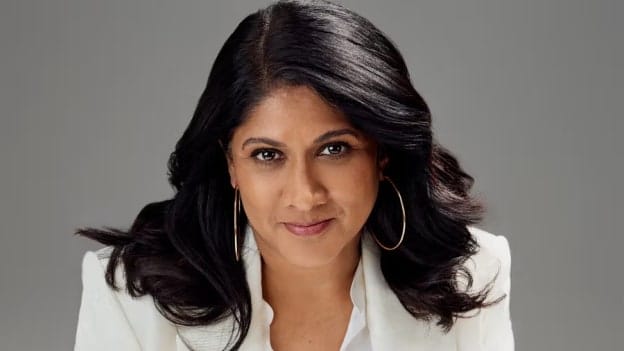
Companies are prioritising leaders with domain expertise, digital savvy, and purpose-driven vision: reflecting a shift toward adaptable, inclusive leadership in today’s fast-evolving global business landscape. We look at the example of Priya Nair, HUL's new CEO.
Amid economic headwinds, technological upheaval, and shifting stakeholder expectations, major corporations across the world are appointing leaders specifically for their ability to drive transformation and restore stability.
One such pivotal move is from Hindustan Unilever Limited (HUL), India’s largest consumer goods company, which recently named Priya Nair as its next CEO and managing director, effective August 1, 2025. A veteran with nearly three decades at the company across sales, marketing, and brand leadership, Nair’s elevation reflects HUL’s confidence in institutional experience and innovation-led growth.
Nair’s appointment comes at a critical moment, as consumer goods companies face slowing demand, changing consumption patterns, and rising sustainability pressures. Moreover, her rise underscores the increasing emphasis on gender diversity in corporate leadership, especially across emerging markets.
Meanwhile, in the mining sector, Rio Tinto-headquartered in London and Melbourne, elevated iron ore head Simon Trott as its CEO — an insider move reflecting the board’s preference for operational continuity amid complex projects and rising investor scrutiny. Similarly, advertising giant WPP-based in London appointed Cindy Rose, a former Microsoft executive, as its CEO. Her tech and AI expertise are seen as critical to repositioning the agency in an increasingly automated, data-driven landscape.
These appointments reveal a pattern: companies are increasingly seeking leaders who offer a mix of domain expertise, digital fluency, cultural alignment, and the ability to navigate uncertainty with clarity. Whether promoting from within or turning to tech-savvy outsiders, the focus is clear — strategy, adaptability, and purpose now define effective leadership in a rapidly changing world.
Inclusive leadership: HUL's bold move
Nair’s elevation at HUL is a prime example of this shift. Her appointment signals a strategic blend of continuity, consumer-centric innovation, and a decisive move toward inclusive leadership at the top.
Well-planned, intentional, and well-received
Firstly, Nair's appointment marks a historic moment as she becomes the first woman to lead the company since its existence. Her elevation continues HUL’s tradition of promoting from within, having joined Unilever in 1995 and recently led its global beauty and well-being business.
It was also clearly an intentional move. Her predecessor, Rohit Jawa’s tenure lasted just over two years, and his early exit came somewhat unexpectedly. Official statements suggest his decision was voluntary, citing a desire to "pursue the next chapter" of his professional journey. There were no indications of underperformance or external pressures, which points to a well-planned and stable transition.
Meanwhile, markets responded positively to the announcement, with HUL’s shares climbing around 4%–5% on the day of the news. The reaction signals investor confidence not just in Nair’s capabilities but also in the continuity and forward momentum of the company’s leadership strategy. The market also read the move as a signal of progressive governance, with Nair’s appointment reflecting global trends in gender diversity at the top levels of leadership.
A strategic pick
Nair joined HUL in 1995 and worked for various sales and marketing roles across home care and beauty and personal care. In 2012, she was appointed to the HUL management board to lead beauty and personal care, and by 2014, she became executive director for South Asia, heading the home care business. She later led beauty and personal care as EVP for South Asia in 2021, became global CMO for beauty and well-being in 2022, and was named business group president, beauty and well-being, in 2024. Under her stewardship, the division has become one of Unilever’s fastest-growing global businesses.
Nair’s deep familiarity with HUL’s operations ensures that no major disruption is expected. Her leadership in the beauty and well-being segment has already proven her ability to grow market share and margins. Going forward, her focus is likely to remain on premiumisation, innovation in core categories, and enhanced digital and sustainability initiatives. She is expected to double down on building brands that connect with younger, urban consumers while maintaining affordability in rural markets.
As a leader, Nair is widely respected for her consumer-centric innovation, strong digital marketing acumen, and collaborative leadership style. She has played a defining role in positioning iconic brands, such as Dove, Sunsilk, and Lakmé as category leaders, while embedding purpose, inclusivity, and sustainability into her brand DNA. Given her track record, sustainability will likely remain at the center of HUL’s product and supply chain strategy.
She is also likely to bring a sharper focus on data-driven marketing, direct-to-consumer (D2C) models, and AI-led consumer engagement.
A broader significance
This leadership transition is a powerful signal of strategic continuity paired with progressive change. Nair brings credibility, internal equity, and a modern leadership outlook. Her promotion also comes at a time when consumer behaviours are rapidly evolving, and digital and sustainable transformations are at the heart of business success.
The fact that her appointment was met with a rise in the stock price further underscores that both institutional and retail investors view this as a strong, forward-looking move.
Author
Loading...