








Leadership
Indonesian innovators: Strategic leadership shaping a digital economy



|
Updated on



A new wave of Indonesian business leaders are writing a new playbook, blending massive success with deep social impact. Here's who they are and what makes their strategies so powerful.
Indonesia's digital economy is undergoing a transformative period, forecast to reach at least $125 billion by 2025 and to potentially exceed $130 billion within the same year.
This massive growth establishes Indonesia as a leading digital market in Southeast Asia, fueled by a young, digitally adept population and significant investment in areas like AI and Fintech.
AI, in particular, is fundamentally reshaping Indonesia's economic landscape, attracting significant investment to boost efficiency and improve service delivery in sectors such as healthcare, manufacturing, logistics, and public services.
At the core of this growth are Indonesian business leaders whose strategic foresight and agile approaches are not merely expanding market reach but redefining industries and confronting societal challenges, offering valuable insights into leadership in emerging economies.
Here are some of the business leaders that are shaping Indonesia’s digital economy.
Patrick Walujo of the GoTo Group
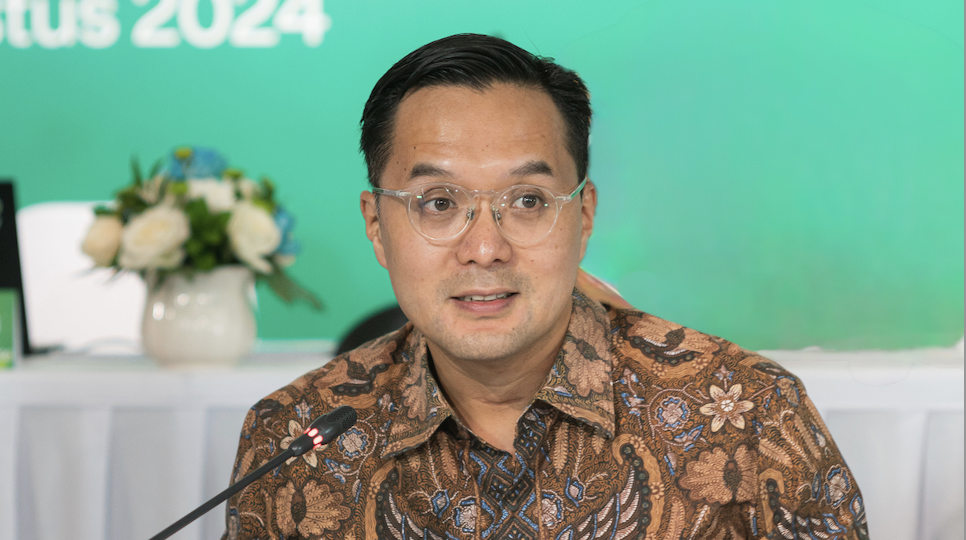
Patrick Walujo is the Group CEO of GoTo, Indonesia's biggest digital ecosystem combining Gojek and Tokopedia. He has a long-term vision for the company, focusing on sustainable profitability by expanding the user base, cutting costs, and building strong partnerships.
Walujo's genius lies in steering the massive GoTo ecosystem toward profitability, a tough job in a competitive market. He successfully guided GoTo to achieve positive adjusted EBITDA in the fourth quarter of 2023, putting it on track to hit its US$85.4 million to US$97.6 million target for 2025.
GoTo achieved it through disciplined cost management and a pivotal strategic partnership that integrated Tokopedia with TikTok's e-commerce operations, a move designed to dominate social commerce.
Walujo is also pushing for practical AI implementation across the ecosystem. "Sahabat AI," for instance, is being explored to power chatbots and use optical character recognition (OCR) to streamline merchant onboarding and improve customer experience.
Beyond the tech, Walujo has shown a genuine commitment to sustainability. In Q1 2024 alone, GoTo expanded its two-wheel electric vehicle fleet by 25% and channeled US$1,402. consumer contributions into carbon offset programs, leading to the planting of over 239,000 trees.
Walujo’s rise shows that a leader’s true measure isn't just the size of their empire, but their ability to make it stable and profitable. He demonstrated that in a hyper-growth market, the shift from "growth at all costs" to sustainable profitability and smart alliances (like the one with TikTok) is the most critical move for long-term success.
Image: GoTo
Jonathan Sudharta of Halodoc

Jonathan Sudharta is the Co-founder and CEO of Halodoc, Indonesia's largest digital health company. His mission comes from seeing firsthand how hard it is for many Indonesians to access healthcare, given the country's low doctor-to-patient ratio. He is dedicated to making healthcare simple and accessible for everyone.
Sudharta's innovation is rooted in his "problem-first" philosophy. Instead of just building a platform, he focused on solving the core issue of patient anxiety from long wait times. By optimizing the system, Halodoc radically reduced the time to connect with a doctor from hours to an average of just 15 seconds. This laser focus on the user's biggest pain point has been incredibly effective.
He has successfully built a scalable, integrated health ecosystem that now serves over 20 million monthly active users. The platform connects patients to a network of over 20,000 licensed doctors and 4,900 pharmacies, offering medicine delivery in under an hour and at-home "Home Lab" services.
Sudharta’s comprehensive approach, which secured a US$100 million funding round in July 2023, has effectively democratized healthcare access across the nation.
The success of Halodoc only shows that the most effective innovation comes from deeply understanding and solving your customer's most painful problem. Instead of just adding more features, Sudharta focused on removing the patient's “anxiety” from long wait times. This proves that when you solve a person's real problem first, your product becomes not just wanted, but needed.
Image: Halodoc
Belva Devara and Iman Usman of Ruangguru

Co-founders Belva Devara (CEO) and Iman Usman (COO) lead Ruangguru, Southeast Asia's largest education technology (EdTech) company. Their shared mission is to fix the educational inequality they experienced growing up by delivering affordable and high-quality learning solutions to millions.
Devara and Usman successfully used technology to bridge a massive societal gap, reaching over 20 million K-12 students. They developed AI-powered tools like "Roboguru," a homework solver using photo search technology that helps students understand tough subjects on their own time.
Their business model is built on affordability, making high-quality learning accessible to students in lower-income and rural areas who need it most. They amplify this social impact through partnerships with the government and private companies to provide scholarships and free access.
Their successful international expansion into Vietnam (KienGuru) and Thailand (StartDee), backed by a $55 million funding round in 2021, proves their model for tackling educational inequality is both effective and scalable.
They also demonstrated that having a huge social impact can be the most powerful business model. They show that you don’t have to choose between helping society and making a profit. When your mission is to solve a real and widespread national problem, customers will naturally support you, and that becomes the driver for rapid growth and success.
Image: Ruangguru, Iman Usman
Willix Halim of Bukalapak

Willix Halim is the CEO of Bukalapak, a pioneering Indonesian e-commerce company. His leadership is defined by his willingness to make bold strategic changes to ensure the company's long-term health and profitability.
Halim's innovation is his courage to make a massive strategic pivot in the face of intense market competition. Starting in February 2025, he is shifting Bukalapak away from the low-margin, hyper-competitive physical goods market. Instead, the company will focus exclusively on higher-margin virtual products and digital services, such as mobile credits, bill payments, gaming, and investments.
This bold move demonstrates remarkable foresight and adaptability. Rather than fight a losing battle, Halim is steering the company toward more profitable waters.
The strategy is already paying off, with a 37% quarter-over-quarter revenue increase in Q1 2025, driven by the new focus areas, which swung the company to a positive net profit. This, combined with the continued success of the "Mitra Bukalapak" program empowering traditional vendors, showcases a pragmatic and forward-thinking approach to sustainable business.
Halim’s approach only proves that you don't have to compete in every single battle. The real strategy is to find where you are uniquely strong. Instead of going head-to-head with other e-commerce giants on everything, Halim saw the gold in empowering the underserved small businesses. It's a lesson in strategic focus—sometimes the biggest opportunity lies in helping the small players grow.
Image: Bukalapak
Beyond disruption: The era of digital nation-building
The paths forged by these leaders signal a pivotal evolution in Indonesia's digital narrative. The initial era, defined by disruption and a race for user acquisition, is maturing into a more profound stage. The new metric for success is not merely market share, but meaningful integration into the country's economic and social fabric.
Innovation is no longer just about creating a slick app or a new service. It is now synonymous with solving fundamental national challenges. The most valuable companies are becoming those that build digital infrastructure for healthcare access, educational equity, and SME empowerment.
As these tech giants transition from disruptive outsiders to core pillars of the economy, their next great challenge will be to institutionalize this problem-solving DNA. Their ability to tackle even bigger, more complex issues—from sustainable logistics to food security—will determine the trajectory of Indonesia's future as a digital superpower.
Author
Loading...