








Leadership
Inside a CEO’s Odyssey: Rohith Murthy on Transformation, AI, and Human Potential



 ||
||

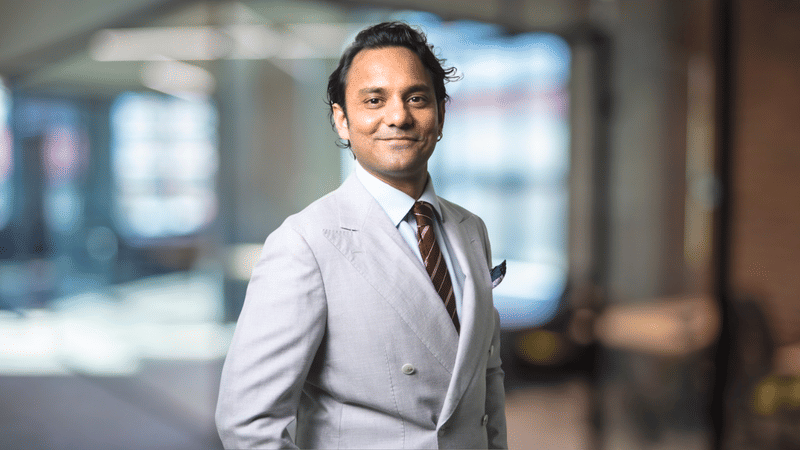
'Small wins matters...When use cases are visible and adoption feels collective, people begin to see AI as a shared journey rather than a threat,' asserts CEO Murthy.
Discussions around global CEOs’ pay are always compelling, especially when companies struggle to meet profit expectations and turn to cost-cutting or restructuring.
But the reality is that the pressures on today’s CEOs are unprecedented. They are no longer responsible only for driving business performance; they are also expected to shape culture, steward technology and human investments, lead complex transformations, and navigate an increasingly unpredictable world.
And the truth is, no CTC can fully capture these demands. Some CEOs are stepping back under mounting pressure, while others are delegating these challenges to their CHROs, according to the report.
But not tech-focused leaders like MoneyHero Group’s CEO, Rohith Murthy. Defying the odds, he is personally experimenting with AI, rethinking work-life experiences, and encouraging his teams to do the same.
In this exclusive conversation, Murthy offers a clear view of a CEO’s Odyssey, where AI is reshaping industries, leadership means wearing many hats, and CEOs must justify not just compensation, but long-term investments, while orchestrating culture, capability, technology, and direction.
Read below the edited excerpts:
Rohith looks at this through three lenses.
First, the macro lens. “When a paradigm shift happens, organizations, small or large, have a unique opportunity to tap into it. Early on, there’s a lot of noise, examples of things working or not working, but real use cases are still limited.”
During this shift, there’s an opportunity to act early, before it becomes commoditized, or before you get disrupted.
Second, institutional knowledge. “I’m fortunate to have a leadership team leading the business growth and expansion for years. That is why institutional knowledge is invaluable. If you equip people who know the business best with this intelligence, they can do incredible things. And it applies across functions, because this intelligence is general purpose, and sometimes even industry’s top talent struggle.”
Third, technology as a cultural driver. Rohith shares, “Coming from a tech background, I believe technology drives culture. Much of the work we do is repetitive, therefore, everyone in our organization from CXOs to small teams must look for ways to optimize. AI helps with the finiteness of time, optimizing workflows and efficiency.”
He notes, “When people experience the benefits firsthand, they can achieve more at work, and still have energy and time for life outside work. AI isn’t simply a tool for replacing people, but one for amplifying them.”
Are AI-triggered layoffs as short-sighted leadership?
Rohith explains that every organization operates on a unique model. “If you’re not working for that organization or sitting on its board, you’re like anyone else reading a headline and thinking, “Oh, they made some AI-driven decision.”
Having said that, Rohith acknowledged there are specific functions where AI is clearly challenging not just the role itself, but the unit economics and cost structures behind it.
Not just front jobs, even engineering is changing. “The way engineers code and use AI tools is very different from how many legacy engineers worked in the past.”
Some functions carry very defined unit economics, and in certain organizations, there’s an immediate opportunity to optimize those costs, which may lead to restructuring decisions. In other cases, it simply means not replacing roles, the work still exists, but people are expected to become more productive and strategic.
This is why, he tells his teams, mindset matters. “If you treat AI like an additional team member, everything changes,” he explains. And urges teams to accept AI tools as their colleagues to assign them tasks, collaborate, and embrace as the technology starts to shift.
Rohith shared, “it begins with recognizing what AI can do better than us.” Illustrating everyday examples of how he collaborates with AI tools to handle cognitively heavy background research, while balancing work-life demands and the limits of human energy, he said, “working alongside an AI agent, one that can operate through the night, is like suddenly having another team member who takes on cognitive work while you sleep. When I wake up in the morning, the AI agent has output ready for review.”
This, he explained, is a simple example using specific AI agents. “The next level is orchestration, where one agent completes a task, passes it to another agent for a specialized function, and then a third agent reconciles the work and delivers the final output in the desired format. That interplay is incredibly powerful because human time and energy are finite, while these agents can work continuously in the background, often handling certain tasks better than we can,” he shared.
Rohith also points out that this idea isn’t entirely new, “Microsoft Excel has been an incredible productivity tool for decades, allowing people to program workflows, store data, and optimize work. The promise of AI is similar, but on a much larger scale, it’s about increasing the output of the entire labour force,” he underlined.
For Rohith, AI agents in the workplaces, and life in general is very exciting. “For example, in personal finance, which today is largely reactive. Nobody wakes up in the middle of the night thinking, “Let me check the top cashback cards.” Most people would rather spend time on OTT platforms. Financial questions are usually triggered by events, such as a natural calamity, flight turbulence, or rising interest rates.”
“This is where AI agents can help businesses move from being reactive to proactive. An agent can monitor spending patterns, track habits, and initiate conversations when something changes. It can prompt reflection, suggest actions, or ask timely questions,” he explained.
Human-in-the-loop
Rohith points to a few core human strengths. The first strength is empathy, “much of the work we do is deeply human. You can have a good month, a bad month, a great week, or a project that doesn’t go as planned. Sometimes you hit your numbers; sometimes you don’t. Ultimately, empathy for one another matters.”
He added, “without empathy, everything becomes deterministic, focused on a single “right” outcome. If that outcome isn’t achieved, it can feel like you’ve failed. But that emotional understanding is fundamentally human.”
For Rohith, running a listed company has only amplified this reality. “Some days the market rewards you; other days it doesn’t. In that environment, empathy and trust within the organization have to increase even more.
If the culture is right and teams truly trust each other, AI should only amplify these human qualities. It should lead us to empathize more, not less,”
The second strength according to him is – “our ability to step back and ask the right questions.”
He admits that many are too wired in, “how often do we let our minds wander? How often do we question why we do things a certain way, or why something has never changed, or why others are doing it differently? These moments of curiosity often spark new ideas,” he remarked.
“Humans are uniquely capable of forming conjectures, something AI still struggles with.”
And having experienced this personally, Rohith sometimes asks AI tools to guess, even when it doesn’t know the answer. “It may hallucinate, but much of innovation comes from conjecture and trained guesswork, especially when you’re trying to explain something that doesn’t yet make sense.” It's simply finding creative workarounds without a playbook, and that’s deeply human, and AI tools simply cannot replicate it at the moment.
The third strength according to him is our ability to celebrate moments. That, Rohith says, is the joy of work. “When something works, whether it’s big or small, we celebrate. Sometimes with our teams, sometimes on our own, sometimes with our families. AI doesn’t do that yet. These moments of celebration are uniquely human.”
And finally, the ability to learn and adapt continuously. “That capacity to evolve is what has allowed humans to thrive, and it will become even more critical going forward. Today, you’re not just competing with AI, you’re also competing with someone across the world who can do the same job, possibly without speaking the same language.”
For him, human capabilities like empathy, conjecture, celebration, and continuous learning, are irreplaceable.
The no-layoff transformation: How redeployed talent outperforms external hires
Rohith says the most effective way is for stakeholders to experience it firsthand, by seeing people actually use the technology, embrace it, and change how they work.
This makes it easier to bring stakeholders on board. He doesn’t have to explain how teams are, or aren’t, using the tools, or where they’re struggling. “The story comes from the bottom up, this is how the organization is using it. See it for yourself.” And while it starts with him as CEO, it equally starts with the rest of the organization.
He believes this approach matters whether you’re talking about AI or any other transformation.
The second piece, Rohith says, is about expectations. “CEOs set aspirational targets, and they get excited about what technology and intelligence can enable. But they also have to continuously remind stakeholders to be patient.”
“Be impatient with your expectations, but be patient with the outcomes,” he explains.
While he welcomes the impatience surrounding AI adoption and progress. “What matters is patience with outcomes. Some things take time. Transformations don’t happen instantly. If they did, we’d see many more of them succeed,” he said.
“Patience allows ideas and inquiries to flow, while also setting the expectation that learning takes time. The organization may not see immediate, material movement in a specific metric or needle, but it is learning. It’s reimagining and rethinking the business. Directionally, it’s moving the needle, just not enough for us to suddenly say, ‘Let’s stop doing this and start doing something else.’” he shared.
The project Odyssey
“For me,” he says, “I strongly believe we have to disrupt within our own organization.” From his favourite book, The Innovator’s Dilemma by Clayton Christensen, Rohith points to the Jobs-to-be-Done framework, which centres on the idea that everything exists to fulfil a job. “Christensen often referenced examples like Kodak to show how disruption frequently happens not because companies lack resources, but because they resist change,” Rohith shared.
“That change has to start at the top,” he says. “It has to start with leadership, and it has to start with me.”
He believes a CEO must feel deeply uncomfortable when a new technology emerges. If leadership doesn’t actively embrace it, use it, and make decisions around it, someone else will, and the risk of disruption becomes very real.
That thinking became the foundation of Project Odyssey, which rests on three core principles.
First, Odyssey is a journey, and “not something that happens overnight,” he says.
Second, the transformation must be embraced by key players across the organization, starting with the leadership team. “I have to embrace this alongside my leadership team. It can’t be driven by one person alone,” Rohith explains, while also acknowledging everyone’s learning curve.
Third, Odyssey is about unlocking new pockets of growth. He explains that MoneyHero understands its core engine well. “If the company continues executing effectively, it will grow at a steady base rate, and that’s a good thing. But the bigger question is how to unlock incremental growth.”
“Traditionally, that comes from entering new markets, expanding product offerings, or pursuing acquisitions. But it can also come from reimagining how the business operates internally. That’s where experimentation plays a critical role.”
One example is a recently launched WhatsApp-powered journey that allows users to get live pricing for car insurance. “Twelve to eighteen months ago, live pricing didn’t exist,” Rohith notes. “Today, a user can share their current insurance details, answer a few simple questions, and receive a cheaper option through an AI-powered interaction.”
These may seem like small use cases, he says, but they fundamentally change how people think about car insurance, and they open up new avenues for growth. “The same thinking is now being applied across every workflow and function in the organization.”
At a broader level, Rohith believes the business must be re-platformed to become truly AI-native. “There’s no point claiming to be AI-native while still running on legacy tools and subscriptions,” he says. “Embracing AI requires evaluating every aspect of the business: Is there a better way to do this? Is the ROI worth it? What does it take to re-stack the organization?”
Rohith says, “the real purpose of Project Odyssey is to examine every part of the business and ask whether it can be done faster, cheaper, and better for users.”
Transparency in an AI-disrupted workplace
Rohith’s approach starts with transparency. “If you’re not transparent, people will second-guess your intentions,” he says.
Second, leaders must demonstrate commitment through action. At MoneyHero, every employee can access enterprise AI tools if they ask for them. “It’s not limited to a few people, everyone has access,” he shared.
Third, Rohith believes leaders must model usage themselves. He regularly shows teams how he uses tools like Claude for brainstorming or wireframing, bringing prototypes to discussions and inviting feedback. “I’m not just delegating and expecting outcomes, I’m showing how I use the tools,” he says.
Finally, small wins matter. Teams are encouraged to experiment, achieve tangible results, and share how they got there. Continuous communication builds comfort and trust. When use cases are visible and adoption feels collective, people begin to see AI as a shared journey rather than a threat.
Future CEOs: Value by AI-led automation, or scaling human potential
Rohith believes the answer depends largely on the kind of market a CEO operates in. Drawing from his experience as both a public-market CEO and a founder in private markets, he notes that expectations can vary, but for publicly listed companies, the lens is fairly consistent.
“Once you run a public company,” he says, “you’re ultimately judged on a few core questions: Is the business making money? How much money can it make? Is that growth sustainable? And what is the long-term potential of the business?”
These fundamentals, he explains, are what the market tracks, and they are eventually reflected in financial performance and share price. “While leadership, culture, and innovation all matter, these metrics remain the baseline against which CEOs are assessed.”
AI, in that context, has to show up in the numbers. “You can have a compelling AI use case,” Rohith says, “but if your financials don’t reflect it, the market won’t reward you, unless investors truly believe you’re building the ability to disrupt a market in a way others can’t.”
He also believes AI will push CEOs to become far more product-focused than before. As AI becomes more embedded in how businesses operate, product quality and differentiation will increasingly define success.
“People come to you because you have a great product,” he explains. “And more and more, you’ll see CEOs talking about product strategy, what their product is, why it’s good, and why it’s different.”
Historically, this kind of product-led thinking was expected primarily from CEOs in technology or digital-first industries. Rohith believes that is changing. Product thinking, he says, will be expected from every CEO, whether the product is an app, a car, or a physical service experience.
Beyond product, he emphasizes the growing importance of long-term investment. While public-market CEOs are closely scrutinized on quarterly results, they are also expected to place thoughtful bets on the future.
“You have to see where the world is going, have conviction in that view, explain it clearly, and then work backward to invest for that future,” Rohith says. “That articulation has to be sharp and timely.”
Fast-following, he warns, is no longer enough. CEOs cannot afford to fall behind and then scramble to catch up. Investing ahead of the curve, particularly in areas like AI, is becoming a critical part of leadership credibility.
What was once a narrative reserved for a small group of visionary CEOs, Rohith believes, will soon be expected of leaders across industries. “Regardless of the sector,” he says, “the ability to invest for the future, and clearly explain why. will define how CEOs are judged.”
Topics
Author
Loading...