








Leadership
Not Your Typical CHRO: Steven Starace’s journey from operations to people powerhouse
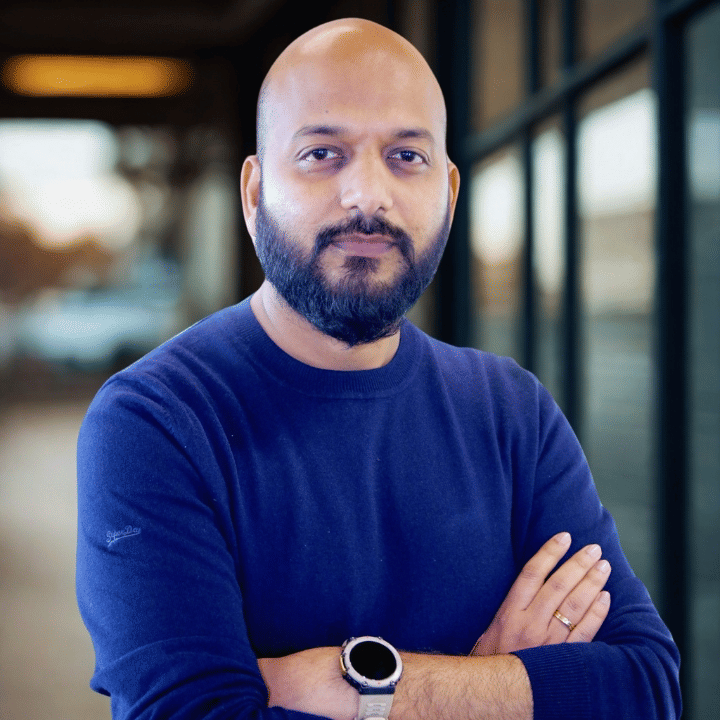





Unlike many of his peers who climbed the HR ladder from the ground up, Starace’s path to becoming CGI’s global people leader began in operations.
In an era where technology, talent, and transformation collide at breakneck speed, Steven Starace, Executive Vice-President and Chief Human Resources Officer at CGI, is charting an unorthodox path for HR leadership. With a career that started in business operations and now sees him steering people strategy for one of the world’s leading IT and business consulting firms, Starace’s journey is proof that the future of HR belongs to those who understand both the boardroom and the break room.
People Matters sat down with Starace for an in-depth conversation on how he’s preparing CGI’s 94,000-strong workforce for the age of AI, why culture trumps brand, and what it takes to win the war for talent when the rules of work are being rewritten in real time.
From Business to People: The making of a modern CHRO
Unlike many of his peers who climbed the HR ladder from the ground up, Starace’s path to becoming CGI’s global people leader began in operations. “When the CEO asked me to take on the CHRO role, my first reaction was, ‘Why me? I’m not an HR guy!’ But that’s exactly the opportunity,” he recalls. “HR isn’t just about people—it’s about translating people focus into real business outcomes.”
He credits decades of business experience with shaping his belief that effective HR starts with understanding the business itself—its pain points, its ambitions, and the intricacies of client demands. “If you don’t fully grasp the complexity of the business, it’s hard to be a good strategic partner. But if you do, and you bring the people element to the table, you become indispensable.”
For Starace, great HR is about being invited in because you make leaders better—not just because you’re expected to show up. “When I ran a business unit, my HR partner was so valuable I wanted her in every meeting. That’s the environment I want at CGI.”
Driving outcomes, not activities
So what drives Starace as a leader? The answer is refreshingly straightforward: “I want to drive outcomes and make an impact. That’s been true whether I was running a business unit or leading HR globally.”
Starace is quick to point out that CGI’s unique culture—rooted in ownership and accountability—fosters this mindset. “When you act like an owner, you want to drive results because you’re vested in the company’s success. We’re not about ego or hierarchy here; it’s about genuine collaboration.”
AI, skills, and the war for talent
With AI reshaping industries, Starace sees a twofold challenge: upskilling CGI’s existing workforce and competing for scarce external talent. “We’re rolling out a comprehensive AI talent strategy that covers technology, business, and domain skills,” he says. “We see technology as a tool to drive outcomes for clients—so we focus on use cases that matter, not just the shiny new thing.”
Does the world have enough AI-ready talent? “No, not yet,” he admits. “High-tech skills like AI are always in demand and always scarce. That’s why we’re building internally and buying externally where we need to.”
Crucially, Starace says CGI’s approach is about blending technology with deep industry expertise. “We have a client proximity model—local business units close to clients, backed by global delivery and innovation centres. That way, we help clients ask the right questions, not just implement the latest tech.”
Culture Over Brand: Why people stay at CGI
In a hyper-competitive market for talent, what keeps CGI’s people from jumping ship? “Culture,” Starace says, without hesitation. “Our attrition is lower than industry averages because people value the collaborative, down-to-earth environment here. We rely heavily on referrals—people bring in friends because they want others to experience it.”
He acknowledges that CGI’s brand recognition isn’t as strong as some competitors, but believes culture is a more powerful magnet. “It’s something we’re always working on, but culture is our real differentiator.”
AI: Disruptor and enabler
Is AI a threat to jobs, especially for entry- and mid-level employees? Starace takes the optimistic route: “AI is absolutely disruptive, but it’s also an enabler. It will force roles to evolve, and those who adapt can be even more productive. The disruption is real, but it’s also an opportunity.”
He points out that efficiency gains are nothing new—but AI accelerates the trend. “We’ve always had to do more with less, especially in managed services. AI will just make that happen faster. The link between headcount and revenue growth is starting to break.”
Bridging generations and building for the future
With a 94,000-strong, multi-generational workforce, Starace sees diversity as a strength. “The digital divide is real, but it’s also a bridge—different generations bring different strengths. Our collaborative culture helps us harness that.”
As for the so-called ‘skills shelf life’—the idea that skills become obsolete faster than ever—Starace believes adaptability is key. “We look for agile learners, people who aren’t afraid of change, and those who are outcome-focused. The right mindset is more important than any one skill.”
India’s rising role and the global talent map
With 20,000 employees in India—over 20% of CGI’s global workforce—Starace calls the country “essential” to CGI’s future. “India is not just a delivery hub; it’s a source of innovation, industry expertise, and client engagement. We expect to keep growing here, including in smaller cities as infrastructure and policies improve.”
He’s bullish on Indian leadership within CGI, too. “Our president of US operations is from India, and we take succession planning seriously. The talent bench in India is strong, and we’re investing in developing it further.”
DEI and Sustainability: More than buzzwords
On diversity, equity, and inclusion, Starace says CGI’s foundation is clear: “Inclusivity has always been part of our management foundation, even before DEI was a buzzword. Local reporting may change due to laws, but the culture and intent do not. We see diversity as a strength, not a checkbox.”
Sustainability is also woven into CGI’s DNA. “Our client proximity model reduces travel, which helps our climate goals. We have strong ESG programs, and HR plays a role in building a sense of ownership and accountability to our communities.”
The Future of Work: Navigating uncertainty
What will the workplace of 2030 look like? Starace says flexibility and collaboration will remain key. “We’re a professional services firm, so working side-by-side with clients is in our DNA. Hybrid work is here to stay, but we want to maintain our strong culture. The specifics may differ by country, but our principles won’t change.”
Leading from the table and beyond
Does Starace have a seat at the table? “Absolutely. The HR function reports directly to the CEO and sits on the executive committee and the global board. It’s the same at every strategic business unit. At CGI, people are the business.”
His advice to other HR leaders seeking a strategic role? “You don’t get a seat at the table by force—you earn it by providing value. When you help drive growth and solve real business problems, you’re not just invited in, you’re indispensable.”
And could a CHRO ever become CEO? Starace believes so. “The CHRO role is more multifaceted than ever. Those who master it are well positioned to lead entire organisations—especially those that put people at the centre.”
Topics
Author
Loading...