








Leadership
The Human Edge in the Age of AI: Katherine Parente’s vision for the future of work




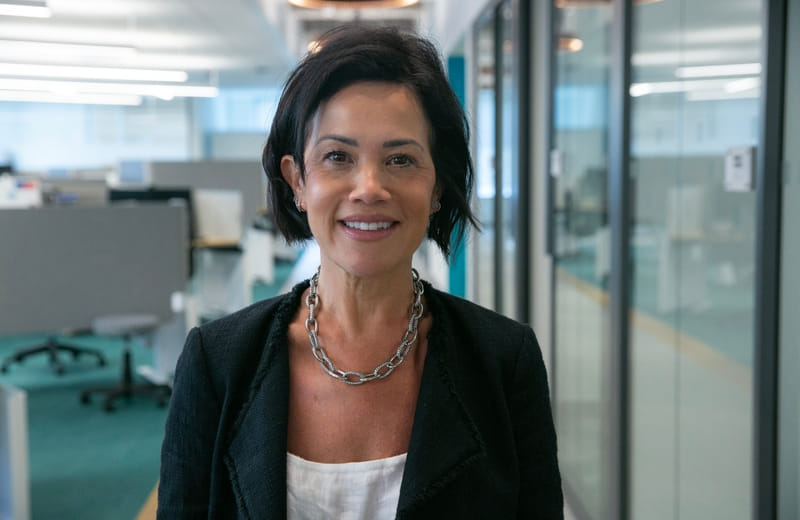
Parente’s view of the workplace is unflinchingly pragmatic: “There’s finally an acceptance that things will never be the same, and that it will continue to evolve,” she observes.
The world of work is in the midst of a profound transformation, driven by technological innovation, shifting workforce demographics, and an evolving understanding of what it means to be an employer of choice. At the heart of this revolution is Katherine Parente, Chief People Officer at Pega, who brings both a global perspective and a passion for people to her leadership. In an exclusive interview with People Matters, Parente shares her insights on the future of work, the evolving role of HR leaders, and how Pega is navigating the complexities of talent, technology, and culture in the age of Artificial Intelligence (AI).
The Never-Ending Evolution: Hybrid, multigenerational, and global
Parente’s view of the workplace is unflinchingly pragmatic: “There’s finally an acceptance that things will never be the same, and that it will continue to evolve,” she observes. The Covid-19 pandemic, once a seismic shock, is now in the “rear-view mirror”, but the opportunities it created—global collaboration, flexible work arrangements, and the breaking down of regional barriers—are here to stay.
For Pega, a 5,500-strong technology company with a truly global footprint, the challenge has been to retain the “goodness” of remote work while recapturing the innovation that comes from people coming together, whether physically or virtually.
“Redefining what ‘getting together’ means is something that companies are going to keep reinventing,” she says. The workforce, she notes, is now “multigenerational” and “multicultural,” with new entrants bringing different skill sets and expectations. The hiring matrix has shifted: “It’s less about skills and experience—though those are still valuable—and more about the ability to learn, to have a growth mindset, and to be adaptable.”
The Growth Mindset: Learning, unlearning, and thriving with change
At Pega, the focus is on hiring for learning agility and a “growth mindset.” Parente explains, “Does this person exhibit the qualities we want—someone who will internalise massive change, who is willing to learn and unlearn, to push themselves and those around them?” While technical skills remain essential, it’s the attitude toward change and the willingness to embrace new challenges that set candidates apart.
This philosophy extends beyond new hires. With AI and automation reshaping job roles, Pega invests heavily in upskilling and reskilling its existing workforce. “We have absolutely no intention of eliminating roles because we’ve replaced some portion of what someone does with AI,” Parente asserts. Instead, the company encourages employees to ask, “What would you do with the extra time AI gives you?” The aim is to create a “curious culture” where continuous learning is the norm, not the exception.
AI at the Core: Empowering people, not replacing them
Pega’s journey with AI is not new. “We are considered an AI-first company,” Parente says proudly. With a CEO who has championed AI for more than four decades, Pega’s DNA is steeped in innovation. The integration of AI into its products and processes is strategic, not opportunistic.
She acknowledges the natural anxiety that employees may feel about AI: “Will my job be taken away?” Her answer is unequivocal: “Don’t be afraid of AI taking your job; be afraid of people using AI to enhance theirs.” Pega’s approach is to empower employees to leverage AI as a tool for productivity, creativity, and growth, not as a threat.
This forward-thinking mindset is reflected in hiring priorities. “Engineers we hire today look very different from those we hired five years ago,” she notes. Systems thinking, business acumen, and a facility with AI systems are now as important as technical expertise. The expectation is that every employee, regardless of function, will be comfortable working alongside AI, continually learning and adapting.
Sticky culture, global talent, and India’s strategic role
Retention, not just attraction, is a critical concern. In an industry marked by a “war for AI-ready talent,” Parente believes that Pega’s “sticky culture” is a key differentiator. “Our average tenure is in the teens,” she says, a remarkable feat in the technology sector. The company’s philosophy is to be a “magnet, not a mandate”—creating an environment where employees feel “seen and heard” and where trust is paramount.
Training and development are central to this ethos. Pega’s India operations—especially in Hyderabad and Bangalore—have evolved from “delivery locations” to the “heartbeat” of the global ecosystem. “Fifty percent of our developers are based in India,” Parente shares. Hyderabad, in particular, is an AI Centre of Excellence, driving research across generative AI, predictive analytics, and natural language processing. Indian employees are not just contributors; they are leaders, managing global teams and spearheading innovation.
This approach has allowed Pega to build an exceptionally loyal workforce. “More than 40 percent of our employees worldwide have a tenure of greater than 12 years,” Parente notes. The “stickiness factor,” she believes, comes from staying ahead of the curve—both in technology and in people practices.
The Evolving Role of the CHRO: From transactional to strategic
Parente’s own experience as Chief People Officer mirrors the transformation happening across the HR profession. “The seat at the table that’s required of a CPO is more visible and more responsible for the future of the organisation,” she explains. No longer confined to “transactions and administration,” today’s HR leaders are full partners in business strategy, sitting with boards to discuss not just people, but company performance and investor expectations.
This evolution is particularly pronounced in technology companies, where the pace of change demands that HR leaders be deeply involved in strategy, P&L, and decision-making. “The demand is higher,” she says, “when you’re at the forefront of technology and run by technologists.”
Parente is also heavily networked with other HR leaders, sitting on the board of a Gartner-sponsored CHRO platform. She observes that while the shift to strategic HR is happening across industries, the speed varies: “The uptick is faster in tech. In manufacturing or retail, the change is coming, but it’s not as rapid.”
Looking Forward: The workplace of 2030 and beyond
So what does the future hold? Parente sees the HR business partner model deepening at all levels of the company. “The partnership that ties people to actions starts at every level,” she says. The expectation is that HR will be embedded throughout the organisation, not just at the top.
The evolution of talent, particularly in technology, will be defined by a “growth mindset”—the ability to look at challenges and ask not “Can I do this?” but “How can I do this?” Employees will be more invested, more empowered to take risks, push back, and challenge assumptions.
And as for the future of HR leadership? Parente believes that the possibility of a CHRO or Chief People Officer leading a multi-billion dollar company is not far off—especially as board requirements for people expertise grow. “I’ve already seen CHRO-background leaders running global companies,” she notes. While regional differences persist, she is confident that it’s only a matter of time before talent leaders are recognized as the natural choice to lead organisations where people are the most valuable asset.
Conclusion: People at the heart of innovation
Parente’s perspective is both optimistic and grounded. For Pega—and for the broader world of work—the future belongs to those who embrace change, foster a culture of learning, and put people at the centre of strategy. In an era where technology and talent are increasingly inseparable, her message is clear: “Stay ahead of the curve, invest in your people, and never stop reinventing what it means to work together.”
Topics
Author
Loading...